When Polished Becomes a Cage
There is a specific kind of freedom that can only be understood by those who have spent years being extremely careful about who they are allowed to be. For BTS, that tension reached its apex in the years between 2022 and 2025, when South Korea's most globally famous musical act disappeared into mandatory military service. Seven men, accustomed to performing synchronized choreography for stadium audiences, were reduced to basic training, uniform schedules, and institutional silence. When they came back, they did not return quietly.
"Like Animals" is the sound of that return stripped of any diplomatic softening. The tenth track on ARIRANG is a grungy, distortion-heavy piece of alternative rock that sounds, at its core, like something that has been kept in a box too long and has finally broken through the lid. It is not the BTS of polished synchronization or carefully crafted imagery. It is something rawer and more unsettling, which is precisely the point.[1]
Comeback After Service: The Stakes of ARIRANG
BTS released ARIRANG on March 20, 2026, their fifth studio album and first full-group release since all seven members had completed military service. The album's title is drawn from one of Korea's most ancient and revered folk songs, a melody historically associated with longing, endurance, and the experience of separation.[2] It was chosen deliberately. The group had been separated, from each other and from their music, in ways they could not fully have prepared for.
The album was executive produced by Diplo, a collaboration that seemed unlikely on paper but made sense in practice. Diplo has described his approach to the project as an exercise in revealing the group as grown men rather than polished performers. He stated that his goal was to let their creativity shine and to let them speak their stories as grown men, showing evolution, depth, and perspective.[3] For months, the group lived together in Los Angeles while recording, the first time they had done so since 2019, and the sense of reclaimed togetherness runs through the album's pores.
ARIRANG received universal critical acclaim. Rolling Stone declared that BTS nailed the comeback.[4] NPR's Sheldon Pearce described it as a deeply reflective body of work that explores BTS' identity and roots.[5] The Hollywood Reporter offered a track-by-track breakdown that highlighted "Like Animals" as one of the record's most striking departures.[6] OutLoud Culture called it one of the album's more intense moments, a track that roars with primal energy.[1]
The album structure matters for understanding where "Like Animals" sits. Critics noted the record divides roughly into two emotional halves: the first half is all appetite and restlessness, the second half shifts toward themes of freedom, release, and the act of living without constraint.[7] Track 10 arrives well into that second movement, functioning as a primal release valve after the album has already done the work of establishing its more introspective themes.
The Animality as Metaphor: What the Song Is Actually Saying
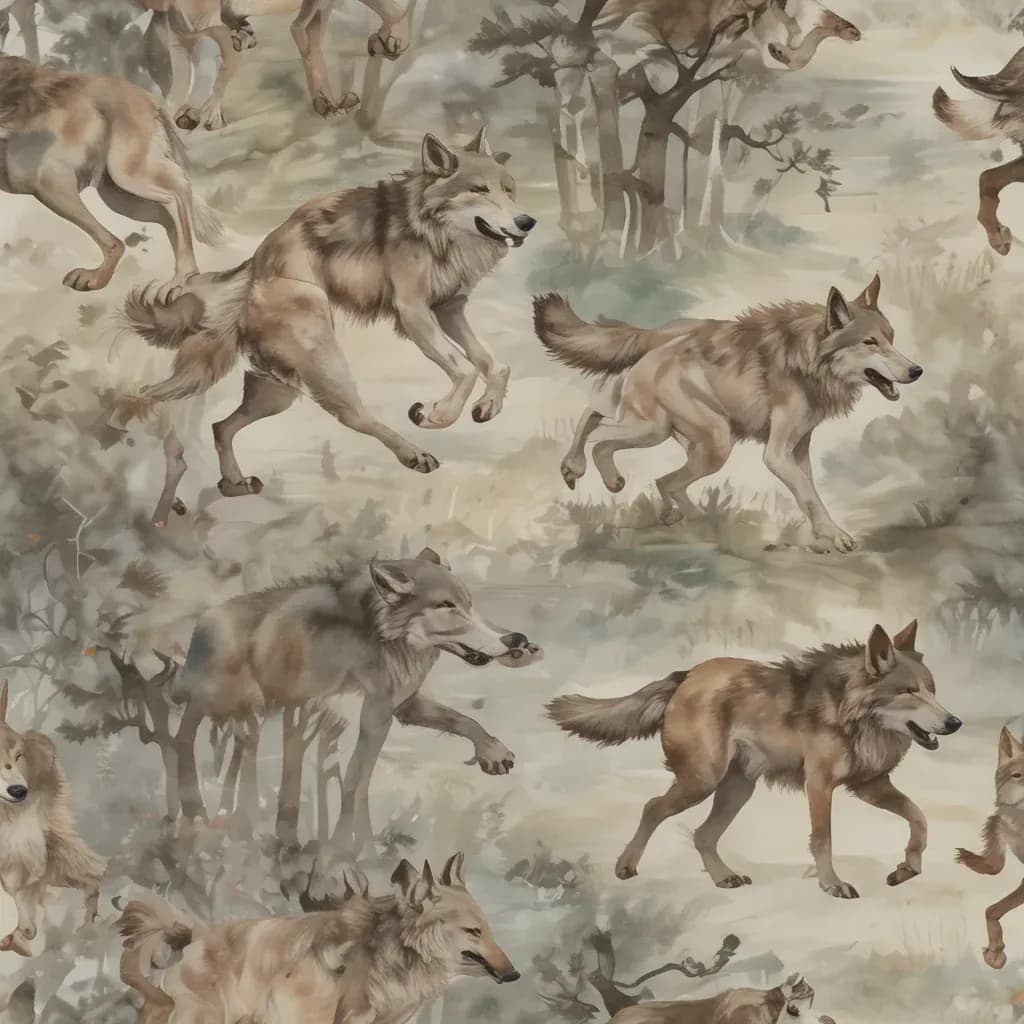
The central metaphor of "Like Animals" is deceptively simple: what if being untamed were not a problem to be solved but a truth to be embraced? The song draws on the imagery of animality not as something shameful or regressive but as a marker of authenticity. Civilization, the song implies, requires the performance of a kind of domestication. You present a curated face. You suppress the unruly parts. You behave in accordance with expectations. "Like Animals" rejects that bargain.
This rejection takes on specific weight in the context of military service. South Korean mandatory conscription is, by design, a process of conformity. You dress the same, move the same, respond the same. For artists whose entire careers had been built on expressive individuality, the contrast could not have been more stark. The song never makes this subtext explicit, but it does not need to. Jung Kook, in interviews around the album, spoke about the accumulation of longing he felt during service: during his time in the military, he could not work on music even when he wanted to, and that built up a sense of longing.[8] "Like Animals" sounds like that longing given physical form and finally released.
The track also works as a meditation on vulnerability. Where the polished version of BTS offered perfection, this song offers something messier and more honest. The imagery throughout suggests that sharing your unguarded self with someone, claws, shadows, and all, is not weakness but intimacy. The rawness is the point. To be like animals is to drop the performance and simply exist.
Sound as Statement: Diplo, Distortion, and the Eighties Goth Reference
The musical choices on "Like Animals" reinforce the thematic ones. The track has been described by critics as having a grunge edge, with a heavy distorted bassline running throughout and what one reviewer identified as an Eighties goth vibe, reminiscent of Love and Rockets circa their Earth, Sun, Moon era.[4] This is not the BTS of layered synth-pop production or intricate vocal harmonies presented in pristine clarity. This is a BTS that has been run through distortion and left there.
Diplo's production philosophy for the album emphasized textures and moods that felt unexpected but still true to them.[3] On "Like Animals," the grungy palette serves a precise function: it signals that something has been shed. The production itself sounds like the act of removing a carefully maintained exterior. The acoustic guitar loop at the song's foundation gives it an almost confessional quality, while the distortion and heavy low end provide the counterweight of raw force.
NPR's review placed "Like Animals" alongside another track as songs that felt like quintessential BTS songs despite the variance in method.[5] This is a significant observation. The song does not sound like much of BTS's previous catalog, and yet something essential remains. That something essential is arguably the refusal to be anyone other than themselves.
Cultural Resonance: What "Taming" Means in the K-Pop Context
To understand why "Like Animals" lands with such force for BTS's audience, it helps to understand what the K-pop idol system asks of its performers. The Korean entertainment industry has historically demanded a particular kind of self-erasure from its artists. Idols are expected to be relatable but aspirational, human but flawless, present but never overpowering.
BTS spent the early years of their career navigating, and eventually partially dismantling, those expectations. Their willingness to discuss mental health, the authentic emotion they brought to their music, and their insistence on artistic control were all departures from the standard idol playbook. "Like Animals" extends that tradition in its most aggressive form yet. The song functions as an explicit rejection of the taming process. It names the cost of performance and sides unambiguously with the wild self over the managed one. For fans who watched BTS be pulled in every direction, by industry demands, by public expectation, by mandatory military service, the song arrives as a kind of vindication.
The word "animals" in the title also does something interesting in the context of the album's name. ARIRANG, as a piece of Korean folk tradition, is associated with endurance under duress.[2] The combination of that ancestral framing with the explicitly un-domesticated energy of "Like Animals" creates a kind of through line: the endurance was real, and so is the relief on the other side.
Alternative Interpretations: The Shadow, the Pack, and the Romantic
Fan communities have read the song through several different lenses, and the range of interpretations speaks to how layered the writing is. The most widely circulated reading, beyond the military service context, draws on Jungian psychology, specifically the concept of the shadow self. The shadow is the unintegrated, unacknowledged part of the psyche: the parts of ourselves we hide, suppress, or disown because they do not fit the image we want to project.
This framework connects "Like Animals" to earlier BTS work, particularly SUGA's Shadow interlude from Map of the Soul: 7, which drew explicitly on Jung's ideas. In this reading, the song's call to embrace your unguarded, messy, animal self is a call to integrate the shadow rather than keep hiding it.[9]
A second reading emphasizes the collective dimension. BTS has always positioned itself as a group first and a collection of individuals second, and some fans read "Like Animals" as a song about the pack dynamic: seven people who are at their most authentic when they are together, unfiltered. The imagery of being untameable resonates differently when applied to a group that has survived industry pressure, global fame, military separation, and public scrutiny, and emerged with their bond intact.[9]
The song also sustains a more straightforwardly romantic interpretation. The imagery of wanting to enter someone's inner world, to be accepted alongside your own shadows and mess, reads as a description of real intimacy. In this reading, "like animals" is not about rejecting civilization but about the kind of closeness that requires you to stop managing yourself in front of another person. None of these readings cancel each other out. The song is written to hold all of them.
Why This Song, at This Moment
"Like Animals" does not ease into its thesis. It commits to the primal, the unpolished, the loud. There is a kind of risk in a band like BTS releasing something so deliberately rough. The audience is vast and the expectations are multiple. Some fans wanted the group to return to familiar comforts. "Like Animals" declines that invitation. It says, instead: here is what happens when you hold everything in for long enough. Here is what it sounds like when restraint finally gives way.
Time magazine described ARIRANG's greatest strength as the sincerity with which it walks the line between qualities of BTS' music and expression that have always been there and a messy embrace of inevitable change.[8] "Like Animals" is that messy embrace at its most unapologetic.
There is something valuable in hearing one of the world's most visible pop acts argue, with distortion and grit, that being uncontrollable is not a failure state. It is, the song insists, the realest thing about us. The animals we carry inside do not disappear because we learn to perform otherwise. They wait. And when the cage opens, they run.
References
- BTS Returns Home with 'Arirang' — OutLoud Culture review describing Like Animals as roaring with primal energy and among the record's more intense moments
- Arirang (album) - Wikipedia — Wikipedia article on the ARIRANG album covering its title's origins in Korean folk tradition
- Diplo Producing BTS Highly Anticipated New Album ARIRANG — Broadway World article featuring Diplo's quotes about his production philosophy for the album
- BTS Nails Its Comeback With 'Arirang' — Rolling Stone album review, five stars, noting Like Animals' Eighties goth vibe and grunge edge
- With 'Arirang,' BTS returns to a K-pop moment of its own making — NPR review by Sheldon Pearce describing the album as a deeply reflective body of work and noting Like Animals as quintessential BTS
- BTS 'Arirang' Track-by-Track Breakdown — Hollywood Reporter track-by-track analysis of ARIRANG highlighting Like Animals as one of the record's most striking departures
- BTS 'Like Animals' Lyrics: Meaning of Song From 'Arirang' Album Explained — Just Jared analysis of the album's structural arc and Like Animals' position in the freedom-themed second half
- Breaking Down Every Track on BTS' New Album 'Arirang' — Time magazine album breakdown including Jung Kook quote about longing during military service
- BTS ARIRANG album discussion — Lainey Gossip discussion of fan interpretations including Jungian shadow self readings and pack dynamics