Made of Glass
Most songs about fame are written from the inside, by someone dazzled or exhausted by the spotlight. "Made of Glass" is written from the sidelines. Its narrator is a witness, someone who knew a person before the rise and now watches them perform a version of themselves for an audience that can see straight through the act. It is a song about transparency, fragility, and the particular grief of watching someone you once understood become a stranger.
It is the eighth of fourteen tracks on David Kushner's second album, Devotion, and at just over three minutes it is among the more compact entries.[1][2]
Where the song sits
Devotion arrived on November 13, 2026, as the follow-up to The Dichotomy, the 2024 debut that carried Kushner's breakthrough single "Daylight" and went multi-platinum.[3][4] Kushner has described the new record as a study of devotion in both directions: the way it can complement and elevate a person, and the way it can consume or ruin one.[3] He added that some songs are hopeful and others sad, and that he still thinks devotion is worth the risk.[3]
The album's title is usually read romantically, but the tracklist suggests a wider net. Alongside songs that sound like love songs sit titles such as "Worship Me" and "Dead Vine," which hint at devotion to a person, to a faith, to an image of oneself, or to a career.[1] "Made of Glass" belongs to the darker side of that ledger. It is about what happens when a person gives themselves wholly to ambition or to the machinery of success, and what is left of them afterward.
The credits list Kushner as a writer alongside Sean Douglas and Jacob Olofsson, the latter a producer who also helped shape the album's lead single "Ritual."[1][3] Kushner has said that he wants to keep expanding his sound and building something bigger, a goal that fits the album's wider canvas.[5]
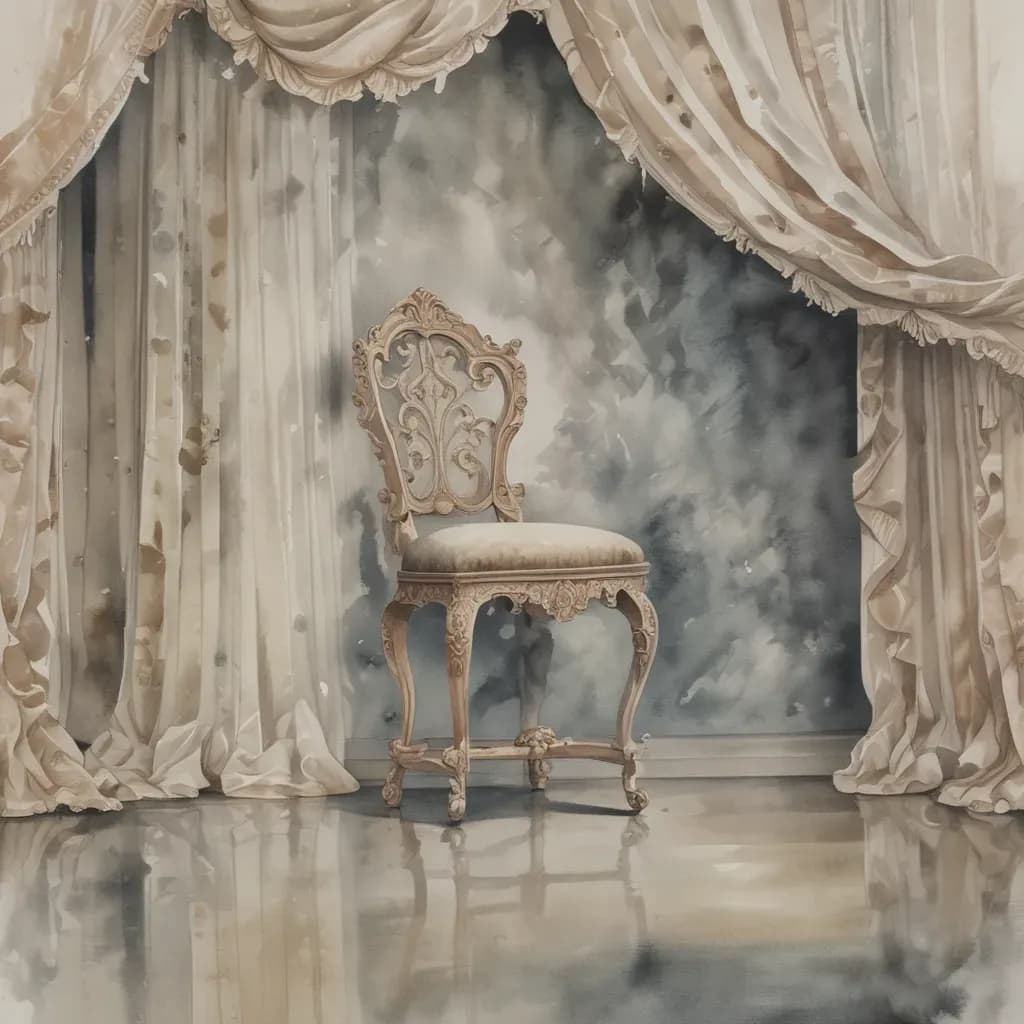
The glass metaphor
The central image is simple and well chosen. Glass is clear, so whatever it holds is visible. It is also brittle, and it fails all at once rather than gradually. By casting the subject of the song as someone made of glass who has forgotten the fact, Kushner folds two ideas into one picture.
The first is exposure. The person in the song believes they are playing a role convincingly, borrowing the manner and confidence of someone they are not. Everyone nearby, the narrator included, can see the seams. The performance fools only the performer.
The second is fragility. Transparent things do not just reveal; they break. The song keeps returning to the sense that the person at its center is closer to a collapse than they realize, and that the admiring crowd will be no help when it comes.
The metaphor is extended in the closing section, where the old proverb about people in glass houses and stones is bent into something gentler and sadder. Rather than a rebuke aimed at hypocrites, it becomes a plea for mercy toward a person who is already close to cracking.
A rise told in small, cold details
The verses sketch the subject's ascent through a handful of images rather than a plot. The narrator stands somewhere high and looks across at the person, noticing their glazed expression. A substance that is supposed to be the source of their euphoria turns out to be an empty one, so the high is partly imagined or staged. Contracts are being signed, and the ink has already dried, a way of saying the commitments are done and cannot be undone.
Taken together, these details describe a person who has said yes to everything quickly. Nothing in the song suggests villainy. The tone is closer to alarm than accusation. The narrator is watching someone make irreversible choices while visibly intoxicated by their own momentum.
The pre-chorus gives the narrator's position away. They claim to have seen all this coming before the lights found the person, and they warn that attention and spectacle offer no warmth when the night is quiet and you are alone with yourself. That line of thought is the emotional hinge of the song. The bright, public life and the private, lonely one are treated as opposites, and the first is no compensation for the second.
The lost younger self
The second verse is brief, but it carries the song's most personal note. The narrator imagines the noise inside the other person's head, a kind of static that drowns out everything honest, and says plainly that the person they once knew is gone. There is a reference to an earlier, childlike version of this person, someone the narrator met when things were simpler and more sincere.
This is where the song stops being a commentary on celebrity and becomes a song about loss. The narrator is not mocking a sellout. They are mourning a friend, or someone like one, who has traded an unguarded self for a polished one. The sorrow is aimed at the missing person, not the present one.
The wordless vocal lines that follow each chorus reinforce this. They work like a sigh or a lament, a place where the narrator stops explaining and simply grieves.
Faith, vanity, and what Kushner knows
Kushner's music has always been shaped by moral and spiritual language. He has said that faith is the most important thing in his life, and that biblical stories he absorbed as a child feed directly into his songwriting.[5][6] "Daylight," his best-known song, is built on biblical imagery that he says he absorbed as a child.[6]
"Made of Glass" does not lean on religious imagery as openly, but the moral framework is recognizable. The song is about vanity and self-deception, about a person who has mistaken applause for substance. The warning about stones, in particular, echoes an older tradition of telling the powerful that judgment cuts both ways and that nobody is as safe as they feel.
His public philosophy fits too. In 2023 he said that vulnerability is freedom.[5] "Made of Glass" shows the opposite case: a person who hides behind a role and keeps their vulnerability concealed, even from themselves. The irony is that the transparency they are avoiding is the very thing everyone else sees.
Who is the person in the song?
The song never names its subject, and Kushner has not, in anything I could find, said who inspired it. That leaves at least three readings open.
The first is that it describes a specific acquaintance, perhaps someone from his own circle who changed as success arrived. Kushner rose quickly, from TikTok virality to a worldwide hit, and he is well placed to have watched peers go through the same experience.[6]
The second is that the narrator is speaking to a version of himself, or to a fear of what he could become. The detached, observational voice can be read as a self-portrait in the third person, with the "you" as a stand-in for the part of him that might be tempted by the same traps. Songwriters often address themselves through an imagined other when the truth is too uncomfortable to say directly.
The third is that the song is a general portrait of an era. Public life now rewards constant performance, and an audience trained on curated images can detect fakeness quickly, even when it cannot say how. On this reading the glass is not just personal, it is cultural: everyone is visible, and everyone is breakable.
I should be clear that none of these is confirmed by the artist. They are interpretations drawn from the song's own details and from what Kushner has said about his themes elsewhere.
Why it resonates
Part of the song's power is its restraint. It does not climax in anger or punish its subject. It watches, it worries, and it leaves the ending open, with the last image a sudden darkness that arrives without warning. That absence of resolution feels more honest than a lecture would.
It also speaks to a very contemporary anxiety. Many listeners, especially younger ones, have watched a friend or a favorite creator get absorbed by an online persona, and have felt the odd mourning that follows when the person they knew seems to disappear behind it. The song gives that feeling a shape and a name without turning it into gossip.
Within the album, it adds a necessary shadow to the larger theme. If Devotion asks what a person is willing to give themselves to, "Made of Glass" answers with one of the costs: devote yourself to an image and the real self can quietly dissolve.
Conclusion
"Made of Glass" is a short song with a long reach. It takes a single clear metaphor, sets it against a handful of cold, precise images of success, and uses it to ask who we become when we are watched. Its narrator has no power to stop the fall, only to describe it with tenderness and to hope someone else will be gentle when it comes. That mix of concern and helplessness is what makes it linger, long after the three minutes are over.
References
Keep reading
More by David Kushner
More Pop
- I'm Still Here Take That
- Masterpiece Take That
- Ooh Laka Laka La Enrique Iglesias
- take me home (4 christmas) Olivia Rodrigo
- Who Do You Think You Are Take That
- Read Your Eyes David Kushner