Maybe Heaven Is a Jazz Club
Most debut albums end with a statement. This one ends with a room. After ten songs of heartbreak, rebirth and self-reclamation, FINAL GIRL closes on a track named for a place that may not exist: a jazz club that is also, perhaps, an afterlife. It runs under three minutes,[1] the shortest closer imaginable for a title that large, and it leaves the listener standing in a doorway.
A note on method before going further. The album arrives on November 6, 2026,[1] and this essay was written ahead of release. No interview about this song exists yet, and no critic has reviewed it. What follows is built from the album's documented history, the artist's own public statements about grief and songwriting, and the placement and title of the track. It is a first reading, offered with that limit in plain view.
A closing track with a question in its title
The title opens with the word maybe. That single hedge shapes everything. The song does not claim that heaven is a jazz club, only that it might be, and a hedge at the end of a record built on hard-won certainty is striking.[4]
The sequence leading up to it matters. The tracklist runs from Silver Screen Baby through When in Rome, Do the Math, Breaks Open and Immortalized, and then lands on this one.[1][4] Titles like Skin Over Bone and Hands of Man suggest a body-conscious, physical record. A song about heaven after all that flesh feels like a deliberate exhale.
The runtime is also telling. At 2:56 it is among the shorter tracks on a 34-minute album,[1] so whatever it says, it says briefly. Short closers tend to work like a final glance over the shoulder rather than a grand finale.
Where the album comes from
To read the ending, it helps to know what the album survived. After her 2023 EP Alchemical: Volume 1, Cameron scrapped a planned second volume and stepped back from music. She has described a period of therapy and of digging into pain and depression, and of feeling that she had drifted from the sound of that EP.[1]
She has also said that her label repeatedly told her the timing was not right, and that she had to push openly for the album to be approved. The record was finally greenlit in 2026, and she bills it as her proper musical introduction.[1] Five singles from 2025 were left off the final tracklist because, in her words as reported, they did not feel confessional enough.[1]
Seen against that history, a record that ends on the idea of an afterlife is less morbid than it sounds. This is an album about getting through something, and the final question is naturally about what comes after getting through.
Jazz, a father, and the sound of home
Jazz is not an arbitrary choice of metaphor for this artist. A 2023 American Songwriter cover story describes her father as a classically trained pianist who played jazz and piano music around the house, and she has spoken of a childhood whose whole architecture was musical.[3]
The same profile notes that he died in 2011, and that she was only beginning to write about him. She told the interviewer that putting the deaths of loved ones into words was extremely hard, because the loss is difficult to grasp, and that saying aloud what once felt impossible brought a kind of freedom.[3]
No source connects this particular song to her father, and it would be irresponsible to claim one. But the pieces sit close together: a closing track about heaven, a title that points at jazz, and a songwriter who has said that grief was the next thing she meant to write toward. It is a reasonable thing for a listener to wonder about, and a reasonable thing to hold loosely.
Why a club, and not a cloud
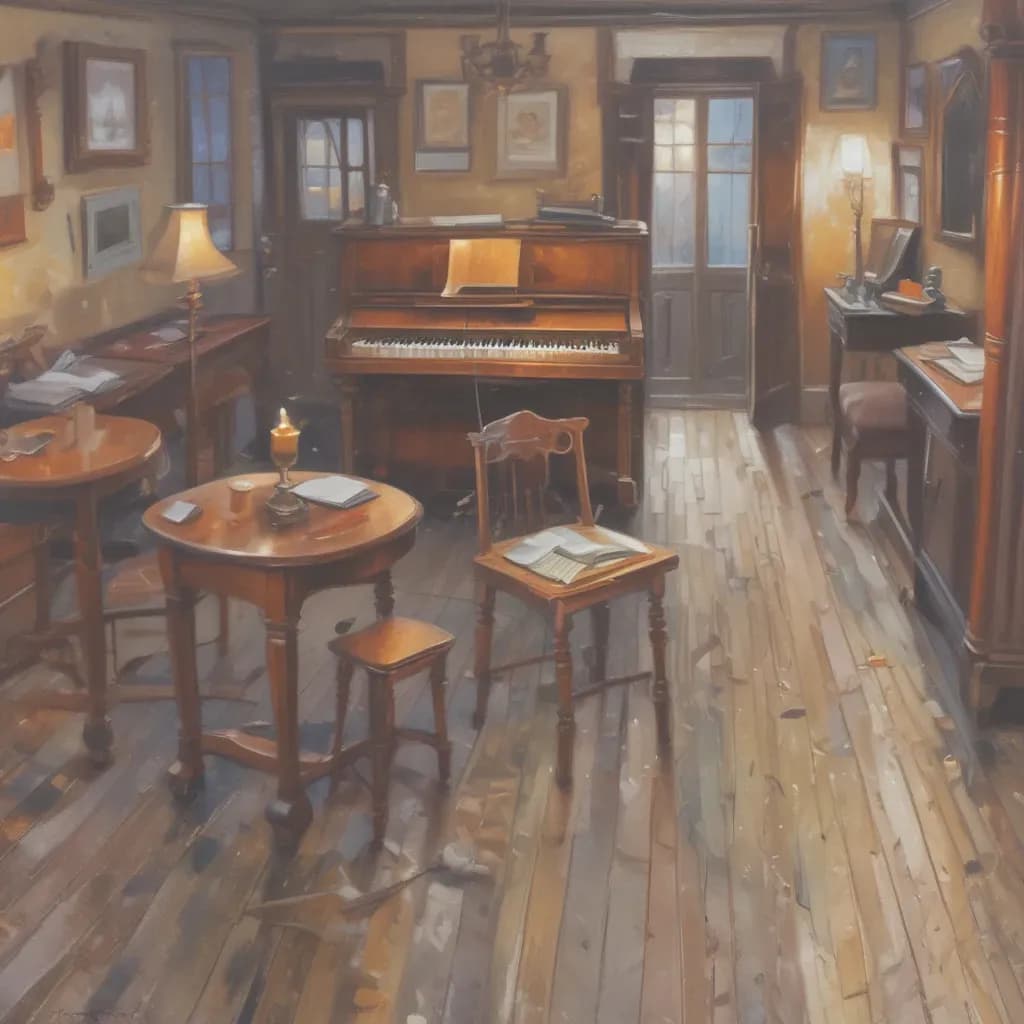
Popular imagery of heaven runs to clouds, gates and harps, all of it airy and silent and a little sterile. A jazz club is the opposite. It is dim, crowded with strangers, full of smoke and clinking glass, and organized around people who are playing together in real time.
That choice suggests a particular idea of paradise. It is not purity or rest. It is belonging: a room where the music is live, where the mistakes are part of the performance, and where you are allowed to arrive late and stay. For someone whose public life began on a television set, where everything is rehearsed, an afterlife made of improvisation has an obvious appeal.
It also fits the album's title. The final girl of horror films is the one who is left standing at the end, bloodied and exhausted, after everyone else is gone. A story about survival needs to say where the survivor goes next, and a smoky room with a pianist in the corner is a gentler answer than most.
Other ways to hear it
The most grief-centered reading takes the title literally. In this version the song imagines a place where the dead are waiting, and the narrator is working out whether she can believe in it. The word maybe then becomes the emotional center, the small allowance a person makes when faith is not available but hope still is.
A second reading is romantic. Cameron has said she co-wrote and recorded a version of the album shortly after beginning her relationship with Damiano David, and that she felt healed, in love and safe.[1] On that reading, heaven is not a destination after death but a way of describing a present happiness so complete that it needs a borrowed word. A jazz club becomes the shape of a good night with the right person.
A third reading is about the music business. Heaven might be the place where she is finally allowed to make the music she wants, free of the delays she has described. A club is a small, human-scaled stage, the opposite of the arena machinery that surrounds pop stardom. Any of these could be right, and the song may hold more than one at once.
Why it may resonate
Closing an album on uncertainty is a quiet kind of bravery. Pop tends to resolve. This record, by ending on a maybe, admits that healing is not a finish line and that some questions stay open. Listeners who have lost someone, or who have simply come through a hard stretch, often recognize that stance more readily than a triumphant one.
There is also the matter of scale. After an album that reaches for big, radio-ready emotion, a short closer in a small room feels like being let in on something. It is the sound of the volume dropping after a long night, when the people who stayed are the ones who mattered.
Conclusion
For now, Maybe Heaven Is a Jazz Club is best understood as an ending written in the conditional. The documented facts are modest: it closes a debut album that took years to reach release, it runs just under three minutes, and its title imagines paradise as a place of live music.[1][4] Everything beyond that awaits the song itself.
Once listeners can hear it on November 6, these readings can be tested against the actual words and arrangement. If the title is any guide, the song will not insist on an answer. It will leave the door open, the band tuning in the next room, and let the listener decide whether to go in.
References
Keep reading
More by Dove Cameron
More Pop
- Georgia on My Mind Ray Charles
- Out of Nowhere Gracie Abrams
- Go Easy Dua Lipa
- CHANEL Tyla
- Espresso Sabrina Carpenter
- Bed Chem Sabrina Carpenter