Messiah
Few words in rock carry as much baggage as the one in this song's title. A messiah is a rescuer, a figure who arrives when things have grown unbearable and promises that the suffering means something. Blind Channel's "Messiah" is interested less in the rescuer than in the people waiting for him, and in the strange fact that waiting, believing and doubting all feel like different shades of the same ache.
The Finnish band describe the song as an exploration of faith, which they call one of the most human things there is.[1] They add a confession that sets the tone for everything else: in their experience, believing in something turns out to be harder than believing in nothing.[1] That single idea, belief as labor rather than comfort, is the best doorway into the track.
A band returning from silence
To hear the song properly, it helps to know where its authors were standing. Blind Channel formed in Oulu, in northern Finland, in 2013, and spent the following decade building one of the most recognizable heavy acts in the country.[4] They describe their style as "violent pop", a blend of nu metal weight, electronic textures and big choruses.[4] In 2021 they won Finland's national selection with a landslide and went on to finish sixth at Eurovision in Rotterdam, famously painting their middle fingers red after being told they could not make the gesture on stage.[4]
Success was followed by two number one albums in Finland, then by an abrupt stop. In October 2024 the band announced an indefinite hiatus.[4] Former vocalist and guitarist Joel Hokka stated in 2025 that he would not return, citing insomnia.[4] The band announced their comeback in August 2026, with a new album on the way.[4]
That album is Painstream, the band's sixth, released on Century Media on October 30, 2026.[3][4] The group frames it as a record that looks at pain in all its forms, from personal struggles to the problems facing humanity, and arrives at hope, unity and strength drawn from shared experience.[1] It was born, they say, from a stretch of intense self-reflection and creative rediscovery.[1] A band that has just survived its own near-collapse, with a changed lineup and a new frontman in Niko Moilanen, is in an unusually good position to write about what it costs to keep believing in something.
Faith as a human reflex
The first thing worth noticing is how the band approach religion. "Messiah" is not a sermon and it is not a takedown. A retail description of the album notes that the song raises questions about faith, fear and spirituality, and those three words are well chosen.[5] Fear sits right next to faith in the description, as if the two were neighbors who share a wall.
That pairing is old and very human. People reach for belief when they are frightened, and belief in turn produces new fears: of being wrong, of being abandoned, of finding out that nobody is coming. The band's own comment about believing in something being harder than believing in nothing points at exactly this tension.[1] Nihilism, at least, asks nothing of you. Faith demands that you keep showing up, keep hoping, keep risking disappointment.
Read this way, the title becomes slightly ironic. A messiah, in the traditional story, ends waiting. In the song's emotional world the waiting seems to be the real subject, along with what the waiting does to a person and to a community.
The cathedral that could fall
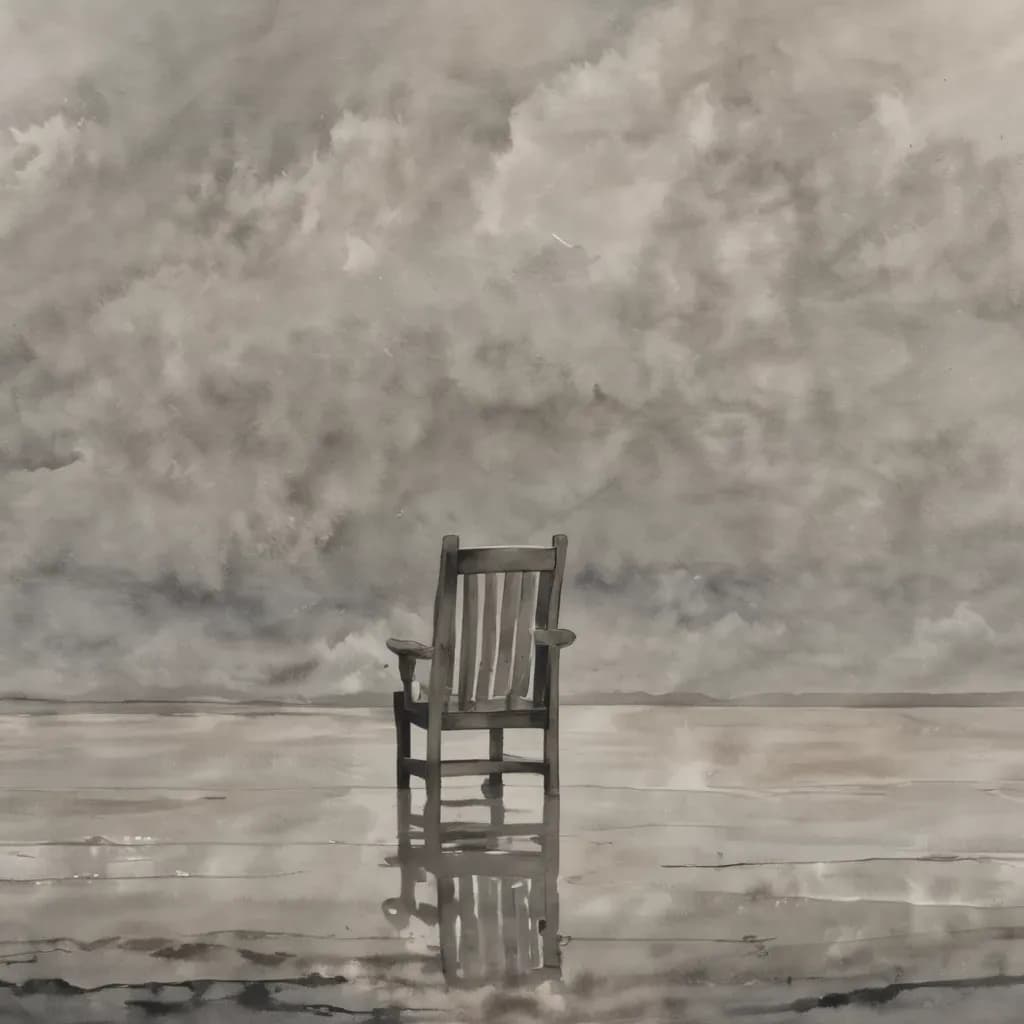
The most striking thing the band have said about the track is about sound rather than words. They set out to write something that echoes like a cathedral that could collapse on you at any moment.[1][2] It is a remarkable design brief, and it tells you how to listen.
A cathedral is built to make a human being feel small and sheltered at once. The vaulted ceiling, the long reverberation, the hush: all of it says that something larger than you holds the space. But the band add a threat to that picture. The structure might come down. Awe and danger live in the same architecture.
Heavy music is well suited to this kind of double feeling. Big, resonant guitars and layered electronics can swell like a choir and then lean hard like a wall of stone. Blind Channel's lineup, which includes Aleksi Kaunisvesi on synths and samples alongside guitar, bass and drums, has always had the tools for both the sacred and the crushing.[1][4] Here the aim seems to be to let listeners feel faith as a physical space, one that is beautiful and not entirely safe.
A story without the band
The official video adds another layer. The band say it is unlike anything they have done before, and that the members do not appear in it at all.[1][2] Instead it tells a standalone story that the song sparked in them.[1] Coverage describes it as cinematic.[1]
This choice matters for interpretation. For a band whose public image has often been loud, funny and personal (the red fingers at Eurovision are a good example), stepping out of frame suggests that the song is meant to be about other people. Faith is a collective experience. Congregations, movements and crowds are made of individuals who want the same thing and are afraid of the same disappointment. By handing the visual side to characters who are not the band, the video seems to widen the song from a personal confession into a portrait of belief in general.
It is worth being honest that the details of that story are not spelled out in the coverage available at the time of writing, so any reading of the video beyond the band's own description would be speculation.
How it fits Painstream
The title Painstream plays on the word mainstream, and the band's stated approach is to look at what it feels like to be human today through the lens of pain.[1] They say they hope the songs give listeners something to believe in, raise questions and make people think, just as the songs did for the band themselves.[1][2]
Placed in that context, "Messiah" works as the record's spiritual center. Other songs on the album tackle personal struggle and human connection; this one asks what people lean on when those things are not enough. The band's recent singles, including "Stars We See" and "Into the Void",[4] point toward a collection that looks upward and downward in turn, at distant lights and at emptiness. A song about faith belongs naturally between those poles.
The album also carries a pointed sense of timing. After a hiatus and a departure, a group that had been defined by swagger and spectacle returned with a record that is openly about doubt, hope and exhaustion. Faith, in that light, is not only a topic but something the band had to practice in order to get back to work.
Alternative readings
One reading is religious in the literal sense: the song as a meditation on organized belief, its comforts and its capacity to harm, with the collapsing cathedral standing for institutions that shelter people until they suddenly do not. The band's language about a building that echoes and might fall lends itself to this view.[1]
A second reading is secular. The messiah can be anything people hand their hopes to: a charismatic leader, a political cause, a partner, a fan community, even a band. Rock music has long played this role for its listeners, and a group that has just returned from the brink knows how heavy it can be to be someone else's source of strength. Under this reading the song is as much about the burden of being believed in as about the act of believing.
A third is personal and psychological. Faith here would mean faith in oneself, in recovery, in getting better. The album's concern with pain and with finding strength in shared experience supports this,[1] and it fits a record made by people who had recently stepped back from the stage to rebuild.
These readings do not exclude one another, and the song's openness is part of its design. The band say they want listeners to ask questions rather than receive answers,[1] which is a fair description of what a good song about belief should do.
Why it resonates
There is a cultural moment behind all this. Many listeners today live without fixed religious structures but are not free of the longing that those structures served. People look for meaning in wellness routines, online communities, politics and fandom, and they often feel the same fear of letting go that the faithful always did. A heavy song that treats that longing with seriousness, without mocking it and without selling a solution, offers something rare.
The sound helps. Metal has always been a genre where doubt and devotion share a stage, from church-organ intros to lyrics about abandonment. Blind Channel bring that tradition into a contemporary frame, with the pop instincts that carried them to a national audience and the production polish of a major-label album. The result is something both large and accessible: you can sing along to it and still be left with an unsettling question.
Early on, the band have made clear that Painstream is meant to belong to its audience now, and a UK and European tour in early 2027 will give the song its first real test among crowds.[1][6] Songs about shared belief tend to find their final shape in a room full of voices.
Conclusion
"Messiah" asks what it means to believe when belief is difficult, frightening and unguaranteed. Its central image of a cathedral that echoes with awe while threatening to fall captures the odd double life of faith: sheltering and precarious, uplifting and heavy.[1] For a band that has gone through hiatus, change and reinvention, the subject feels earned rather than borrowed.
The song does not pretend to know whether anyone is coming. What it offers is company in the waiting, and the stubborn suggestion that holding on to something, anything, may be the most human act there is.
References
Keep reading
More Alternative Metal
- For the Love of Gold Gloom is Okay
- I Don't Trust Tomorrow Bullet for My Valentine
- Wheel Narrow Head
- Giving In Sleep Theory