I Don't Trust Tomorrow
A song about the clock
Some songs are built around a feeling, and some around a deadline. "I Don't Trust Tomorrow" belongs to the second kind. From its title onward, it treats the future as something untrustworthy, a promise that keeps being made and keeps being broken. It is the sound of a person who has stopped believing the next day will be kinder than this one, and who has decided to be furious about it rather than quietly resigned.
That anger is the point. Bullet for My Valentine could have written a mournful meditation on anxiety. Instead they wrote what the band's own frontman has called an absolute monster of a track,[1] and handed a share of it to one of the most ferocious vocalists in modern metal.
Where the song sits
The track was released on 12 November 2026, alongside an official video, as the second single from the band's eighth album, Social Apocalypse.[1][2] The album is due on 19 March 2027 through Spinefarm Records, and the song is its third track.[2] It arrived roughly a month after the title track, which was the Welsh band's first new music in four years.[4]
The album was produced by Carl Bown, who has worked on several of the band's records and who has a reputation for refusing to let artists get comfortable.[2] Frontman Matt Tuck has said the producer never lets you settle, and that pushing attitude shows in how little this song relaxes.
There are only two guest appearances on the record. One is a duet with Chrissy Costanza of Against The Current. The other is this song's guest, Will Ramos of Lorna Shore.[1] For a band that rarely invites outsiders in, that is a notable choice, and it signals that the track was conceived as an event.
What the band says it is about
Tuck's description is unusually direct. He says the song deals with the fear of an uncertain future and the frustration of feeling trapped by life's expectations.[1][3] He wanted to capture the struggle with anxiety, disillusionment, and the sense of time slipping away. Underneath the anger, he adds, there is a fierce determination to fight back, to reject false promises, and to refuse to be controlled by fear.[2]
That summary is a useful map. It names three pressures (the unknown ahead, the weight of expectation, and the passage of time) and one response (refusal). The lyrics, by the account of those who have read them, move through exactly that arc: they begin in a mood of bleak emptiness, where the narrator cannot see a plan or a future they can make sense of, and they move toward defiance.
Theme one: the future as a broken promise
The title does something clever. Trust is a word usually reserved for people, and by applying it to a calendar day the song personifies the future as a untrustworthy acquaintance. Tomorrow has let the narrator down before. It was supposed to bring relief, clarity, security, and it delivered more of the same.
This resonates with how a lot of people live now. Plans feel provisional, careers and housing feel precarious, and every news cycle suggests the ground might shift again. The narrator's refusal to place faith in what comes next is less nihilism than a kind of weary realism, the stance of someone who has been burned by optimism too many times.
Theme two: the trap of expectation
The second pressure Tuck names is the feeling of being trapped by life's expectations.[1] That phrase suggests a narrator boxed in by a script someone else wrote: milestones to hit, a respectable direction to travel, a schedule to keep. When the script stops matching reality, the result is a particular kind of panic, the sense of falling behind a timetable that no longer makes sense.
Here the song becomes more than private anxiety. Expectation is social. It is passed down by family, by employers, by a culture that treats a person's worth as a trajectory. The track's anger is aimed partly at that machinery, and the determination Tuck describes is a determination to step outside it.
Theme three: time slipping away
Pressure from time runs through the whole thing. The narrator feels the days draining, and the combination of dread about what is coming and regret about what is passing creates a squeeze from both sides. There is no safe ground in the future, and the present is vanishing.
Musically, the band mirrors this. The record was tuned down further than anything they have done before, which the bassist Jamie Mathias has described as the heaviest they have ever sounded.[4] Low tunings make riffs feel slow, thick and inescapable, like a weight pressing on the chest, and that physical sensation fits a song about being cornered.
The album around it
Social Apocalypse is a record about a world that seems to be coming off the rails. The band describes it as pairing candid introspection from people worn down by modern life with observations of a planet in disarray.[2] Tuck has talked about how fast everything is changing, how hard it is to find positivity in world events, and how people are being pitted against each other when they could be united.[2]
As a father, he has said, he looks at how different the world is for younger people, and Louder frames the album as his struggle to find hope on their behalf.[2] Seen that way, a song that distrusts tomorrow carries an extra edge. A parent worries about the future in a way that cannot be shrugged off, because someone else has to live in it.
The title track adds a cultural angle. The band has linked the album's name to being glued to our phones, with guitarist Michael Paget calling it doomscrolling and describing people as zombies in the thrall of an algorithm.[4] That image of numbed, passive consumption makes a good companion to this song, whose narrator is the opposite: wide awake, agitated, and unwilling to drift.
Will Ramos and the sound of the fight
Ramos is best known as the vocalist of Lorna Shore, a band whose brand of deathcore pushes extremity to dramatic heights. The press response to this feature has focused on the fact that he does not simply scream: the track gives him a rare clean vocal turn alongside the roar he is famous for.[2] Blabbermouth called it hair-raising.[1]
The casting works thematically. A song about fear and defiance needs a voice that can sound both frightened and monstrous, and Ramos's range lets one performance carry both. Tuck has said the guest takes the song to intense new heights.[3] The contrast between Tuck's melodic, anthemic delivery and Ramos's extremity also reflects the internal split of the narrator, part wounded, part weaponized.
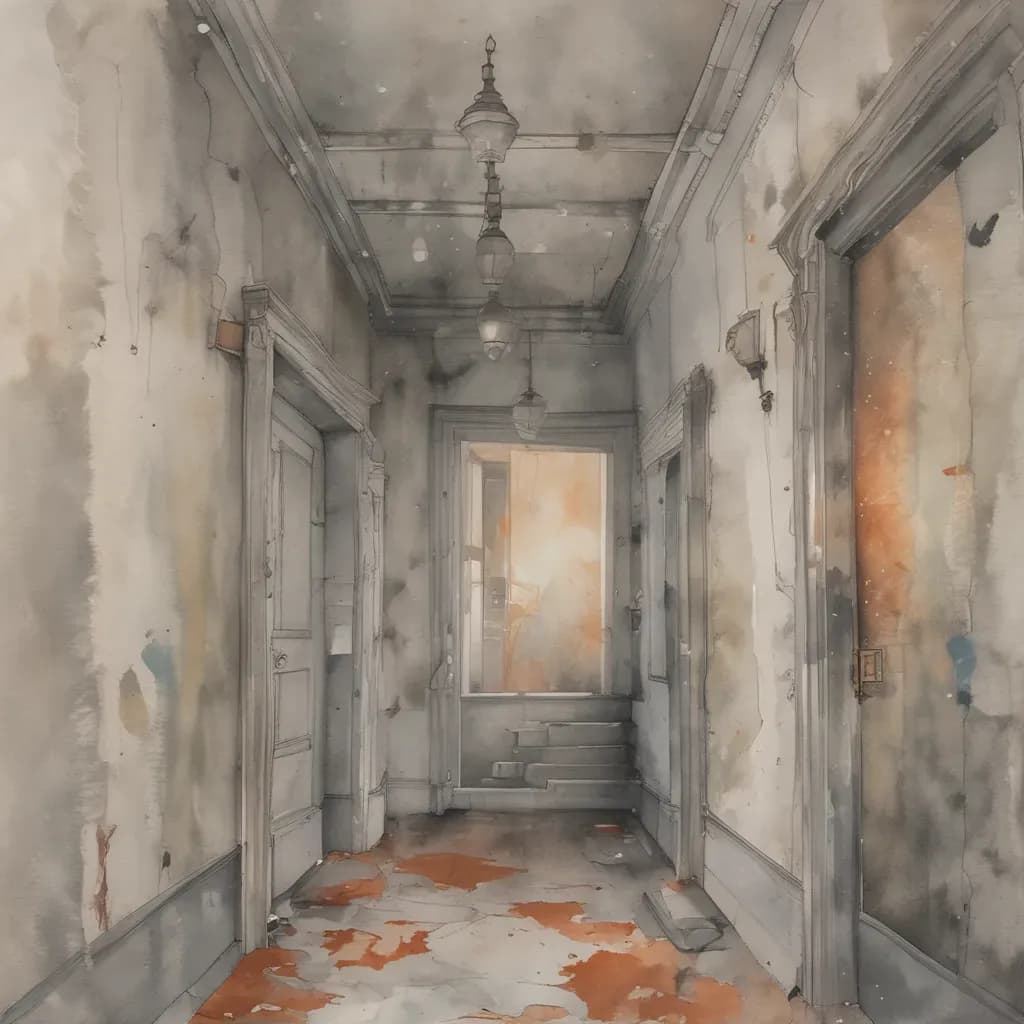
The video adds a visual metaphor. It shows the band performing in a decaying mansion that is invaded by zombie-like creatures who find and attack them.[3] It is a tidy picture of the song's argument: the thing that threatens the band is hollow, shambling and relentless, a swarm that cannot be reasoned with. Whether the creatures stand for despair, apathy, or the screen-numbed crowd is left open.
Alternative readings
It is possible to hear the song less as social commentary and more as a personal reckoning. In that reading, the distrust of tomorrow is about the narrator's own track record: promises made to themselves that were never kept, a future self who always seems to dodge responsibility. Distrusting tomorrow, then, becomes a vow to act today.
Another reading takes the song as a mental health statement. Tuck mentions anxiety directly,[2] and for anyone who lives with it, the future is often the main source of dread. The feeling that tomorrow cannot be trusted is a familiar symptom, and the song's fighting stance can be heard as a way of externalizing that dread into something that can be shouted back at.
A third approach is generational. Placed beside the album's concerns about younger people and a divided world, the song can be heard as a message to those who inherit the mess, an acknowledgment that the old promises of stability do not hold, paired with a call to resist being managed by fear.
Why it lands
Heavy music has always been a place to process what polite conversation cannot hold. What makes this track effective is that it is specific about its enemy without being tied to a single issue. Anyone who has lain awake rehearsing worst cases, or felt the walls of other people's expectations close in, can recognize the territory.
It also arrives at a moment when Bullet for My Valentine are deliberately pushing their sound toward its heaviest point while keeping their melodic identity. Mathias has said the band's DNA remains because of Tuck's vocals,[4] and that balance gives the song both bite and a hook. It is a rare combination of catharsis and craft.
Conclusion
"I Don't Trust Tomorrow" turns uncertainty into fuel. It does not offer comfort or a plan, and it admits that the narrator has neither. What it offers is a stance: if the future cannot be trusted, then the only honest response is to stand firm in the present and refuse to be ruled by dread.
That makes it more hopeful than its title suggests. Beneath the heaviness is a person insisting on agency, which is a form of faith after all, faith in the ability to fight back. It is a song for anyone who has looked at the calendar and felt afraid, and chosen to scream instead of surrender.
References
Keep reading
More Heavy Metal
- Detonizer Fear Factory
- Black Dog Led Zeppelin
- Dead Inside Of Me Trivium
- Crown In The Grave Trivium
- Speaking in Tongues Bruce Dickinson
- Down in a Hole Alice in Chains