Only Acting
Somewhere in the final seconds of "Only Acting," the song stops being a song. The crisp indie-pop production that had been carrying the track dissolves into digital glitches, reversed audio, and harsh guitar feedback. It is not a conventional outro. It sounds like something giving way under sustained pressure. And that, it turns out, is exactly the point.
The tension between the face we present to the world and the feelings we never planned to have is what "Only Acting" is fundamentally about. Kero Kero Bonito built the song with a deceptively sunny surface and a ragged, noisy collapse at the end, so that the form enacts the content in a way few pop songs manage: the structure itself breaks down, just as the narrator's protective performance does.
A Band at a Crossroads
By early 2018, Kero Kero Bonito were navigating a shift their fans did not yet know was coming. The London trio, consisting of vocalist Sarah Midori Perry and producers Gus Lobban and Jamie Bulled, had built a devoted following through the relentlessly cheerful bilingual synth-pop of their debut, Bonito Generation (2016). Their sound was video-game bright, maximalist, and playful, and it had made them unlikely standard-bearers for what would come to be called hyperpop. But between that album and their second, something fundamental changed.
Perry's childhood home in Japan was demolished; photographs of the rubble arrived from her brother. Her primary school closed. A beloved pet died. Lobban spent time at his father's hospital bedside. A trip to Jakarta opened the band to new sonic influences, and Lobban found himself drawn back to live guitar and drums after years of digital-only production.
These accumulated losses, and the disorientation of growing through them, fed directly into a central question: who were KKB now, if not the trio their fans had come to expect? "The past and the present and the future are all mixed up together," Perry reflected in an interview with KEXP,[1] describing a feeling of time becoming unstable, of familiar landmarks disappearing faster than new ones could be built.
Released as a single in February 2018, "Only Acting" was the first public announcement of a different KKB. It was also, notably, the first track the band had ever recorded using live guitar, bass, and drums. The instrument shift was not incidental. "All of us went through a few things in our lives," Perry told My Spilt Milk, "and we wanted to use real instruments to let those emotions out."[2]
The Song and Its Structure
"Only Acting" opens with propulsive, clean guitar and Perry's clear, controlled vocal. For most of its three-plus minutes, it operates as a confident and immediate pop song. The Harvard Crimson, reviewing the single, called its first three minutes "infectiously fun"[3], and the description fits: the melody is hooky, the production tight, the energy sustained.
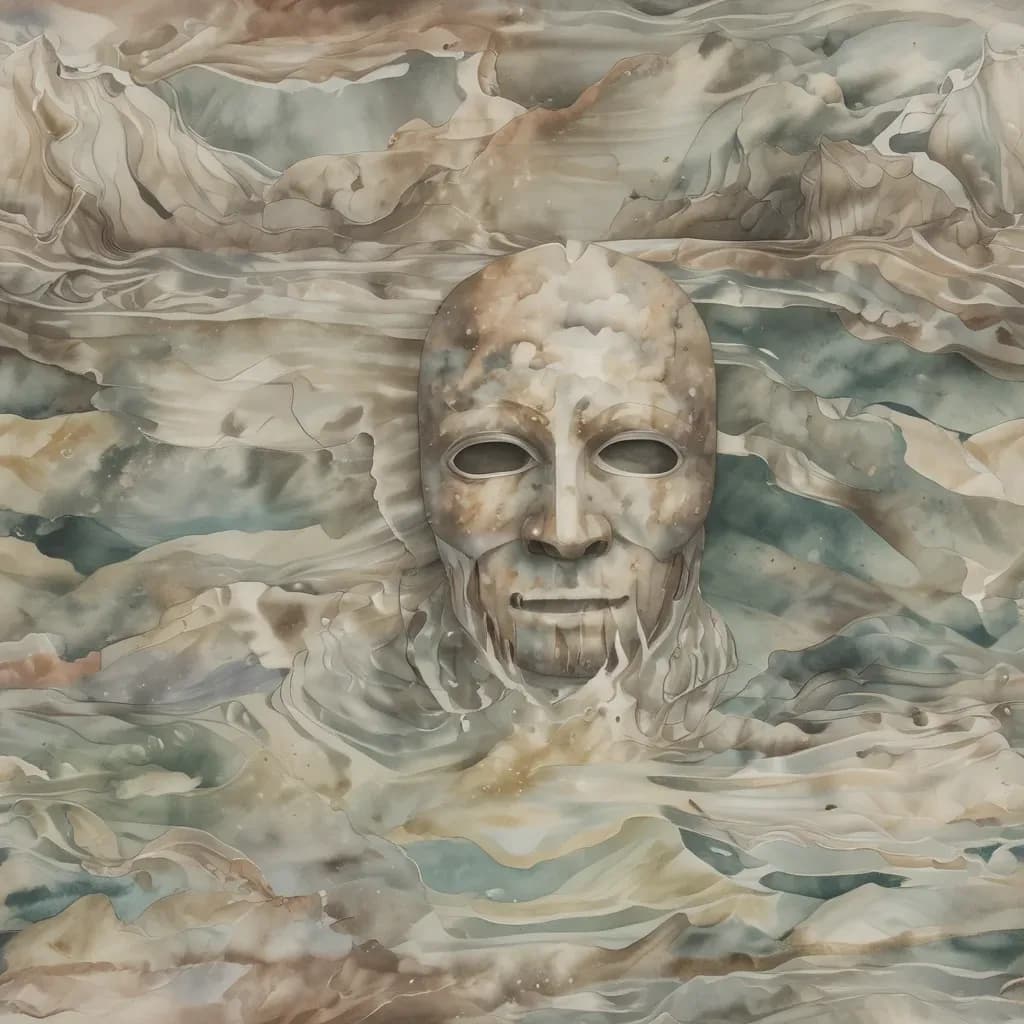
The lyrical scenario is almost literally theatrical. Perry narrates from inside a performance, playing a role on a stage, surrounded by an audience and a temporary cast of other players. The song's central and most quietly devastating move is the gradual admission that the performance has become indistinguishable from reality. She entered the situation intending to act, to hold the world at arm's length through the mediating framework of a role. But the emotions proved impossible to contain within that frame. The performance became experience. The act became life.
And then the song dissolves. The final stretch abandons pop structure entirely, collapsing into layered noise, distortion, digital artifacts, and reversed audio. Pitchfork described the track "bursting into distortion-heavy rock, deteriorating into laser beam synths and jagged guitar squeals."[4] It is abrupt and genuinely unsettling, arriving after the measured warmth of everything that preceded it.
This is not accident. The noise ending is the song's argument made sonic: sustained performance, held together under enough pressure, eventually tears apart. The music does what the lyrics describe.
Who Is the Actor?
The concept of performativity, the idea that identity is not a fixed inner truth but something constructed through repeated, socially shaped behavior, gives "Only Acting" its sharpest thematic edge. The narrator begins in a position of apparent control: she is acting, she knows it, and the audience wants something from her. This is, in the song's framing, how social existence often works. We present versions of ourselves calibrated to our audiences. We play the roles available to us. We manage the impressions others form.
What the song interrogates is whether that detachment is ever really sustainable. If you perform feeling for long enough, where does the performance end? The admission at the heart of the song, that the feelings turned out to be real despite the protective scaffolding of role-play, is the kind of emotional experience that defies neat categorization. The song refuses to resolve that ambiguity, and the noise ending refuses to provide the satisfying final chorus that would paper over it.
One extended analysis of the song situated it within broader conversations about "the ways that we present ourselves to others, how our language, gestures, and interactions with others inform and constitute our perceptions of identity."[5] That framing connects "Only Acting" to a recognizable exhaustion: the effort of maintaining a socially acceptable persona, the vertigo of realizing the performance you adopted to get through the day has become indistinguishable from your actual inner life.
The song also addresses the transience of social casts. The people who populate any given chapter of our lives, the collaborators, the relationships, the audiences, are not permanent fixtures. Roles change. Cast members exit. "Only Acting" treats the grief that can accompany these departures with unusual honesty, without bitterness but without pretending it does not sting.
KKB's Meta-Dimension
What gives "Only Acting" unusual resonance beyond its immediate emotional content is the degree to which it also describes Kero Kero Bonito themselves. The band was candid about this. They described being worried that fans would feel abandoned by the stylistic shift of Time 'n' Place, but also confronting the alternative: continuing to perform their Bonito Generation personas indefinitely. The song is, at one level, a document of that specific artistic anxiety, the fear of becoming permanently identified with an earlier version of yourself that no longer fits.
Producer Gus Lobban articulated the band's response to that anxiety to Flood Magazine with characteristic directness: "We're saying that we're gonna do whatever the fuck we want."[6] This willingness to abandon the expected, to refuse the comfort of performing what audiences already love, is precisely what the song describes at the personal level.
For listeners who came to KKB later, through the lens of their influence on what became hyperpop, "Only Acting" represents an interesting inflection point. The band moved toward rawer, more abrasive sounds at precisely the moment other artists were running their aesthetic ideas through more maximalist, digitally saturated filters. The song's endorsement of emotional honesty over polished presentation, its willingness to let the track fall apart rather than resolve neatly, has quietly shaped a strand of artists interested in using noise and structural disruption as emotional language.
Alternative Readings
Several listeners and critics have read "Only Acting" through the lens of masking, a term used particularly in neurodivergent communities to describe the exhausting process of suppressing natural behaviors and performing neurotypical social expectations. The song's imagery maps closely onto that experience: the performance, the audience's demands, the gradual breakdown. Its resonance with listeners who navigate that particular form of self-management is well documented in fan communities. It illustrates something about the best pop writing: imagery precise enough to carry a specific personal meaning can simultaneously become a container for experiences far beyond the one that generated it.
Another interpretive thread runs through the song's ending specifically. The refusal of resolution, the deliberate denial of the satisfying final chorus that conventional pop structure promises, can be read as a critique of pop music's own demand for emotional tidiness. The listener expects the loop to close. Instead they get static and feedback. The song declines to pretend that everything resolved, which is, in its way, the most honest moment in the track.
A Performance That Became Real
"Only Acting" is a song about the moment the border between performance and feeling becomes impossible to locate. It is about the courage, or the inevitability, of admitting that what you told yourself was only a role has become something more complicated and more real.
The noise ending is not a failure of the song. It is its completion. The pop surface holds for as long as it can, and then the act falls apart, and what remains is something rawer and harder to categorize. As Everything Is Noise observed of Time 'n' Place as a whole, the album is a "pitch-perfect representation of what it is to exist, for better or worse."[7] "Only Acting" earns that description in three minutes of tense, careful pop craft, followed by the honest sound of things giving way.
Kero Kero Bonito, a band that had spent years performing a particular kind of cheerful, synthetic joy, were doing exactly what the song describes: stepping off the stage they had built for themselves, not because they wanted to abandon what came before, but because staying would have been the real performance.
References
- Kero Kero Bonito Talks Traversing Time 'n' Place — KEXP interview with Sarah Midori Perry on the band's emotional transition and the themes of Time 'n' Place
- Kero Kero Bonito Searches for Sense in a Messy World — My Spilt Milk interview in which Perry discusses the shift to live instrumentation on Only Acting
- Kero Kero Bonito Get Far Out With New Single, 'Only Acting' — Harvard Crimson review of the Only Acting single praising its pop craft and experimental ending
- Kero Kero Bonito: Time 'n' Place Album Review — Pitchfork review (6.5/10) describing Only Acting's noise breakdown and the album's experimental pop aesthetic
- Only Acting: Performativity, Expectations, and Experience — Extended critical essay situating Only Acting within theories of performativity and identity
- Kero Kero Bonito Are Doing Whatever They Want — Flood Magazine interview with Gus Lobban on the band's creative philosophy during the Time 'n' Place era
- Kero Kero Bonito - Time 'n' Place Review — Everything Is Noise album review calling Time 'n' Place a pitch-perfect representation of existence