Pandora's Box
The old Greek story is usually remembered for its ending: a lid lifted out of curiosity, a swarm of troubles set loose on the world, and one small thing left behind at the bottom. What gets forgotten is the quiet before the opening, the long stretch in which the container sits on the shelf and everyone knows, vaguely, that it should stay shut. Pandora’s Box by Skepta is a song about the moment after the lid comes off, and about whether a person can ever tell what was inside before he looked.
It arrived in late October 2026 as one of the previews of The Fork and Knife, his first solo album in seven years.[1][2] The album was not yet out when this essay was written, so what follows leans on the single itself, the way the press has described it, and the long arc of the artist behind it.
Where the song sits
Skepta shared the track on 23 October 2026, and Clash framed it as another preview of the record, with the release week built around a takeover of The Cause in London on 6 November.[1] That timing matters. The song is not a deep cut discovered after the fact. It was chosen as part of the introduction to a comeback, and it tells you what kind of comeback this is meant to be.
The album is Skepta’s sixth and his first solo full-length since Ignorance Is Bliss in 2019, released through Big Smoke and Epic.[2][3] In the years between, he built a parallel identity as a dance-floor figure under the name Mas Tiempo and as the founder of the fashion label MAINS.[2] Clash described the new project as a return to rap after a period dominated by club culture.[1]
Reading the song against that background, the title takes on a second meaning. A veteran who has spent years in other rooms returns to the microphone, and the first thing he does is open something that was safer closed.
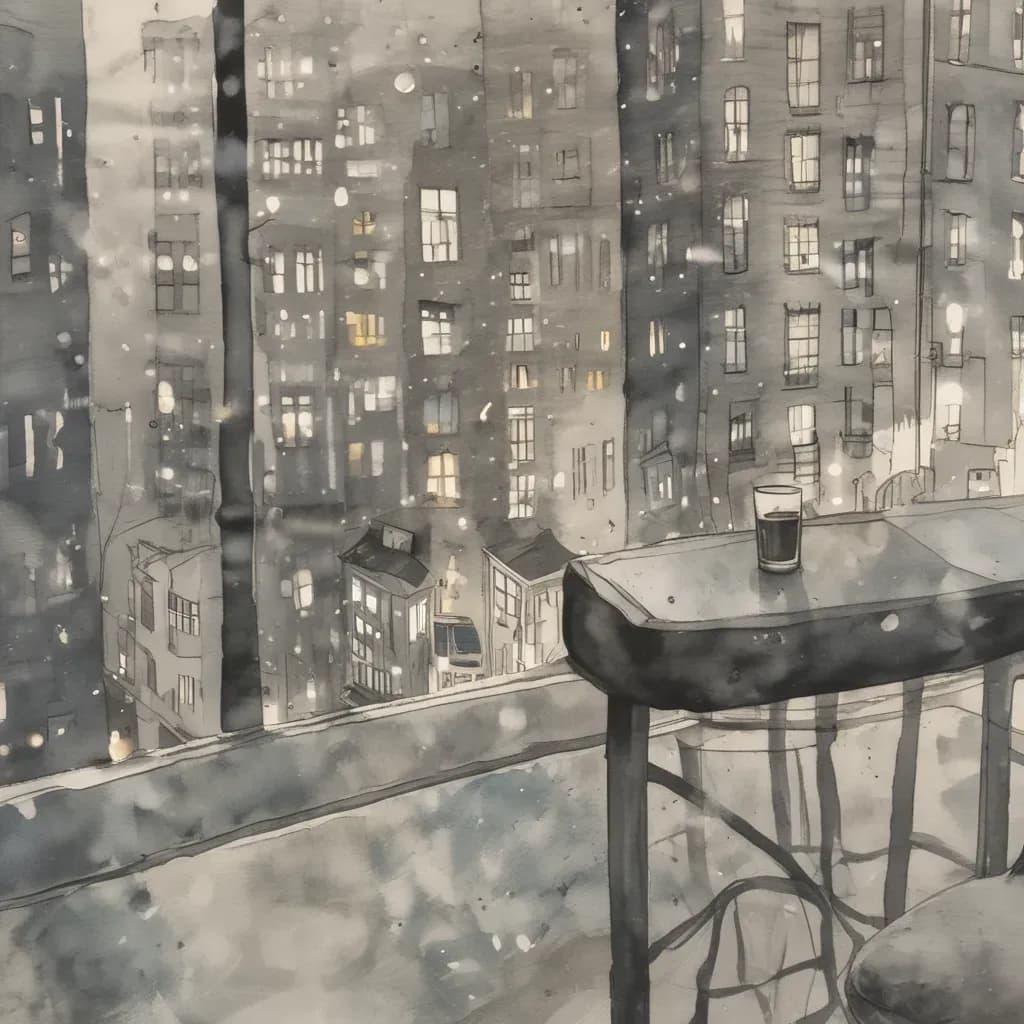
A man looking inward
The most detailed critical account so far reads the song as an inventory of the costs of success. According to that review, the track deals with the isolation of fame, the strange drift away from old friends, and the difficulty of knowing who around you is genuine.[4] It also points to themes of coping through substances under pressure, and to insomnia, burnout and an inner conflict that does not switch off when the studio lights do.[4]
This is familiar territory for rap generally, but it lands differently for an artist with Skepta’s particular history. He rose through the North London grime scene, was an early figure in a genre that treated bravado as a form of armor, and eventually became one of its biggest stars.[3][5] For someone shaped by that culture, admitting fatigue or fear is not a neutral act. It means putting down the armor in public.
The mythological frame gives the confession its shape. In the story, the troubles are not invented by opening the box; they were always in there. The song’s central conceit, as that review reads it, is applying the idea to the inside of his own head: certain thoughts and habits were there all along, and the decision to look at them is what turns private weight into public subject matter.[4]
Swagger and unease at the same time
Not everyone hears the same song. Clash describes the single as packed with muscular swagger and says Skepta is working from a position of strength.[1] The other review, by contrast, hears floating synth lines over a heavy sub bass and calls the mood tense and paranoid, with a delivery that is fast and urgent but precise.[4]
These readings are less opposed than they first appear. Grime has always been able to hold confidence and anxiety in the same bar, and the best of it sounds like someone talking himself up while checking the exits. A performer can sound commanding precisely because the subject matter is unsteady; control of the voice becomes a way of managing what the words admit.
That tension is probably the most honest thing about the track. A purely vulnerable song would be a different kind of statement, and a purely boastful one would ignore the title. What the single appears to do is let both registers sit in one performance, the shoulders squared and the eyes darting.
Fame as a sealed container
Seen as an image, the box is a useful picture of celebrity. From the outside, a long career looks like a finished object, polished and closed. From the inside, it holds everything that was put away to keep the machine running: the sleepless nights, the people who stopped calling, the habits that took the edge off.
There is also a generational angle. Skepta was already established before the current wave of British rappers arrived, and he now works alongside much younger figures. In October 2026 he released a separate single with the producer and rapper fakemink, called "Chiltern Firehouse", which Stereogum described as a clash of styles between two London generations.[5] Standing next to a younger artist is a reminder of how much time has passed, and of how many versions of oneself have been shut away.
It is worth being careful about that link. No review of "Pandora’s Box" that I could find credits fakemink on the track, and the connection here is context rather than credit. The pairing matters to the story of the album’s rollout, not necessarily to the song’s content.[4][5]
The album behind the single
Reports on the announcement describe a record preoccupied with identity: what it means to be British and the child of Nigerian immigrants, to live between cultures, and to connect the Windrush generation to present-day London.[2] The visual world around it draws on 1980s Nigerian-British imagery, football culture and documentary realism, and the sound is said to lean on sound system, club and rave traditions.[2]
On that map, "Pandora’s Box" looks like the private counterpart to the public themes. If much of the album looks outward at heritage, community and place, this single looks at the one-person population that all of that history is carried by. The big questions about belonging have a small, anxious version, and it is the one that keeps you awake.
The first single, "Innocent Smile", a team-up with Chase & Status and Madness frontman Suggs, suggests the album will also be sociable and broad.[5] Placed beside it, "Pandora’s Box" supplies the shadow. A record that wants to feel like a celebration needs a track that admits what the celebration costs.
Other ways to hear it
The most direct reading is the one above, a confessional about fame, pressure and a mind that will not settle. A second reading is more political: the box is not only personal. Opening up a decades-long career in grime, with its debts to a community that did not always get its due, releases a set of questions about ownership, credit and what success obliges a person to carry back.
A third reading is strategic and slightly wry. A comeback single titled after a myth about unleashing chaos is also a promise to the audience. The man who returns to rap after seven years is telling listeners that he has things to say that he has held back, and that you may not like all of them. Whether or not that was the intent, it is an effective piece of positioning.
Because the album was not out when this was written, any firm claim about the song’s place in the track order or its relation to its neighbors would be speculation. Listeners should treat the interpretations here as a first reading, and expect it to be revised once the whole record can be heard in sequence.
Why it resonates
Part of the appeal is how plainly the central image works. Nearly everyone has a version of the box: a topic they have avoided, a habit they have let run, a feeling they decided not to examine. The song gives that avoidance a shape and a name, and it lets a famous person say the unglamorous thing, that success did not solve the problem and may have sealed it in.
It also helps that the confession arrives in a form that does not ask for pity. Fast, controlled and loud, it behaves like a rap record even while it talks about the things rap records traditionally cover up. That combination, honesty delivered with the posture of strength, is a large part of why rap built around mental health has found such a wide audience over the past decade.
Conclusion
In the myth, what remains in the box after everything else escapes is usually taken to be hope. Whether the song offers anything like that is, for now, unclear from the outside. What it does offer is the act of looking: an established star turning the key on the part of himself that fame made easy to ignore, and doing it at the start of a comeback rather than the end of a career.
That choice is the meaning of the song as much as anything it says. The lid is off, the album is about to follow, and the most interesting question is not what was inside but what a person does next, now that everyone has seen it.
References
Keep reading
More by fakemink & Skepta
More Grime
- Chiltern Firehouse fakemink & Skepta
- Innocent Smile fakemink & Skepta
- Revenge fakemink & Skepta
- Secrets of Patriarchy fakemink & Skepta
- Victory Lap fakemink & Skepta
- Cold Shower fakemink & Skepta