Parasocial Christ
Among the modern lexicon of digital anxiety, few phrases land with the surgical clarity of "parasocial Christ." It is at once a diagnosis and a condemnation: the observation that billions of people have fashioned their favorite celebrities, influencers, and online personalities into something functionally indistinguishable from religious icons. That Lamb of God chose this phrase as the title of one of their most acclaimed songs in years is not an accident. Randy Blythe has spent three decades as one of metal's most incisive lyricists, and on this track from the band's twelfth studio album Into Oblivion, he deploys the concept with the force of a medical verdict.
A Song for the Scroll
"Parasocial Christ" was released November 21, 2025, as the second single from Into Oblivion, Lamb of God's twelfth studio album and a record widely received as among their strongest work in years.[1] The song arrived accompanied by an official music video directed by Jon Vulpine, whose stark and desaturated visual approach translates Blythe's critique into imagery of a person consumed and undone by digital noise.[2]
Blythe's public statement about the song is unusually direct even by his outspoken standards. He identifies the attention economy, worth hundreds of billions of dollars, as an industry built on keeping people glued to screens and generating advertising revenue while concentrating that wealth among an already extraordinarily privileged class of tech entrepreneurs.[3] Most pointedly, he names the listener as both victim and complicit participant, writing that listeners are products being sold in a marketplace they have no share in.[3] The song channels the logical conclusion of that framing: stop, disengage, and reclaim the life waiting in the physical world beyond the screen.[3]
With characteristic self-awareness, Blythe acknowledged the irony of distributing this message through the very social media channels he was critiquing. It is a gesture of honest complicity that adds moral weight rather than undercutting the argument.[3]
The Architecture of False Gods
The term "parasocial relationship" was coined by sociologists Donald Horton and Richard Wohl in 1956 to describe the one-sided emotional bonds that television audiences formed with on-screen personalities.[4] They observed that viewers would respond to performers as if they knew them personally, developing feelings of intimacy with people who had no awareness of their existence. In 2025, the concept had migrated from academic obscurity to mainstream vocabulary, partly because social media platforms engineered environments specifically designed to simulate reciprocity. Comment sections, live streams, reply videos, and direct messages create the sensation of genuine mutual connection where none exists.[5]
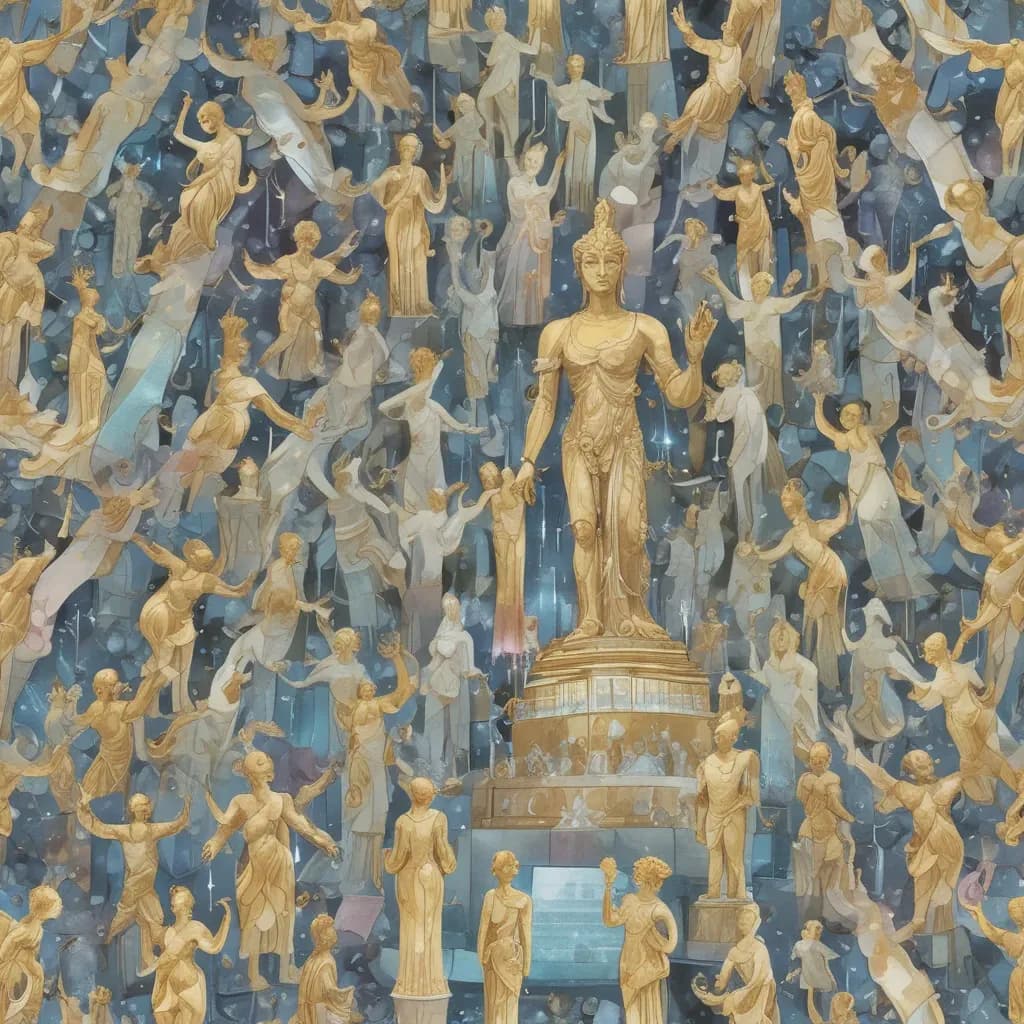
Blythe grafts the religious suffix "Christ" onto this clinical term, and the fusion generates considerable intellectual heat. In Christian theology, Christ is both title and person: the anointed savior, the intermediary between humanity and the divine, the figure in whom ultimate hope and meaning is invested. By naming influencers and media personalities "parasocial Christs," the song suggests that the function of religious devotion has not disappeared from modern secular life. It has been redirected. The hunger for transcendence, guidance, and community that once drove people toward churches and temples now drives them toward follow counts and recommendation algorithms.
The song's central provocation is that this redirection comes at a price the follower does not consciously understand they are paying. The emotional labor of maintaining these one-sided relationships, the time invested, the identity formation organized around figures who will never know the follower's name, is not merely wasted. It is actively harvested. Every click is monetized; every scroll is a contribution to companies whose sole product is the user's own attention span.[3]
The Machinery Behind the Mirror
One of the song's most pointed arguments concerns class and systemic exploitation. Blythe's framing makes the economic logic explicit: the tech industry converts human loneliness and curiosity into revenue for people who are already extraordinarily wealthy, and the users receive nothing in return except the addictive loop of engagement itself.[3] This critique draws on a long tradition of countercultural skepticism about media and consumer capitalism, but Blythe grounds the argument in physical reality rather than theory. The implication throughout is that the real world, made of actual bodies and genuine relationships, is waiting for the listener if they would only stop scrolling.
Blythe's relationship with sobriety and addiction is well documented and public, and it lends his critique of social media a particular personal resonance.[6] Recovery, by his own account, required confronting the ways compulsive behavior provides an escape from authentic experience. The song deploys similar language around social media engagement: the suggestion is that screen addiction operates by the same psychological mechanics as chemical addiction, offering an illusion of connection and meaning while foreclosing on the real thing.
Music That Sounds Like Its Subject
Musically, "Parasocial Christ" is among the most viscerally aggressive tracks in the Lamb of God catalog. Revolver described it as an "anti-tech thrasher," a phrase that captures how the music physically embodies its subject: relentless, overstimulating, and propulsive in the manner of a doom-scroll that cannot be stopped.[7] Angry Metal Guy called it "one of the best songs Lamb of God have written in a decade," citing the riff density and the rawness of Blythe's vocal performance.[1]
Producer Josh Wilbur, a longtime Lamb of God collaborator who recorded the album across multiple locations including Total Access studio in Redondo Beach, California, gives the song a raw and unpolished quality that feels appropriate.[8] This is not a clinically produced album track; it sounds like something born from genuine anger. Mark Morton and Willie Adler's guitar work across the record was shaped by a return to foundational influences, with Morton citing The Haunted, At the Gates, and Meshuggah as reference points: three bands that share a quality of precision-engineered aggression, riff constructions that are technically demanding but delivered with maximum physical impact.[9] On "Parasocial Christ," that lineage is audible. The grooves are identifiably Lamb of God yet sharpened to a new edge.
Why It Lands in 2025
The timing of the song's November 2025 release placed it in a specific and charged cultural moment. Following an American presidential election cycle that had tested virtually every theory about media, misinformation, and the construction of political reality through screens, Blythe's target was impossible to miss.[6] The album's thematic genesis is itself rooted in that political moment: Blythe has described driving through rural North Carolina on election night 2024, listening to The Cure's most recent album, and crystallizing the ideas that would define Into Oblivion.[6]
Research published in Current Opinion in Psychology has documented the central paradox of parasocial relationships: they can offer genuine psychological benefits including reduced loneliness, positive role modeling, and a sense of community, while simultaneously producing documented harms including negative self-comparison, degraded real-world social functioning, and in extreme cases the kind of devoted following behavior that organizations and political actors have learned to systematically exploit.[5]
The word "Christ" in the title is not only about spiritual hunger. It is about the way these attachments can be turned against the follower by those who profit from mass credulity. Heavy metal has historically functioned as a genre that gives its audience permission to feel rage at systems they did not consent to. The audience for Lamb of God is not passive. They are participants in a tradition of confrontational music that has always been partly about reclaiming one's own interiority from commercial and institutional forces. "Parasocial Christ" channels that tradition directly against the machinery that most threatens it.
Alternative Readings
The song invites a second reading that sits beneath the social media critique. "Christ" is not a neutral term, and attaching it to the word "parasocial" raises questions about the nature of religious devotion itself. Every relationship a living worshipper has with a historical or divine figure is, by definition, non-reciprocal. The person in the pew cannot receive a reply from the figure on the cross. Prayers travel in one direction.
Read from this angle, the song becomes a broader meditation on the human tendency to project meaning, intimacy, and salvation onto figures incapable of providing it, whether those figures are influencers with millions of followers or the central icon of a 2,000-year-old religion. The two phenomena may share more psychological architecture than either their defenders or critics typically acknowledge.
A third reading focuses the critique on political messianism: the tendency in contemporary democratic life for voters to invest a single leader with redemptive power, expecting one person to heal wounds that are structural and systemic. Blythe has spoken at length about the accelerating breakdown of the social contract in America,[6] and the figure of the "parasocial Christ" maps directly onto the political strongman who builds a mass following by simulating intimate connection with millions of people he will never meet.
The Honest Exit
At the song's core, behind the thrashy aggression and sharp conceptual provocation, there is something close to genuine concern. Blythe does not position himself as above the problem. His statement about the song explicitly acknowledges the irony of releasing anti-social-media content through social media channels, a gesture of honest complicity that gives the critique moral weight rather than moral superiority.[3]
The implied instruction throughout the song is unambiguous: stop, disengage, and reconnect with physical reality. Heavy metal has never been much for subtlety, and it has never been much for false comfort either. The song offers no utopian vision of a deplatformed world. It simply points at the door and suggests you walk through it.
In a genre that has spent decades exploring themes of rage, grief, mortality, and systemic failure, "Parasocial Christ" stands as one of Lamb of God's most timely and precise diagnoses. Not because the problem of parasocial connection is new, but because the song arrives at exactly the moment when the costs of that problem have become impossible to ignore. It is a bruising piece of music about an invisible wound, delivered by a band that has spent 30 years ensuring you feel every bit of it.
References
- Lamb of God - Into Oblivion Review — 3.5/5 review calling the album among the best since Wrath (2009) and Parasocial Christ one of the best songs Lamb of God have written in a decade
- Watch the video for Lamb Of God's raging new single, Parasocial Christ — Kerrang coverage of the single and official music video release, directed by Jon Vulpine
- Lamb of God Warn About Addictive Scrolling on New Song Parasocial Christ — Randy Blythe's full statement about the song, describing the attention economy, the user-as-product dynamic, and his call to put down the phone
- Parasocial interaction - Wikipedia — Background on the term coined by Horton and Wohl in 1956 to describe one-sided emotional bonds with media figures
- Parasocial relationships, social media, and well-being — Research in Current Opinion in Psychology on the paradox of parasocial relationships: psychological benefits alongside documented harms
- Randy Blythe on Into Oblivion, The Cure, and the Breakdown of the Social Contract — March 2026 interview where Blythe discusses the album's genesis on election night 2024, his views on digital connection, and the social contract
- Hear LAMB OF GOD's anti-tech thrasher Parasocial Christ — Revolver describing the song as an anti-tech thrasher on its single release
- Into Oblivion (album) - Wikipedia — Full album details including production credits, recording locations, and tracklist
- Lamb of God's Mark Morton on Into Oblivion's Guitar Influences — Morton discusses citing The Haunted, At the Gates, and Meshuggah as reference points for the record's guitar approach