Soon
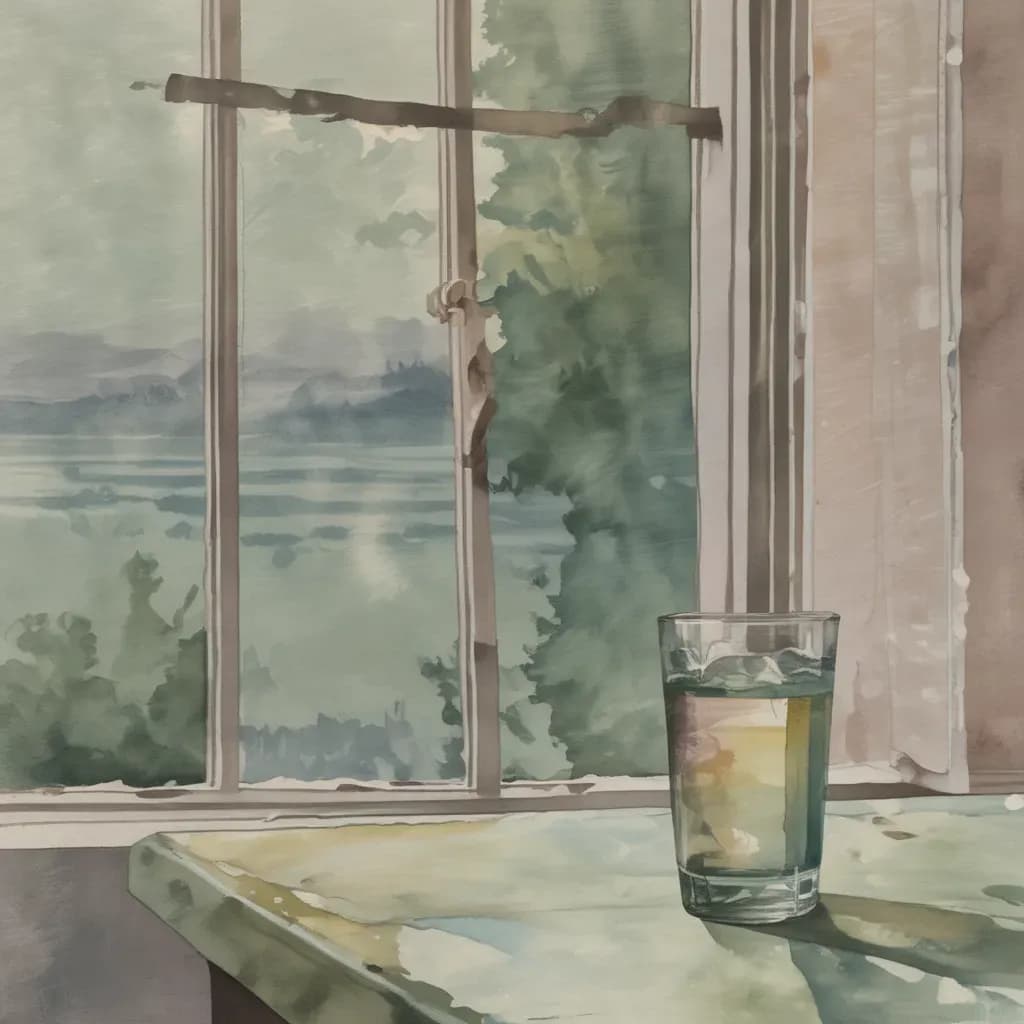
Most pop songs announce themselves. This one arrives like weather. A swaying, sampled-sounding groove sets in first, the guitars bend and smear around it, and a voice drifts through the haze so lightly that it barely seems to belong to a person. By the time you notice you are inside the song, it has already rearranged the room.
"Soon" is the sound of a band that loved dance music and noise in equal measure, and that discovered they were the same thing. It is also one of the loveliest pieces of evidence that a song can mean something without ever making a statement.
A single built in three weeks, after years of delay
"Soon" first appeared on the Glider EP, released on Creation Records on 23 April 1990.[1] The EP was recorded in about three weeks at Woodcray studio in Berkshire, with engineer Harold Burgon.[2] That speed was an exception for My Bloody Valentine. Work on their next album had begun in 1989 and was dragging on, and Kevin Shields and label head Alan McGee agreed to put out EPs in the meantime to keep the band visible.[3]
The song climbed to number 41 on the UK singles chart in May 1990, one of the band's highest placings, and the EP reached number 2 on the UK indie chart.[1][2] A different mix of the track later closed Loveless in November 1991, running just under seven minutes.[1][3] So it lives a double life: a chart single that sounded unlike anything else on the radio, and the final statement of one of the most celebrated albums in British rock.
The album sessions eventually stretched from early 1989 to the autumn of 1991 and passed through nineteen studios, with a reputation for cost and perfectionism that the band has long disputed.[3] "Soon" is a reminder that the records which came out of that long labour were not stiff or over-polished. The track breathes and sways.
The dance record hiding inside a guitar band
The most striking thing about "Soon" is its rhythm. The drums were played by Colm Ó Cíosóig and then chopped and sampled, so that the beat sounds like a loop even though human hands made it.[4][3] Writers have described the groove as influenced by swingbeat and new jack swing rather than by the stomping indie dance of the time, and the Guardian's Alexis Petridis called it funkier than the standard baggy breakbeat of the era.[1]
Shields has explained that he was fascinated by hip-hop producers who built tracks out of samples, and that the sampled feel of the drums was a deliberate aesthetic.[3] He even singled out "Soon" as the track on the album where the drums were meant to sound sampled, and where he thought listeners would hear the dance influence most clearly.[3]
That is part of why the song was heard, by some critics, as a bridge between worlds. Drowned in Sound's Dom Gourlay called it one of the most progressive pieces of music to emerge from the acid house scene, and the band also commissioned a remix from Andrew Weatherall for the second 12-inch of the single.[1][2] A guitar group was not supposed to be able to sit in that conversation. Here it does, and it does so by treating the guitar as a texture rather than a lead instrument.
Guitars that behave like synthesizers
The technique at the heart of the track is what fans call glide guitar. Shields has said that the sounds were created through the tremolo arm of his guitar, bending whole chords rather than single notes.[3] He has also pushed back on the myth that the sound came from hundreds of layered guitars, saying the band actually used fewer guitar tracks than many ordinary demos.[3] According to a Guitar World interview cited on the song's reference page, the central glide part was built from only a few tracks.[1]
The result is a sound that has been described as a sound painting.[1] Pitch wobbles and slides, notes melt into one another, and the guitars seem to breathe in time with the beat. Because the pitch is never stable, the ear cannot settle on one melodic line. It keeps hearing something forming and dissolving.
A voice treated as an instrument
Bilinda Butcher's vocals sit in the mix as another layer of color. Shields said that on Loveless he could not tolerate clear, upfront vocals, and wanted the voice to function more like a sound than a message.[3] Butcher contributed a share of the lyrics across the album, and the writing process was often improvised late at night, with one person laying down a melody and another transcribing words afterwards.[3]
This is why trying to say what "Soon" is about, line by line, misses the point. The words are impressionistic. They gesture at closeness, longing and anticipation, but they dissolve into the arrangement before they can become an argument. Even the question of who wrote them is murky. The usual reference credit goes to Shields, but a blog account suggests the story may be more tangled, and the band has rarely cleared it up.[1][4] Listeners have always filled the gaps themselves.
What the song seems to be about
Read thematically, the song is about anticipation, and the title is the clue. Soon is a word about the near future: something imminent, something that has not quite happened. The music enacts that feeling. The groove never resolves into a big chorus or a final climax. It keeps moving toward something that remains just out of reach, and for seven minutes the listener lives inside that almost.
The closeness of the vocals adds to this. They are intimate and breathy, like something said at a very short distance, yet they are blurred enough that you cannot quite catch what is being said. It is the emotional register of a hushed late-night conversation, or of the moment before a kiss, where meaning is carried by tone rather than content.
There is a second theme running underneath, which is surrender. Much of the Loveless record is about losing yourself in sensation, and "Soon" is the most danceable version of that idea. The beat invites the body to move while the guitars wash over the mind. Nobody is asked to understand anything. The track simply asks for time and attention.
The vaguest hit ever
One of the most repeated pieces of lore about the song is a remark attributed to Brian Eno. As reported, he said it set a new standard for pop and was the vaguest music ever to be a hit.[1] The line was repeated in the British music press at the time, with Melody Maker wording it as the vaguest piece of music ever to get into the charts.[1]
It was meant as admiration, and it points to what makes the song unusual. Vagueness here is a craft. The blurred edges are precisely engineered, and the sense of drift comes from careful decisions about pitch, rhythm and mix. The song proves that you can be indistinct and still hypnotic.
Influence and afterlife
The track has been a touchstone for later musicians. Ken Andrews of the band Failure has cited it as an influence and described it as quite dancey and pop, a remark that captures how the song hides its rock lineage.[1] AllMusic's Stephen Thomas Erlewine highlighted it as one of the group's greatest sound paintings, and the Guardian placed it third in a ranking of the band's best songs.[1]
When My Bloody Valentine returned to the stage in the 2000s and after, "Soon" kept earning a place in the set, as the moment when the rhythm section and the wall of guitar lock into a single pulse. For many fans it is the entry point into the band, because it is the song where the shoegaze texture is easiest to dance to.
It also helps to remember what the band was moving away from. Their earlier records leaned on a harder, more conventional indie pulse, and the Glider sessions marked a turn toward rhythm that felt loose, sensual and physical. That shift carried straight into Loveless, where sampled drums and bending guitars became the signature of the whole record. In that sense the single works as a preview of the album's method, released more than a year before the full statement arrived.[2][3]
Other ways to hear it
Some listeners hear "Soon" as a love song, pure and simple, the sound of someone physically close to another person and unable to speak plainly. Others hear it as a song about the drug-like pull of club music and its promise of transcendence. There are also those who treat it as a statement of method: a band showing, in miniature, how a guitar can be turned into something that behaves like a sampler, and how a studio can be played like an instrument.
None of these readings cancels the others. The song is built so that a listener can bring their own feeling to it, and the shifting texture lets that feeling change from one listen to the next.
Why it endures
"Soon" works because it trusts sensation over explanation. It lets a beat, a bent chord and a half-heard voice carry a feeling that ordinary language would flatten. Decades after its release, it still sounds like the future arriving in slow motion.
The closing position on Loveless feels right. After an album of dense, overwhelming sound, the record ends on a groove that suggests the story is not finished. The title promises something is about to happen, and the music, patient and swaying, is content to leave it there.
References
Keep reading
More Shoegaze
- Expect To Believe Miki Berenyi Trio
- I'll Remember Tonight sombr
- Qualia Humane
- I Know! Swapmeet
- Inside Out Duster
- Sure Hatchie