Stoned and Starving
A Walk With No Destination
Some songs are about a place, and some are about a mood that happens to have an address. "Stoned and Starving" belongs to the second group. It follows a hungry, slightly high narrator through the streets of Ridgewood, Queens, collecting small impressions and never arriving anywhere in particular. It runs about five minutes on an album where most songs finish in under two, and it is the piece that people tend to point to first when they talk about Light Up Gold.[2]
That length matters. The song does not rush to a point because the narrator has no point to rush toward. It simply keeps moving, and the music keeps moving with him.
Where the Song Came From
Light Up Gold was first released in August 2012 on Dull Tools, the small label run by singer and guitarist Andrew Savage. A reissue followed in early 2013 on What's Your Rupture?, and that second life is what turned a quiet release into a slow-building word-of-mouth success.[2][5] Savage later described the original rollout as "so un-strategic," with almost no press for the first five months.[3]
The band itself was a New York creation. Savage and guitarist Austin Brown had known each other from Texas, but Savage was firm in a 2013 interview that Parquet Courts did not exist until he arrived in the city, and that he did not want the group filed under a romantic idea of New York either. The songs, he said, come from what he and his bandmates actually know, such as late-night bodega runs and trips to the DMV.[3] Brown added that the city can feel emotionally isolating even when you are surrounded by people, which he called good fuel for a writer.[3]
Both men also had the kind of day jobs that make a song like this plausible. Savage spent about a year and a half as a shipping and receiving coordinator at a warehouse, while Brown worked as a hotel bellman, a porter and an early morning bar cleaner.[3] Brown said much of the album was written in the three days the band spent in the studio.[3] A record made quickly by people with tiring jobs and little money will naturally be full of hunger, in every sense of the word.
When Stereogum's Amrit Singh posted the song in December 2012, he heard a narrator inhabiting the mind of a drifting street kid, and noted how contemporary the geography felt. An older song, he suggested, might have named the Bowery, but this one names a Queens neighborhood bordering Bushwick.[1] The band has not offered an official explanation of what inspired it, so the song's origins are best read through its details and through the critics who have lived with it.
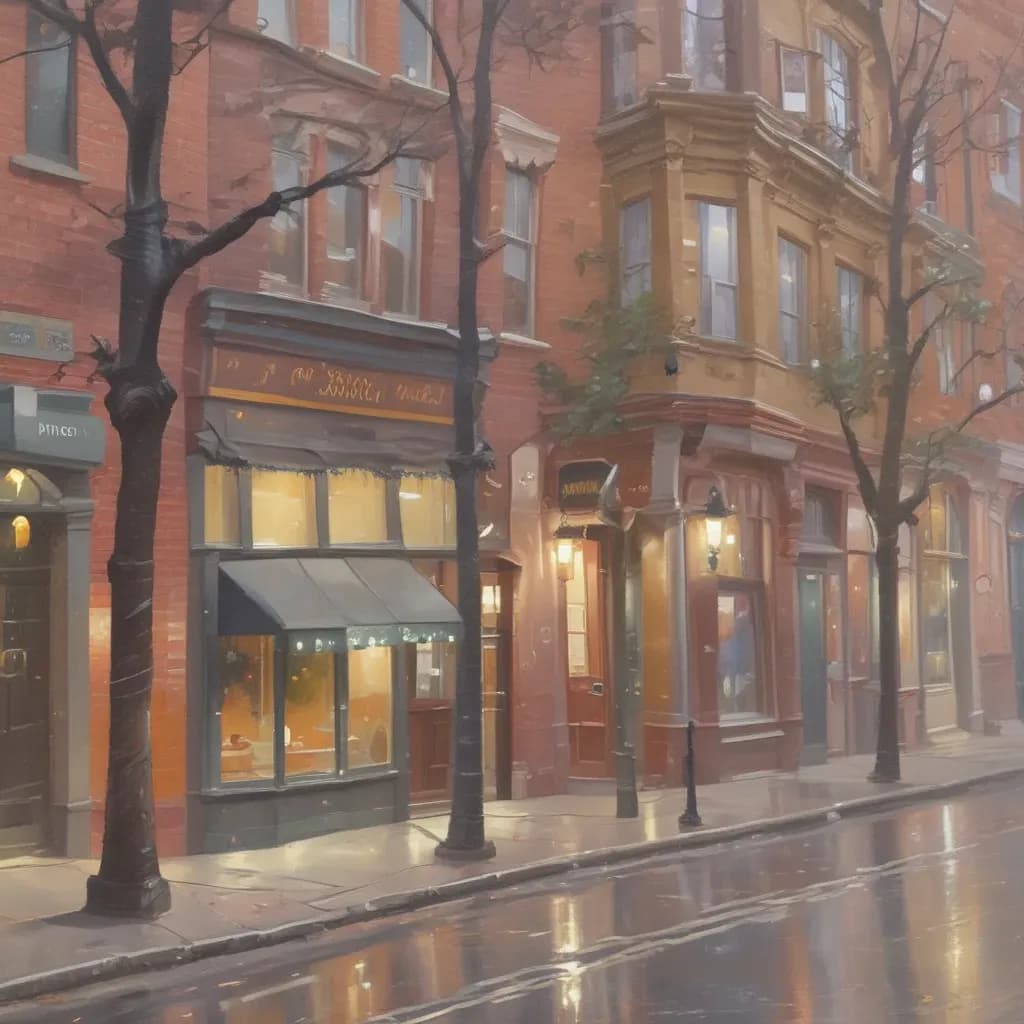
Hunger as a Way of Seeing
The title promises two appetites, and the song keeps them tangled together. The narrator is looking for food, but the search is less a mission than an excuse to be moving. The things he notices are the ordinary clutter of a convenience store: the printed warnings on packaging, the ingredients nobody reads, the glossy pages of magazines flipped without interest, the small gamble of a scratch-off ticket. None of it is dramatic. All of it is rendered with the flat, specific attention of someone whose mind has slowed down enough to see the surface of things.
That is the song's real subject. Being high and hungry here is a way of seeing, and it turns a dull stretch of city into something close to a dream. Ryan Leas, writing on the album's tenth anniversary, called it a tale of aimless wandering and said the Ridgewood opening hits like an iconic first line.[2] Singh heard in it a "timeless, smart-punk malaise," a feeling older than any particular neighborhood.[1]
There is also a bit of comedy in the scale. The stakes are a snack. The narrator treats this errand with the seriousness other songs reserve for war or heartbreak, and the gap between the grandeur of the music and the smallness of the goal is where the humor lives.
Writer's Block and the Searching Artist
Reviewers have offered a few different readings, and they do not cancel each other out. DIY's Jamie Milton read the whole album as a record about needs and wants, a search for an indefinable something, and described this song as documenting writer's block, with the hunger standing in for creative and emotional need.[5] That reading fits Savage's own comments. He said much of the album is about looking for things, whether a snack on a night walk or a bit of inspiration, and he named a different song, "Borrowed Time," as the one about writer's block.[3]
Treble's Justin Stephani went a step further and called the starving, suffering artist the record's main concern, mixing sincerity with a tinge of modern apathy and sarcasm.[6] Seen that way, the walk through Queens is a creative process in miniature. You wander with no plan, you take in whatever is in front of you, and you hope something useful catches. Sometimes nothing does, and the song is honest enough to let that be its ending.
The album's title track, which Savage called the thematic centerpiece of the record, supports this reading.[4] He has said its meaning should stay open or it would lose its magic, and that being somewhat obtuse while remaining emotionally honest is the goal.[3] Brown put it more bluntly: songs that literally describe what they are about are bad songs.[3] "Stoned and Starving" follows that rule. It never explains itself, and it is better for it.
The Sound of Walking
The music does as much interpretive work as the words. Singh heard a post-punk band shaped by the New York of Television, with the looser, vamping feel of Wire and the pulse of guitar bands who love a motorik beat.[1] Leas described a groove that builds almost imperceptibly, driven by an inevitable motorik pulse, with scraggly guitars that finally dissolve into humid feedback.[2]
That description is worth sitting with, because it is a description of walking. The rhythm is steady and unhurried, like footsteps on a warm night, and the intensity rises so gradually that you only notice it once you are deep in. The feedback at the end feels like the heat and haze of the city closing back over the narrator. Treble noted that, apart from this song, many of the album's tracks are hard to tell apart, and that this one stands out as the centerpiece.[6] Its patience is a contrast to the sprinting songs around it.
Apathy, Slackers and What the Song Is Not Saying
It is easy to hear the song as a portrait of slacker culture, and the band was tagged that way early. Treble argued that the song carries the album's most pointed commentary precisely by reinforcing apathy, an ironic gesture in which the shrug is the statement.[6] Leas noted that a narrative formed after Light Up Gold, casting Parquet Courts as stoner dudes with zany references, and that the band seemed to be working against that perception by the time of their next album.[2]
Leas also argued that the later records recast these slacker moments as one scene in a bigger story about young people entering adulthood in tenuous times.[2] That is a useful way back into this song. The narrator is not lazy so much as unmoored, a person with a low-wage routine and a mind that wants something more than the routine offers. His hunger can be read as appetite, as ambition, or as plain economic reality. The song never chooses among them.
A fourth reading is simply that it is a love letter to a specific kind of night. Leas wrote that he himself had been walking around Greenwich Village, neither stoned nor starving, and still felt how close the song hit to the listless feeling of being in his twenties.[2] He added that it also conjures an imagined New York assembled from earlier bands' songs, a city that exists partly in memory and myth.[2] The song works for people who have never been to Queens because it is really about the experience of drifting through your own life at a moment when nothing is asked of you.
A Song the Band Walked Away From
One of the more interesting wrinkles in the song's history is that Parquet Courts famously abandoned it for years, only recently welcoming it back into their sets.[2] Leas suggested the aversion could look willfully difficult, since it was their most popular song for a long time.[2] Bands often grow wary of the track that defines them, especially when it fixes an image they are trying to move past.
Savage has a lighter anecdote about the live version. At one show, fans threw snacks on stage during the song, a gesture he said was appreciated.[4] It is a fitting tribute, a crowd answering the song's hunger with actual food.
Why It Lasts
Light Up Gold packs fifteen tracks into a little over thirty minutes, and Leas described it as a dizzying run of melodies, tangled riffs and brainy one-liners.[2] Comparisons to the Feelies, the Modern Lovers and Talking Heads came quickly, and Treble heard something between the Feelies and the Strokes.[6] Against all that velocity, this song is the place where the album exhales.
It endures because it captures a feeling that is hard to name and easy to recognize: the drifting, underfed, half-focused state of looking for something without knowing what. DIY called the album punk unbounded, both structurally and emotionally,[5] and this song is where that looseness is most generous. It lets a mundane errand stretch until it looks like a small epic.
The best way to hear it may be the simplest. Put it on late, preferably while walking somewhere you have been a hundred times, and let the groove do what it was built to do. The song does not offer an answer to what the narrator wants. It offers company while he looks.
References
Keep reading
More by Parquet Courts
More Post-Punk
- Dum Surfer King Krule
- Dethroned black midi
- Disorder Joy Division
- I Love You Fontaines D.C.
- Processed by the Boys Protomartyr
- Catch It Iceage