Sycamore
The Tree That Refuses to Stay Outside
There is a particular kind of fear that operates beneath the surface of even the closest relationships: the fear of being truly, completely known. Not the composed version of yourself that shows up for ordinary conversation, but the crooked, uncertain, insecure version that lives below the floorboards. Dermot Kennedy has spent his entire career navigating this territory, and on "Sycamore," a spare, almost unbearably intimate track from his third album The Weight of the Woods, he reaches deeper than he ever has before, right down to the roots.
The song opens with a vision of the future shaped by a single tree: its root system working its way upward through the floorboards of a home, slow, persistent, and utterly unstoppable. Kennedy's choice of the sycamore is precise rather than decorative. This is not a tree of epic symbolism. It is sturdy, shade-giving, quietly tenacious. Its root system is famously invasive, capable of lifting paving stones and cracking foundations, finding its way through the smallest gap with unhurried certainty. What Kennedy sees in that tree is the truth about himself, and about anyone who has ever tried to keep certain feelings safely contained.
Coming Home to the Forest
The Weight of the Woods was released on April 3, 2026, and represented a significant reset for Kennedy, who had spent the years since his second album Sonder (2022) touring at a punishing intensity, often performing over two hundred shows a year.[1] The consequences were physical and severe: his voice began to fail from accumulated strain, and he eventually spent two weeks in complete silence, forbidden from speaking. The experience proved clarifying. When Kennedy returned to writing, he was done with the co-writing circuit in Los Angeles and London, sessions he described as demoralising. He wanted to make something rooted in a specific place rather than assembled from industry-approved parts.[2]
The album was built in close collaboration with producer Gabe Simon, who had worked with Noah Kahan and Lana Del Rey and who relocated his family to Rathcoole, County Dublin for six weeks to understand what Kennedy's landscape actually meant to him.[2] The two drove through Kennedy's personal geography together before a note was recorded: the place where his first heartbreak happened, roads walked as a teenager, sites where family members had died. They collected instruments from across the country, brought in traditional players including Cormac Begley on uilleann pipes, and recorded a choir in a shadowy church as a winter storm knocked out the power outside.[3]
The forest behind Kennedy's parents' house, on the border between County Dublin and County Kildare, gives the album its title and its imaginative center.[4] Kennedy has described the woods as representing home itself, not as a nostalgic concept but as an active, living source of strength and meaning. That specificity of place is inseparable from "Sycamore," which names one of the trees growing in that landscape and asks what it means when the roots of your origins follow you inside.
Roots and Armour
The emotional core of "Sycamore" is an act of self-disclosure that functions almost as an ultimatum. Kennedy's narrator strips away all protective language and presents himself as he actually is: vulnerable, broken, insecure. These are not qualities people generally volunteer in relationships. They are the truths we edit, soften, or disguise behind more presentable versions of ourselves. What makes the song remarkable is the way Kennedy frames this disclosure not as a confession seeking forgiveness but as a condition seeking acceptance. The listener understands that the narrator is asking to be seen in full, or not at all.[5]
This tension is deepened by what might be called a songwriter's paradox at the heart of the lyric. Kennedy's narrator acknowledges that he has never encountered a song capable of teaching him how to say what he is trying to say. For a musician whose entire creative life has been devoted to finding language for feeling, this is a startlingly candid admission. It situates the song itself within a conversation about the limits of art as a vehicle for intimacy. No melody, however carefully crafted, quite captures the experience of standing at someone's door with your defenses finally gone. The song gestures toward something that outstrips its own capacity to express it, and that tension is where its power lives.
The fear Kennedy describes runs in two directions at once. There is the fear of being exposed: of allowing another person to see the broken and uncertain interior that ordinary life keeps well hidden. But alongside that is a second fear, harder to name, of self-knowledge itself. The narrator worries about what he might discover if he examines his own past with genuine honesty, about the weight of choices made and their accumulated moral consequences. He is not only anxious about another person's response. He is anxious about what the act of being honest will reveal about himself.
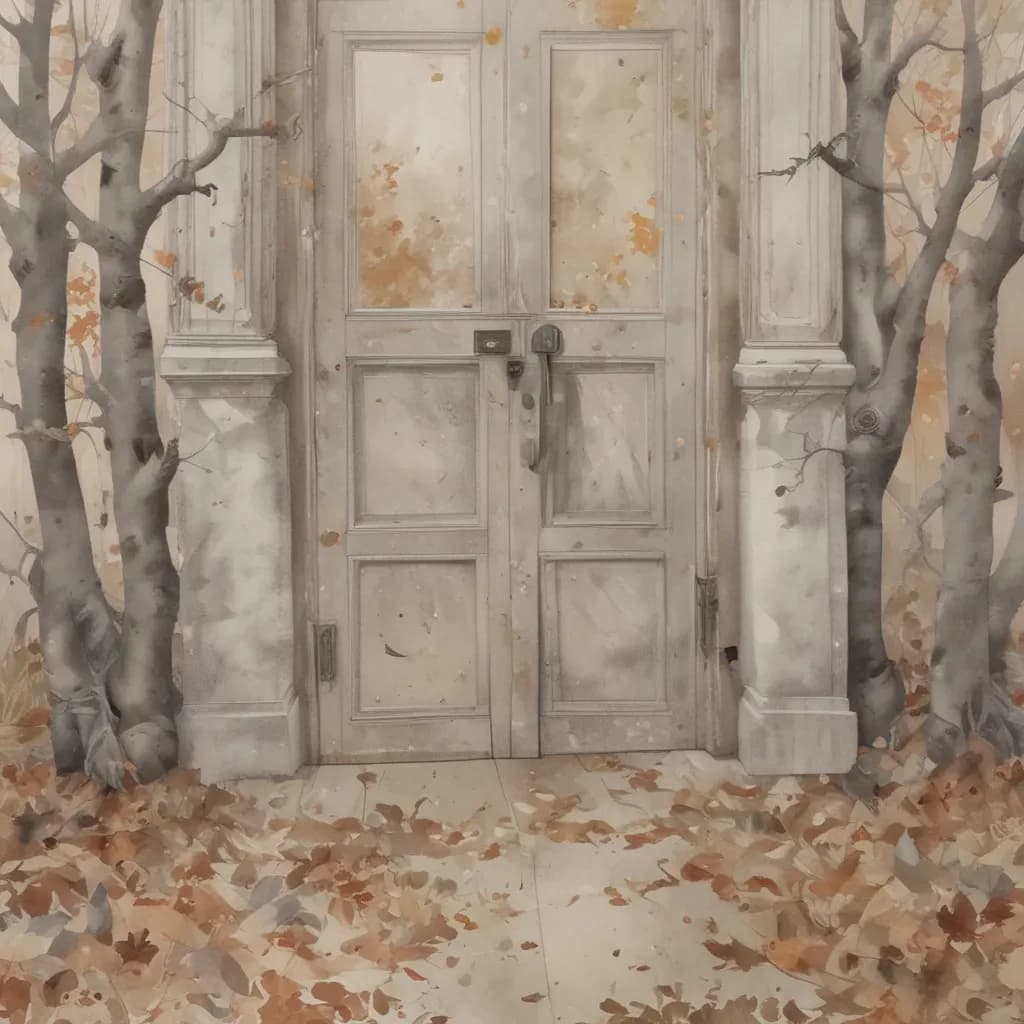
The sycamore tree holds both fears together. It is the thing growing beneath the surface of the domestic space, the thing that was always there, working upward through the dark. The image is not violent but it is inexorable. Kennedy is not describing a sudden emotional breakthrough. He is describing the slow, inevitable arrival of something long suppressed, something that was never going to stay buried no matter how carefully the floor was maintained.
Multiple critics noted the song's quality of fragility, the sense that it might fracture under the weight of its own emotional directness.[4] That fragility is structural as much as emotional. The arrangement gives the lyric nowhere to hide. There is no wall of sound to retreat behind, no production gesture to signal where the feeling should go. The song arrives in the listener's space the way the roots arrive through the floor: quietly, insistently, without asking permission.
Kennedy's Place in the Irish Tradition
"Sycamore" belongs to a tradition of Irish songwriting that treats emotional vulnerability as a form of courage rather than weakness. Kennedy has cited Damien Rice and Glen Hansard as direct influences,[1] and both of those artists built careers on the premise that anguished sincerity is a legitimate artistic mode rather than sentimentalism to be embarrassed about. In Rice's most celebrated work, emotional collapse was practically the subject matter. In Hansard's songs, spoken particularly through his work in Once, the inability to speak directly about feeling is itself treated as a kind of music. Kennedy inherits this lineage and extends it into the arena of contemporary folk-pop, where the stakes of emotional disclosure are higher because the audiences are larger and the risk of perceived performance is always present.
That risk has attached itself to Kennedy's reception throughout his career. A strand of critical response to The Weight of the Woods questioned whether Kennedy's emotional intensity is manufactured, whether the sincerity is curated for an audience rather than inhabited.[4] The same charge has followed artists like Noah Kahan, with whom Kennedy shares a producer. "Sycamore" addresses this critique not by arguing against it but by making the argument structurally: a song this stripped-down and this willing to sit in discomfort has limited capacity for performance. The spare production, praised by Hot Press in their assessment of the album,[6] refuses the emotional amplification that tends to mark Kennedy's more arena-ready material. The listener either believes it or they don't, and the song does not try to persuade.
The sycamore tree also carries specific resonance in the Irish landscape tradition, where particular trees are bound up with memory, identity, and the texture of local place. Kennedy's use of the tree is not simply a poetic metaphor imported from literary convention. It is grounded in a specific forest, a specific border between two counties, a specific childhood.[3] Darkus Magazine described the album as finding Kennedy drawing "deep inspiration, energy, and strength from his native Ireland," and "Sycamore" is perhaps the track on which that grounding is most audible.[7] The tree is not a symbol chosen from outside the experience. It is simply what was growing in the forest behind the house, and Kennedy turned toward it because it was already there.
Another Way to Read It
It is possible to read "Sycamore" as something other than a love song addressed to another person. The imagery of roots growing through floorboards, of nature reclaiming an interior space, can be understood as a meditation on home itself, on the way the landscape of childhood gradually reasserts itself in adult consciousness no matter how far one has traveled or how thoroughly one has tried to outgrow it.
The future being shaded by the sycamore could suggest protection and comfort as readily as intrusion and weight. Shade is not only darkness; it is relief from exposure. If you hold this reading alongside the vulnerability theme, a different picture emerges: the narrator is not only demanding to be accepted by another person. He is accepting himself, allowing the landscape and the truths he carries from it to break through the carefully maintained floor of his adult life.
Read this way, "Sycamore" is a homecoming song. Not the triumphant kind, but the honest kind, in which the person you left and the person you became finally face each other without pretense. This reading sits comfortably alongside the album's broader argument, articulated across tracks like the title song (ID: 745) and its reprise (ID: 744), that the weight of where you are from is not a burden to shed but a resource to carry consciously.
The Tree Doesn't Ask Permission
Kennedy has described wanting The Weight of the Woods to be "not this perfect, polished thing,"[2] and "Sycamore" is the album's most explicit embodiment of that intention. It is a song about the courage required to admit that you do not have the words. To stand before someone, or before yourself, in your broken and insecure entirety. To trust that this is enough to build something on.
The sycamore does not ask permission to grow. It finds the gap and keeps going, indifferent to whatever has been built above it. Kennedy is making the same argument about emotional truth: that it will surface eventually, with or without our cooperation, and that the only real choice is whether to meet it consciously or to wait for it to crack the foundation. "Sycamore" is his attempt to do the former. To kneel at the door before the door is taken off its hinges.
References
- Dermot Kennedy - Wikipedia — Biographical overview: early life in Rathcoole, education at Maynooth, career milestones, and discography
- Dermot Kennedy: 'I was freaking out about my voice. I did two weeks where I didn't speak' — Irish Times interview covering Kennedy's vocal health crisis, recording philosophy, and the inspiration behind The Weight of the Woods
- How Dermot Kennedy Returned to His Roots and Found Hope in the Dark — Rolling Stone feature on the making of The Weight of the Woods, Kennedy's immersive recording process with Gabe Simon, and the album's Irish landscape inspiration
- Dermot Kennedy: The Weight of the Woods review — Irish Times critical review of the album noting Sycamore's fragility and Kennedy's nature-focused concept
- The Masterpiece in the Undergrowth: Why The Weight of the Woods is Dermot Kennedy's Definitive Moment — Music and Gigs review examining how Kennedy finally reconciled folk roots with stadium ambition, and assessing Sycamore's place within the album
- Album Review: Dermot Kennedy, The Weight Of The Woods — Hot Press 8/10 review calling it Kennedy's magnificent third album and praising his return to folk roots
- Album Review: Dermot Kennedy Finds His Roots in the Wild with 'The Weight Of The Woods' — Darkus Magazine review calling it a triumphant return to form and examining Kennedy's use of Irish landscape