Technicolor Steamboat
Nickelback have spent more than two decades as rock radio's most reliable arena act, and as the internet's favorite punchline. Their reputation rests on big riffs, gravelly choruses and songs about heartbreak, hard living and getting even. So it is a genuine jolt when track nine of their eleventh album opens with a twangy acoustic guitar, a shimmer that sounds like sitar, and a gentle invitation to climb aboard a boat.
"Technicolor Steamboat" is the strangest and gentlest thing on Everything Under the Sun, and it may also be the most revealing. It is a song about wonder, about letting go of control, and about the pleasure of being led somewhere you cannot map in advance.
Where the song sits
Everything Under the Sun arrived on October 30, 2026, through Virgin Music Group. Press coverage framed it as a record that covers the whole range of what the band does, from stadium rockers to quieter, more emotional writing. Blabbermouth scored it 8 out of 10 and singled out its emotional side, not just the heavy guitars.[4] RIFF Magazine gave it 7 out of 10 and described a spread of styles running from heavy to soft.[1]
Within that spread, this track is the outlier. RIFF calls it an atmospheric acoustic campfire jam and one of the band's softest, rootsiest moments, a rare step outside the box.[1] The same review praises the rhyme schemes and the alliteration in the writing, which hints at how much of the song's pleasure comes from sound and play rather than plot.[1] It also reports a cameo from fellow Canadian Ryan Reynolds, which fits the loose, friendly mood of the thing.[1]
Louder reached a similar verdict from a different angle. Its reviewer called the song tasteful and excellent, noted the Laurel Canyon style vocal harmonies and the sitar-like color, and said that heard blind, nobody would guess it was Nickelback. In that reading, it is one of the places where the band leaves its comfort zone and gets surprisingly good results.[2]
Credits and band commentary are scarce. At the time of writing, no interview with the band about this particular song has surfaced, and the reviews do not name its writers or producer. That means the interpretation below rests on the finished recording, the critics' descriptions and one detailed reading of the lyrics, not on a statement of intent from the songwriters.
A ticket to somewhere else
The lyrics read as a storybook trip. According to the lyrics site that offers the fullest breakdown, the narrator begins by receiving a golden ticket and swallowing it, the way you might take a sweet or a hallucinogen, and the world immediately turns vivid and slightly unreal.[3] From there the scenery is whimsical: wishing fountains, mountains that seem to be made of crumpled paper, and bells ringing somewhere in the distance.[3]
The image is borrowed from children's fantasy, the kind of candy-factory logic where an ordinary object is secretly a pass into a better-colored universe. That childlike surface is the point. The song is not trying to be dark or dangerous about altered states. It treats the experience as a gift, something offered with a smile.
The title does a lot of the same work. A steamboat is old-fashioned and slow, a vessel of river towns and lazy afternoons. Adding a Technicolor palette pushes it into a different era altogether, the saturated, slightly artificial brightness of mid-century film. The result is nostalgia and psychedelia at once: a past that never quite existed, painted in colors that real life seldom supplies.
The invitation is the hook
The emotional center of the song is its refrain, which is a plain invitation to everyone within earshot to come aboard and drift away together toward a place nobody has been.[3] The listener is addressed directly, and a spoken introduction sets the same tone, like a host promising that you are about to enjoy yourself.[3]
That matters because so much of Nickelback's catalog is about private grievance. Their best known songs tend to feature a narrator who has been wronged, who is nursing a regret, or who is bragging about a lifestyle he does not entirely believe in. Here the narrator has no enemy and no ex. He wants company. The refrain is repeated three times at the close, so the song ends with the door still open and the gangplank down.[3]
The communal gesture also explains the harmonies the critics noticed. Layered voices singing together are the musical version of a crowd climbing onto a boat. The arrangement enacts what the words propose.[2]
From river to cosmos
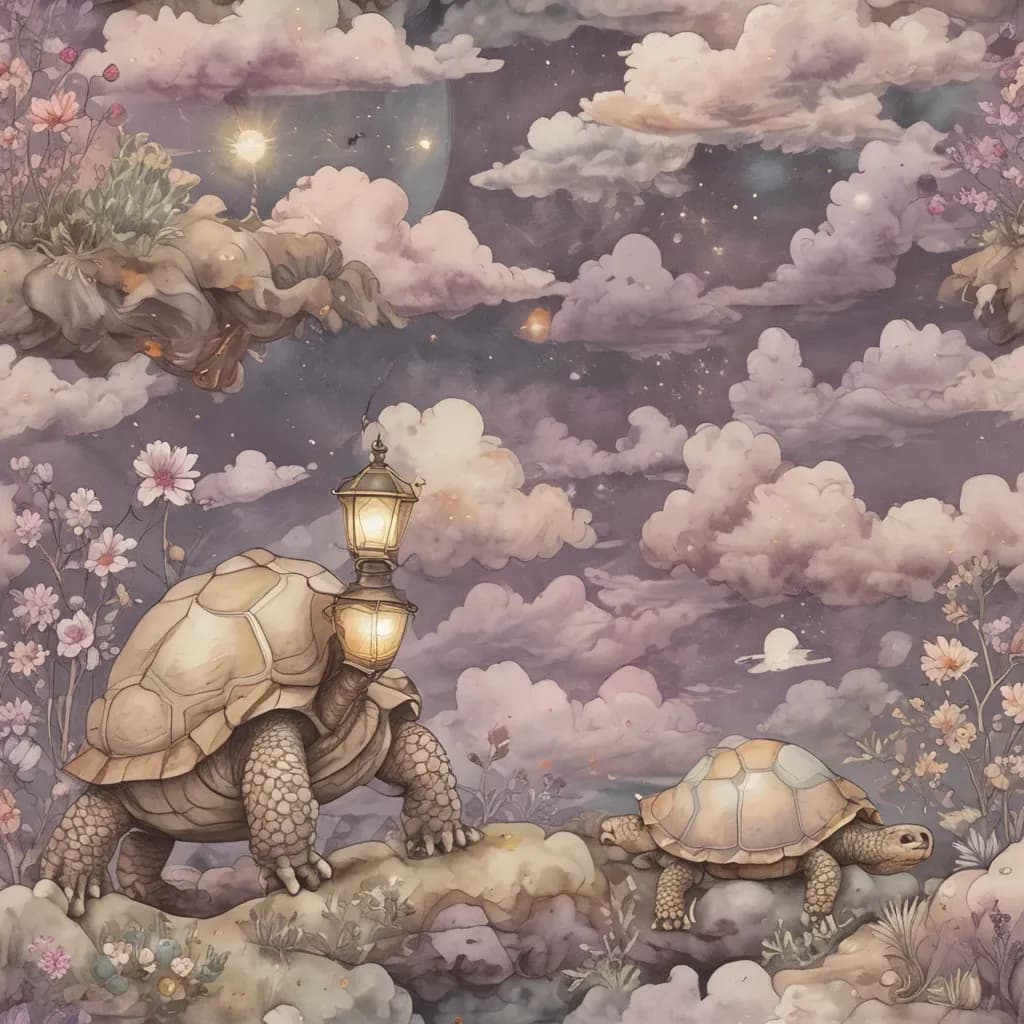
As the trip deepens, the imagery moves from the earthly to the cosmic. Clouds begin to breathe and speak in languages the narrator does not know, and tortoises step in as translators.[3] Later the view rushes through a tunnel of solar systems that open like flowers, with stars and comets circling the moon.[3]
This is classic psychedelic territory, and the song's attitude toward it is worth noting. The strangeness is never frightening. A tortoise translating for a cloud is about the most reassuring way to imagine an incomprehensible universe. The creatures are slow, patient and helpful, which suggests the song's real subject is not intoxication at all but a particular frame of mind: relaxed, curious and unhurried.
The lyrics site sums up the overall message as an encouragement to slow down, stay curious and enjoy wherever the ride goes.[3] That is a modest, almost homespun philosophy, and it suits the music. A band known for volume chooses here to make a case for slowness.
Why it resonates
There is a reason the track stands out even among a record already praised for its range. Nickelback's audience knows the band's strengths intimately, and the band has spent recent years openly addressing the jokes made at their expense. Against that backdrop, a song that simply sets all of that aside and plays for pure pleasure is disarming.
Louder's remark that you would not guess the band from the recording is, in a sense, the song's cultural significance. Surprise is the most valuable currency a heavily mocked act can spend. When a group with a fixed public image delivers something that does not fit it, listeners who came ready to roll their eyes have to listen again.[2]
It also fits the way the album was positioned, as a record with room for lightness alongside the arena anthems.[4] The relaxed tone of the song suggests a group comfortable enough with its position to indulge a daydream.
The sequencing helps too. Landing at track nine of twelve, the song arrives after the listener has settled into the album's familiar rhythms, and it works like a pause on a long drive, a chance to roll down the window and look at the scenery. A record that mixes crunching rock with tender ballads needs an interlude like this to keep its pacing honest, and the band appears to understand that.
Other ways to hear it
The most direct reading is the one above, a literal psychedelic voyage in the tradition of sixties pop, where color and wonder stand in for chemistry. But the song is open enough to support others.
One alternative treats the ticket and the boat as a metaphor for music itself. A song can be a golden ticket: swallow it, let it dissolve, and the ordinary room around you changes. On this view the invitation is addressed to the audience of a concert or an album, and the journey is simply listening. The critics' emphasis on the song's sonic textures, the sitar color and the stacked harmonies, gives that idea some support.[2]
A second reading hears it as a bit of escapism for tired adults. A record dense with heartbreak and defiance can use one track where the narrator steps out of the argument altogether, and a children's story is a convenient costume for that. The innocence of the imagery then becomes the emotional payload, a wish to feel the way you did when a fountain could grant wishes and a paper mountain was just a mountain.
A third, more cautious listener might hear nothing more than craft. RIFF's attention to rhyme and alliteration suggests a writer enjoying the sound of words for their own sake.[1] Not every song needs a thesis, and this one may be content to be a pleasant place to spend a few minutes.
Conclusion
"Technicolor Steamboat" works because it asks for so little. It does not need the listener to understand a grievance, share a heartbreak or enjoy a riff. It asks only that you step onto the boat and look at the colors.
For a band that has made a career of sounding like the biggest room in town, that quiet confidence is the surprise. The song suggests that behind the volume there is a group that still enjoys play, still likes a good story, and is willing to follow a tortoise into the stars if the melody is right. Whether you hear a drug trip, a love letter to music or a simple daydream, the gangplank is down and the invitation stays the same.
References
Keep reading
More by Nickelback
More Psychedelic Rock
- Neon Signs Miley Cyrus
- Crossroads Cream
- Sunday Morning The Velvet Underground
- Somebody to Love Jefferson Airplane
- White Rabbit Jefferson Airplane
- Hey Joe Jimi Hendrix