Sunday Morning
Few songs open a debut album as gently as this one. A celesta chimes like a music box, a bass line ambles along, and a voice sings with a kind of weary tenderness about a bright morning. It sounds like the start of a lullaby. Then, over a little under three minutes, the mood curdles. The sunlight starts to feel like surveillance, and the calm turns out to belong to someone who has not slept.
"Sunday Morning" is the sweetest-sounding track The Velvet Underground ever put on record, and it is also one of their most unsettled. That gap between the surface and the nerve underneath is the whole song.
A single that nobody planned
The song exists largely because a record executive's worry became a songwriting assignment. Producer Tom Wilson felt that the album the band had been making for Verve needed another number with lead vocals from Nico, something with the potential to work as a single.[1] The group had already recorded the bulk of the album across 1966, so this was a late addition, cut in November 1966 at Mayfair Recording Studios in Manhattan. It was the last song recorded for the record.[1]
Lou Reed and John Cale reportedly wrote it on a Sunday morning with Nico's voice in mind, and the band had even played it live with her singing lead.[1] In the studio, though, Reed took the lead vocal and Nico was moved to the background.[1] The decision gave the song a very different character. Nico's glacial register would have made it sound like a distant pronouncement. Reed's hushed, slightly worn delivery makes it sound like a confession.
The track was released as a single in December 1966, with "Femme Fatale" on the other side, and it later opened the album when that appeared in March 1967.[1][3] It did not chart. A trade review at the time, from Cash Box, called it a haunting, lyrical, emotion-stirring chant, which is a fair summary of what the song does even if the market was not listening.[1]
Warhol and the assignment of paranoia
The most repeated story about the song involves Andy Warhol, who managed the band and is credited as the producer of the album. Reed later recalled that Warhol suggested he make the song about paranoia, and that the idea appealed to him.[1] Reed also described the moment in which the song's central warning arrived: a line about the world standing behind you and someone always nearby who will call out. He considered it the ultimate paranoid statement, because it implies that the world cares enough to watch you at all.[1]
There is some disagreement about how much Warhol actually contributed. One account has Reed already holding a guitar part with no words, and Warhol proposing a song that sounded cheerful while dealing with loneliness, isolation and paranoia. The writer of that account admits the story is difficult to prove or disprove.[2] The broader picture of Warhol's role on the album is also contested. His name is on the credits, and he designed the famous banana sleeve, yet several people close to the sessions, including Reed and Cale, pointed to Wilson as the real producer.[3]
Whatever the exact wording, the story clarifies the song's design. Reed was asked for something that could pass as a pop single, and he answered with a pop single whose subject is dread. It is a Trojan horse with a very pretty horse.
The sound of a bright morning
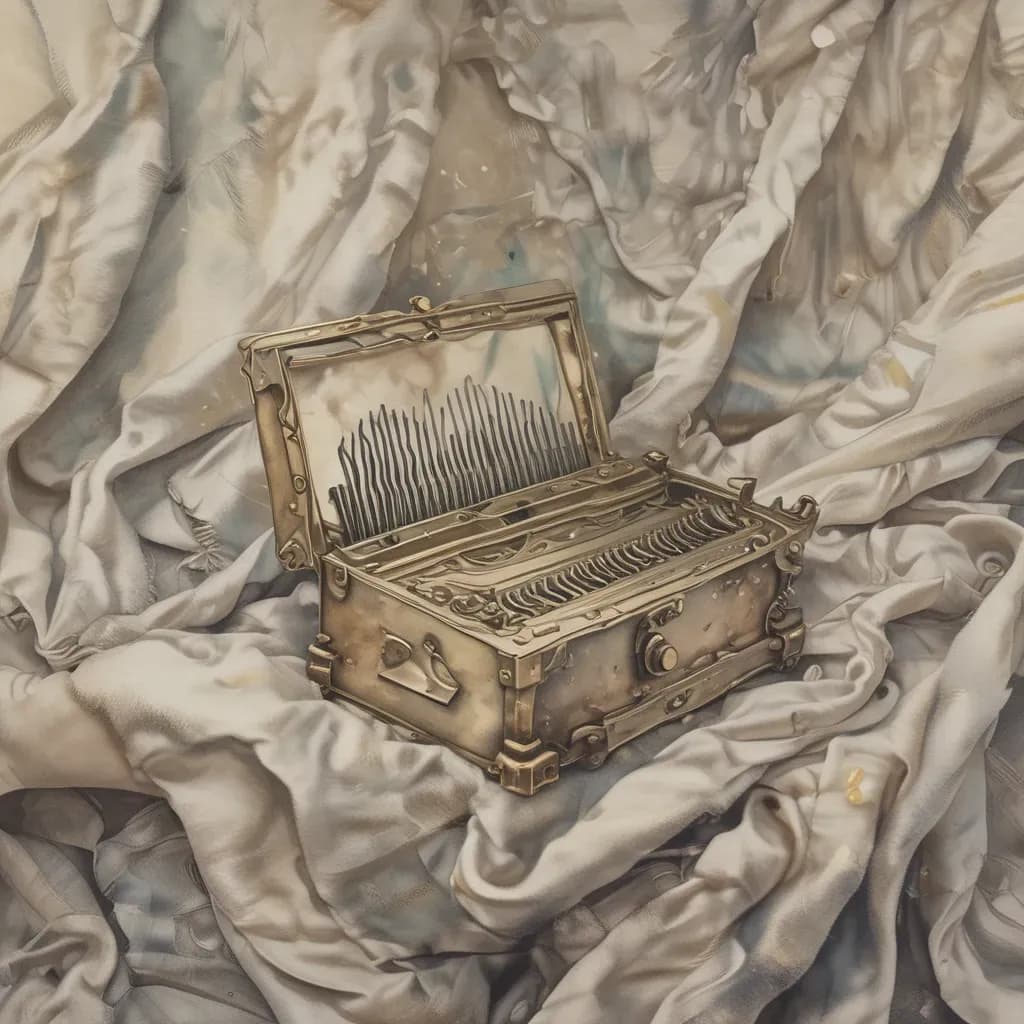
The arrangement does most of the emotional work. The track is in F major, and it is more polished than almost anything else on the album, a deliberate reach for radio.[1] Cale noticed a celesta lying around the studio and decided to use it, and he added electric viola and piano as well.[1] The celesta is the key choice. It is the instrument of nursery rhymes and ballet scenes, and it gives the song a shimmer that suggests innocence.[1]
Sterling Morrison, normally the band's second guitarist, played bass on the track, an assignment he reportedly disliked.[1] Moe Tucker's percussion stays soft and unhurried, and Nico's backing vocals drift in the distance like someone humming in another room.[1] Nothing in the arrangement raises its voice. That restraint is what makes the lyric unnerving, because the music keeps insisting that everything is fine.
Critics have noticed the effect. AllMusic's Mark Deming called the song dreamy pop, and another writer describes it as lulling the listener into a false sense of security before the harder material that follows.[1][2] That is an accurate account of its position in the running order. The album goes on to cover heroin, sadomasochism, street-corner drug deals and a screaming avant-garde finale. "Sunday Morning" is the last moment of safety, and it is already not quite safe.
Hangover, comedown, or both
The song's meaning rests on a mood more than a plot. The narrator wanders through the early hours of a day when other people are heading somewhere ordinary and respectable, and he is aware of every eye on him. The lyric offers advice, even tenderness, but the advice is a warning. The narrator moves through the morning with the sense that he is being observed, followed and gently judged by everything around him. The sunlight does not comfort him. It exposes him.
Morrison, who played on the record, gave the most grounded explanation of what it is about. He described the feeling of crawling home after a Saturday night out while other people are on their way to church, with the sun already up and you hiding your eyes like Dracula.[1] That reading is funny, and it is also exact. It treats the song as a portrait of the vampire's dawn: someone who belongs to the night and has been caught out by the day.
Far Out's Ben Forrest ties the song to Reed's drug use, reading the surface idyll of weekend optimism as a cover for drug-linked paranoia, distrust of the world and regret over wasted years. He notes that the drug connection is subtler here than on the album's more explicit songs.[2] That is an interpretation, not a documented confession, but it fits the facts of the band and the period. Paranoia is a common companion of the long sleepless night, and the Sunday of the title is the day when the bill arrives.
Kindness that sounds like a threat
One reason the song lingers is that its voice is hard to classify. The narrator seems to be offering care. He speaks gently, he gives counsel, he sounds like a friend leaning over a shoulder. Yet the content of the counsel is that you are being watched, and that the person watching may be the world itself. Care and surveillance become the same gesture.
That ambiguity is the heart of Reed's remark about the song. If the world is looking out for you, then the world is also looking at you. A reassuring presence and a menacing one cannot be told apart. The line the song turns on is both a comfort and an alarm, and the arrangement refuses to tell you which to choose.
There is also a quiet theme of lost time. The mood of the song is that of a person measuring how much of life has slipped away while he was awake in the wrong hours. The Sunday morning here is not a fresh start. It is the day after, when the damage is visible and the world has gone back to its routines without him.
Where it sits on the album
The Velvet Underground & Nico was recorded in April, May and November of 1966 and released in March 1967, and it sold poorly at first.[3] It has since become one of the most cited albums in rock history, largely because it treated subjects that popular music had avoided and did so in a voice that was cool, literate and unshowy. Reed had been working as a staff songwriter for a budget label before the band formed, and he brought a pop writer's craft to material that pop writers did not touch.
"Sunday Morning" shows that craft in its purest form. It would be easy to hear it as the album's one concession to commerce, the track that was sweetened to please Wilson. It works better as a thesis. The band's subject was always what lies beneath a pleasant surface, and here they put the thesis in its simplest form by using the most pleasant surface they could build.
The song also set a template that later bands would follow for decades. The pairing of luminous production with a troubled interior can be heard in dream pop, in indie balladry and in every record that makes anxiety sound like a lullaby. The track has also attracted covers from artists as different as Orchestral Manoeuvres in the Dark, who recorded it in 1993, and the Yugoslav punk band Psihomodo Pop, who sang a version in Serbo-Croatian in 1988.[1]
Other ways to hear it
Not every listener hears paranoia. Some take the song at something close to face value, as a tender meditation on a quiet morning and the loneliness that comes with being awake while the world is still. On that reading, the narrator is a sympathetic companion rather than a haunted one, and the warning is a kindness. The music supports that view, since it never actually turns sinister.
A third reading treats it as a song about performance. A man who has been out all night must now put on a face for the daytime world, and the fear is of being found out. The song then becomes an anthem for anyone who has ever felt that their private state is plainly visible to strangers on a bright street.
The song can hold all of these readings because it is built from contradictions that never resolve. It is a pop single about unease, a lullaby about insomnia and a warm voice delivering a cold fact.
Why it still resonates
Anyone who has stayed up too long knows the strange vulnerability of the morning after, when ordinary light feels too strong and ordinary people seem to be living in another country. "Sunday Morning" captures that sensation without exaggeration. It does not dramatize the night before. It shows only the thin, bright aftermath.
It also manages something rare in songwriting, which is to let sound and meaning disagree without either one winning. The celesta says everything is lovely. The voice says to be careful. The listener is left in the space between them, which is exactly where the narrator lives.
More than half a century on, the song still opens the album as a kind of false welcome. It invites you in gently, and by the time the guitars arrive on the next track, you realize the invitation had a subtext all along.
References
Keep reading
More Art Rock
- Breezeblocks alt-J
- Hunger of the Pine alt-J
- Go (Carnaval De Luz) U2
- If The World Is At War We Better Not Be U2
- Going Shopping The Strokes
- Falling Out of Love The Strokes