Torn
Most family songs are about reconciliation or about escape. "Torn" is about the long, quiet middle, the stretch where a mother sits in a house that used to be loud with her children and cannot find a way to bring them back to the same room. It is the closing track of U2's Carnaval De Luz, and it carries a second weight that no listener can set aside: it is Dolly Parton's last recorded vocal.[1][2]
That double life, a story about a divided family sung by a voice that was close to leaving the world, is what makes the song linger. But it is also a well-built piece of songwriting in its own right, and it deserves to be heard as one.
How the song came to exist
The origin story is unusually warm for a rock band meeting a country legend. According to Bono's account in a Rolling Stone interview, he first approached Parton about a side project with an Irish-folk flavor. She told him the idea was a little too Irish for her, and then offered a song of her own, which she called "Torn."[1][4] Bono has said he was struck that she simply handed it over and asked whether they might take it somewhere else.[1]
The credits reflect a three-way collaboration. Parton, U2 and Snow Patrol's Johnny McDaid share the songwriting, Jacknife Lee produced the album version, and Daniel Lanois, the producer who helped shape U2's mid-1980s sound, plays pedal steel.[2][3] It is a quiet reunion of sorts. Lanois's presence ties a late-career track to the atmospheric textures of the band's earlier records.
Press accounts say the original concept concerned a woman struggling to choose between two romantic partners. Bono and McDaid rewrote it into the story of a mother watching her family come apart.[2][4] That shift, from a love triangle to a household, is the creative hinge of the whole song.
A mother between two sons
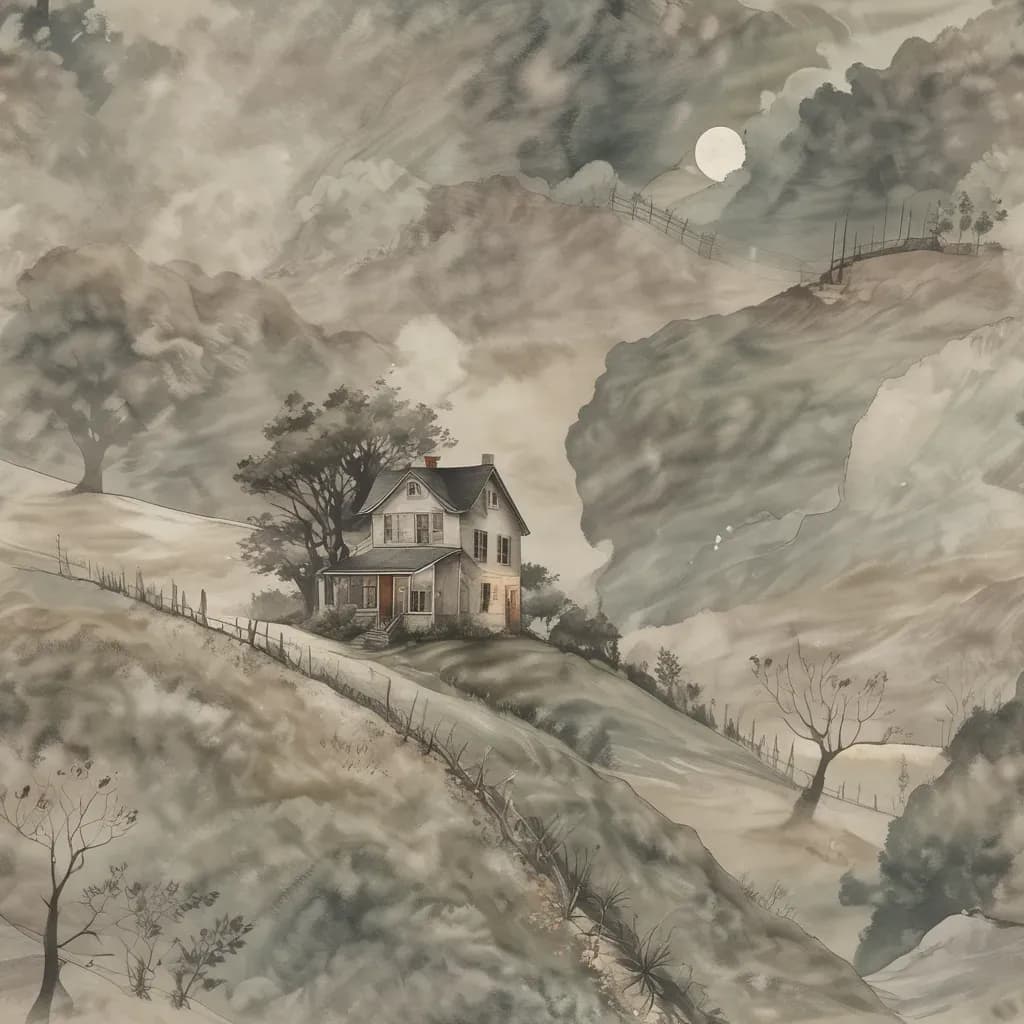
As described by reviewers and explainers, the song follows a mother caught between two sons who have drifted apart over their beliefs.[2] They can no longer share a table. The refrain turns on the idea that people who grew up together have become strangers, and that no one in the dispute comes out ahead. Every heart in the story is pulled in two directions at once.
Domestic details carry the weight. There are household objects that show the damage, like glass in a picture frame that has split, and the sense that harsh words have been said and cannot be taken back.[2] The writers avoid grand statements. The grief stays at the level of a kitchen, which is where most family fractures really happen.
The title does a lot of work in this setting. To be torn is to be divided inside oneself, and to be ripped apart from others. The mother in the song suffers both at the same time. She cannot side with one child without abandoning the other, and she cannot fix what is between them. The song never pretends otherwise.
Brothers, and an old story
Bono gave The Irish Times a frame for the song that reaches far back. As reported by Just Jared, he described it as a story of a family riven by uncivil wars, and he pointed to the oldest brothers in scripture, estranged and wordless at a kitchen table.[2] The biblical echo is deliberate. The first murder story in the Western tradition is a family quarrel, and the song quietly asks how often the larger conflicts of history begin with the same thing.
He also said America was on his mind and McDaid's while writing, but that it could be a story around a kitchen table anywhere in the world.[2] That comment is the key to reading the song politically without reducing it to a slogan. A country can be divided, as a family can, by people who once ate together and now cannot discuss the news without tension. The mother's helplessness is the human scale of a national argument.
The Irish News review makes the same connection from the listener's side. It hears the tale of a family torn apart as dovetailing with the divided-nation theme of "American Obituary," the opener of the band's Days of Ash EP.[5] Seen that way, "Torn" is the private answer to a public question the album has been asking: what do these divisions cost at the level of one household?
Why a country song
U2's own press materials call the track a tender country song detailing broken family ties that holds wider resonances.[1] The choice of genre is not decoration. Country music has long been the form where ordinary domestic pain gets a hearing, where a kitchen and a hospital hallway and a porch are all legitimate settings for a serious song.
Bono's voice, usually built for stadiums, is asked here to share the stage rather than own it. Lanois's pedal steel adds the sliding, sighing quality that country has always used to suggest a voice breaking. The result is a track that sounds smaller than most U2 songs and, because of that, can sound more intimate than most of them.
There is also an interesting symmetry in the fact that a band that has spent fifty years turning private feeling into public anthems ends its newest album by turning down the volume. The Irish News reviewer notes that the song feels possibly a little out of step with the rest of the record, and that is true in tone.[5] But the placement makes sense. After a set built around a carnival of light, the last word goes to the person left alone in the kitchen.
Parton's last vocal
It is impossible to talk about this song without talking about how it was recorded. Parton's official website identifies the Nashville session as her last recorded vocal, made in June 2026; she died on August 25 at the age of 80.[2][3] Bono has said that when she was ill she got out of her bed to sing it, and that the effort can be heard.[1][4]
He has been candid about what that does to him. He told Rolling Stone that he cannot even listen to the finished recording now, and he called working with such a figure a moving privilege.[1] In another remark reported by American Songwriter, he said she sang her heart out and that he could not believe it was the voice of an 80-year-old woman.[4] Just Jared adds that he has called the performance one of the greatest vocals in the history of vocals.[2]
There is a small, human document behind all this. In a note to Bono dated June 2, Parton wrote that she loved the song and believed it could become something special, and she thanked him for including her in his life.[2][3] Producer Jacknife Lee has said she was proud of her vocal and the recording, and that the team had been nervous she might not approve.[4] Just Jared reports that she did hear and approve the finished version before she died.[2]
Two versions of one song
The song exists in two forms. The album version closes Carnaval De Luz, and a separate arrangement, billed as the Kent Wells Version, went to country radio on November 12, the day before the album arrived. Both feature Parton and Bono.[2][3]
That dual release speaks to the song's ambition. U2 did not tuck it away as a curiosity at the end of a long record. They sent it to the audience that knew Parton best, in the shape that audience would most naturally accept. It is a gesture of respect to her world as much as a promotional step.
Where it sits on the album
Carnaval De Luz is U2's sixteenth studio album and its first collection of new songs in nine years, released on November 13, 2026 to mark the band's fiftieth anniversary.[3][5] The earlier EPs, Days of Ash and Easter Lily, are framed in the Irish News review as the second half of a double album.[5] Bono says the idea of a carnival was the thinking behind the record from the start, and the Edge says carnival simply has an attitude.[5]
Against that backdrop, "Torn" is the shadow cast by the party. A carnival implies a crowd, noise and bright color. The closing song gives us a single figure in a room, which is where the crowd goes home. The same album that celebrates light also admits how much of life happens in the dim places between people who love each other and cannot agree.
The Irish News reviewer calls it a moving musical moment in its own right and says that once you know it was apparently Parton's last vocal you understand why the band included it.[5] That is a fair summary. The song is not the album's thesis, but it is its conscience.
Other ways to hear it
The most direct reading is political: a quiet portrait of a nation whose citizens have stopped speaking to each other. Bono's remarks about America support it, and the pairing with "American Obituary" nudges listeners toward it.[2][5]
A second reading is personal and biographical. Any listener who has watched relatives fall out over faith, money or politics will hear their own family in the mother's predicament. The song works because it does not name sides. It leaves room for every listener to place their own brother or sister in the empty chair.
A third reading is elegiac. Because the voice we hear belongs to someone who was dying, the mother's helplessness can sound like Parton's own, a woman near the end looking at the people she loves and wishing for peace among them. That is an interpretation rather than anything the writers have claimed, and the song does not require it. But it is hard to unhear once suggested.
A note on the sources
Detailed commentary from Bono and Parton comes mostly through two interviews, Rolling Stone and The Irish Times, as relayed by other outlets. We have not found extended comments from the Edge, McDaid or Lanois about this track, so those parts of the story remain thin. The reading above leans on reported facts and the descriptions of the song's subject that have been published, and does not quote the lyrics themselves.
Conclusion
"Torn" works because it refuses to take a side. A mother in a kitchen, two sons who cannot sit together, a house full of broken glass and unsaid apologies: the picture is small, and that smallness is its strength. Bono and McDaid wrote a song about a country by writing about a table.
Parton's voice gives it the final authority. She sings about divided love with the plainness of someone who has seen it up close, and the fact that it was her last recorded performance makes the song feel like a parting gift to the band and to listeners. It is a tender way to close a loud record, and one that asks for something quiet in return: that we think about who we have stopped sitting beside.
References
Keep reading
More by U2
More Country
- I Walk the Line Johnny Cash
- Blue Suede Shoes Carl Perkins
- How's It Goin' Bryan Adams
- Jolene Dolly Parton
- Here Then We're Gone Ella Langley & Morgan Wallen
- Tell By Now Kameron Marlowe