Visiting Hours
Between Horror and Relief
There is a particular kind of emotional register that hospital vigils occupy: a state where relief that the worst has not yet happened sits in uneasy proximity to the fear that it still might. Very few songs capture this feeling with any precision, because the feeling itself resists easy articulation. "Visiting Hours" by Kero Kero Bonito does not resist it. The song was built from inside that experience, word by word, and its emotional accuracy is the result.
The song is the eighth track on Time 'n' Place, Kero Kero Bonito's second studio album, released October 1, 2018. It stands apart from the rest of the album not because it is more personal, but because its personal origin is so precisely documented. This is not a song that gestures toward grief or extracts metaphors from suffering. It is a song constructed from actual conversations.
A Song Made from Real Words
During the recording of Time 'n' Place, producer and drummer Gus Lobban's father suffered a severe brain injury and was hospitalized in the intensive care unit at King's College Hospital in London.[1] The injury carries a 50 to 90 percent fatality rate, with only 20 to 30 percent of patients recovering meaningful brain function.[2] The family endured the sustained uncertainty of not knowing which outcome they were living toward.
Lobban's response was to listen. More precisely, he listened to his mother, and to what she said during those hospital visits to his father. The lyrics of "Visiting Hours" are drawn directly from her words: her actual observations about the hospital food, the position of the recovery bed, the small hopes she voiced about returning home.[2] These were not carefully crafted artistic statements. They were the things a person says when they love someone lying in a hospital bed and they need to fill the silence with something manageable.
Vocalist Sarah Perry sings the song, inhabiting the perspective of Lobban's mother with a quietness that serves the material.[1] Lobban himself contributes backing vocals, which is unusual for him within the group's catalog. The rounded, layered vocal textures beneath Perry's lead are a deliberate nod to 1960s girl group production techniques.[2]
The Sound of a Birthday Melody
The song's musical foundation has its own quietly telling origin. The melody was originally written by Lobban for a friend's birthday, composed on a Saisho MK 800, a modest home keyboard.[2] The bassline and melody that now carry the weight of a father's near-death experience were first assembled as a birthday gift, not a requiem.
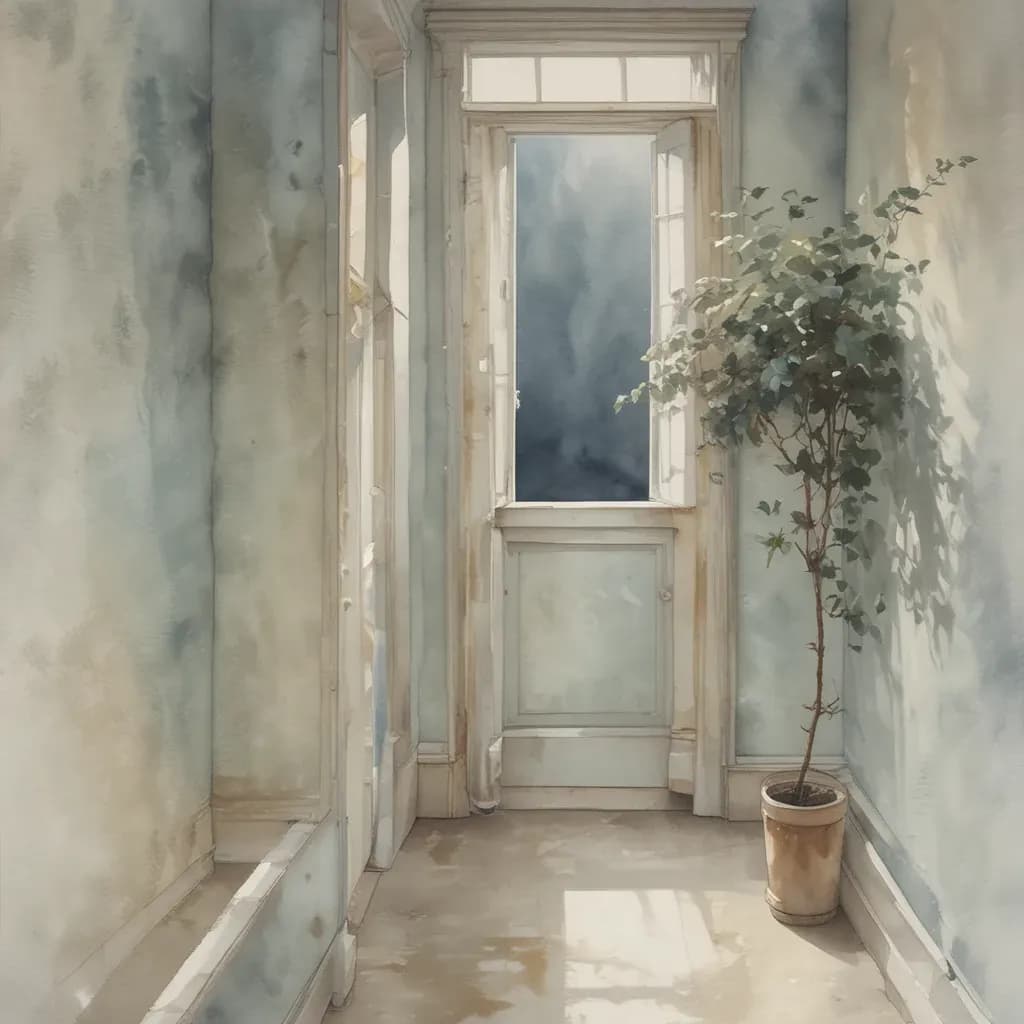
This detail matters because it shaped the sound. The resulting track is built on glowing, warm synths that feel more like sunlight through a hospital window than like grief music. The production does not announce its emotional stakes. It creates a luminous, almost gentle atmosphere that stands in deliberate counterpoint to what the lyrics carry.
The girl-group backing vocals amplify this effect. They evoke a tradition of pop music built around warmth, community, and the reassurance of harmony. Placing them here, in a song about intensive care visits and the practical negotiations of someone who might be dying, creates a tension that is both unsettling and oddly comforting. That tension is perhaps the most honest way to render the emotional reality of a hospital vigil.
The Mundane as Emotional Survival
One of the song's most important qualities is its refusal to reach for the transcendent. It does not describe mortality in abstract or poetic terms. It describes what the hospital food is like. It notes the angle of a bed. It voices quiet hope about going home someday.
This is psychologically true to the experience of acute crisis. When someone we love is in danger, the mind often anchors itself to the manageable rather than the unmanageable. Worrying about whether the meal trays are adequate is something you can potentially address. Worrying about a 50-to-90-percent fatality rate is not. The mundane details give the frightened or grieving person a foothold.
By building the song almost entirely from these mundane details, Lobban and Perry make an argument about what love looks like in crisis. It does not look like grand gestures. It looks like showing up, sitting beside someone, and talking about the food.
Horror and Euphoria Held Together
Gus Lobban described "Visiting Hours" as occupying an unusual emotional register: not tragic, but "definitely maybe... a little bit helpless" while also being "determined and hopeful" by the end.[1] The Fader, in their October 2018 cover story on the band, described the song as capturing "a really strange mix of horror and the euphoria of seeing that the worst hasn't happened."[1]
That formulation is precise. Anyone who has sat with a person in intensive care will recognize the feeling: you walk in and the person is still there, still breathing, still themselves in some essential way, and the relief is almost overwhelming. Then the fear returns because the situation is not resolved. You are living inside a suspended moment whose outcome you cannot yet know.
The song holds both of those feelings simultaneously. The warm synths and girl-group harmonies register the relief and the determination. The underlying situation, which the lyrics convey through their focus on practical hospital concerns, registers the fear and the helplessness. Neither mood defeats the other. They coexist, the way they do in actual life.
Where the Album Places It
"Visiting Hours" fits into Time 'n' Place's preoccupation with loss and irreversibility. The album accumulated its themes from genuine upheaval across all three band members.[3] Sarah Perry received a photograph of her demolished childhood home in Japan. Her primary school closed. Her pet died. Lobban experienced his father's hospitalization. Each of these events represents something that cannot be undone, a place or a person or a relationship that time has moved past.
"Visiting Hours" is slightly different from the other loss-inflected songs on the album in that it does not memorialize something already gone. Lobban's father survived. The song was written while the outcome was still uncertain, or in the immediate aftermath, when relief was still fresh enough to shape the material.[2] This gives it a different character from a dirge or an elegy: it is a song about surviving a near-loss rather than processing an actual one.
The band has cited Mount Eerie's A Crow Looked at Me (2017) as an influence on the album's emotional sensibility.[1] Phil Elverum's practice of documentary grief, recording ordinary life and ordinary loss with minimal artistic mediation, clearly informed Lobban's approach on "Visiting Hours." But where Elverum's work is spare and raw, KKB's is warm and melodic, more aligned with another reference they cited: Charlie Chaplin's "Smile," a song built on the premise that beauty and suffering can genuinely coexist.
Cultural Resonance
By 2018, a meaningful strand of indie music had started taking illness and death as serious lyrical territory rather than background material for metaphor. Mount Eerie, Hand Habits, Palehound, and others were writing explicitly about grief and medical crisis in ways that felt documentary rather than artistically filtered.
"Visiting Hours" participates in that tendency while also departing from it. Most documentary grief music is acoustically spare, as if the weight of the subject matter requires minimal ornamentation. Kero Kero Bonito instead wrap their documentary material in warmth, in synths that glow, in harmonies that echo 1960s pop.[4] The implicit argument is that warmth is not a distraction from pain but one of the primary human responses to it.
This is unusual enough to count as a genuine artistic position. It says something about the band's values: that hope is not naivety, that warmth is not denial, and that the instinct to protect the people we love with small acts of comfort and practical care is itself a form of love worth documenting.
Alternative Readings
Because the song's lyrics are rooted in the specific language of hospital visits, its imagery is concrete rather than universal. But some listeners hear in it a broader meditation on any sustained caregiving situation: the long-haul attention required of caring for someone with a chronic illness, the protracted vigils of aging parents, the exhaustion and love that coexist whenever someone we care about is vulnerable.
The hospital setting can also be read as a concentrated version of a more general truth: that love, in its practical daily expression, is often mundane rather than dramatic. We do not usually love the people closest to us through grand acts. We love them by paying attention to small details, by worrying about the specific things they need, by staying present when presence is difficult.
A Quiet Masterwork
"Visiting Hours" is not the most immediately striking track on Time 'n' Place. It does not have the guitar noise of "Only Acting" or the anthemic quality of "Time Today." It sits quietly in the middle of the album, doing something harder: it holds a real experience without transforming it into art at the expense of its reality.
Most songs about hospital visits are about loss. This one is about something more complicated: the moment when loss is possible, hovering near, and you are still there, still present, still saying the ordinary things that constitute love in a crisis.[5]
That Kero Kero Bonito made it beautiful is not incidental. The beauty is the point. The warm synths and girl-group harmonies assert that what Lobban's mother did during those hospital visits, showing up and talking about small things and hoping out loud, was not just coping. It was care. It was love. And it deserved to be rendered with warmth.
References
- Kero Kero Bonito Are Smiling Through It All - The Fader — October 2018 cover story; Gus Lobban on the song's emotional register, its origin in his mother's hospital conversations, and the band's artistic influences
- Visiting Hours - Kero Kero Bonito Fan Wiki — Song-specific detail: Saisho MK 800 keyboard origin, lyrics sourced from Lobban's mother's hospital conversations, girl-group vocal production reference
- Kero Kero Bonito Talks Traversing Time 'n' Place - KEXP — January 2019 interview discussing the album's collage construction and personal context
- Kero Kero Bonito: Time 'n' Place Review - Everything Is Noise — Critical review praising the album's emotional honesty and warmth as a response to grief
- Album Review: Time 'n' Place - The Mancunion — Review noting the blend of garage rock, bedroom synth, and emotional depth
- Time 'n' Place - Wikipedia — Album overview, personnel, critical reception, and chart performance
- Kero Kero Bonito - Wikipedia — Band biography and discography
- Lyrics on Genius — Song lyrics page