Wasted
The Cost of Letting Go
There is a particular kind of dread that sits at the edge of certain relationships: not the fear of a dramatic ending, but of a slow, quiet dissolution. Of two people who could have fought for something, yet chose, by degrees, to let it drain away. Dermot Kennedy built "Wasted" around that dread, and in doing so produced one of the most viscerally urgent tracks on his 2026 album "The Weight of the Woods."
A Homecoming, A Reckoning
By the time Kennedy was writing "The Weight of the Woods," he was already a known quantity in the world of emotionally charged folk-pop. His debut, "Without Fear" (2019), had turned him from a Dublin busker into an Interscope act with a Brit Award nomination for International Male Solo Artist to his name.[1] His follow-up, "Sonder" (2022), won the RTE Choice Music Prize but also divided listeners who felt it veered too far toward arena-ready production.[1]
"The Weight of the Woods" was conceived as a correction, or rather, a recommitment. Kennedy has spoken about approaching the record from a place of genuine liberation, free from the background pressure of chasing chart positions.[2] The creative process had also been marked by a significant personal setback: a vocal health crisis forced him into two weeks of complete silence, the result of accumulated misuse built up through years of intensive touring.[3] That enforced stillness appears to have cleared something important.
The album was produced by Gabe Simon (known for his work on Noah Kahan's "Stick Season" and Lana Del Rey records) across sessions in Nashville and six weeks in Ireland, where Simon spent time embedded in Kennedy's home environment near the Dublin-Kildare border.[2] The forest behind Kennedy's house became the album's spiritual center and its most persistent image. He has described it as a haven for his sense of wonder, a place he returns to constantly.[2]
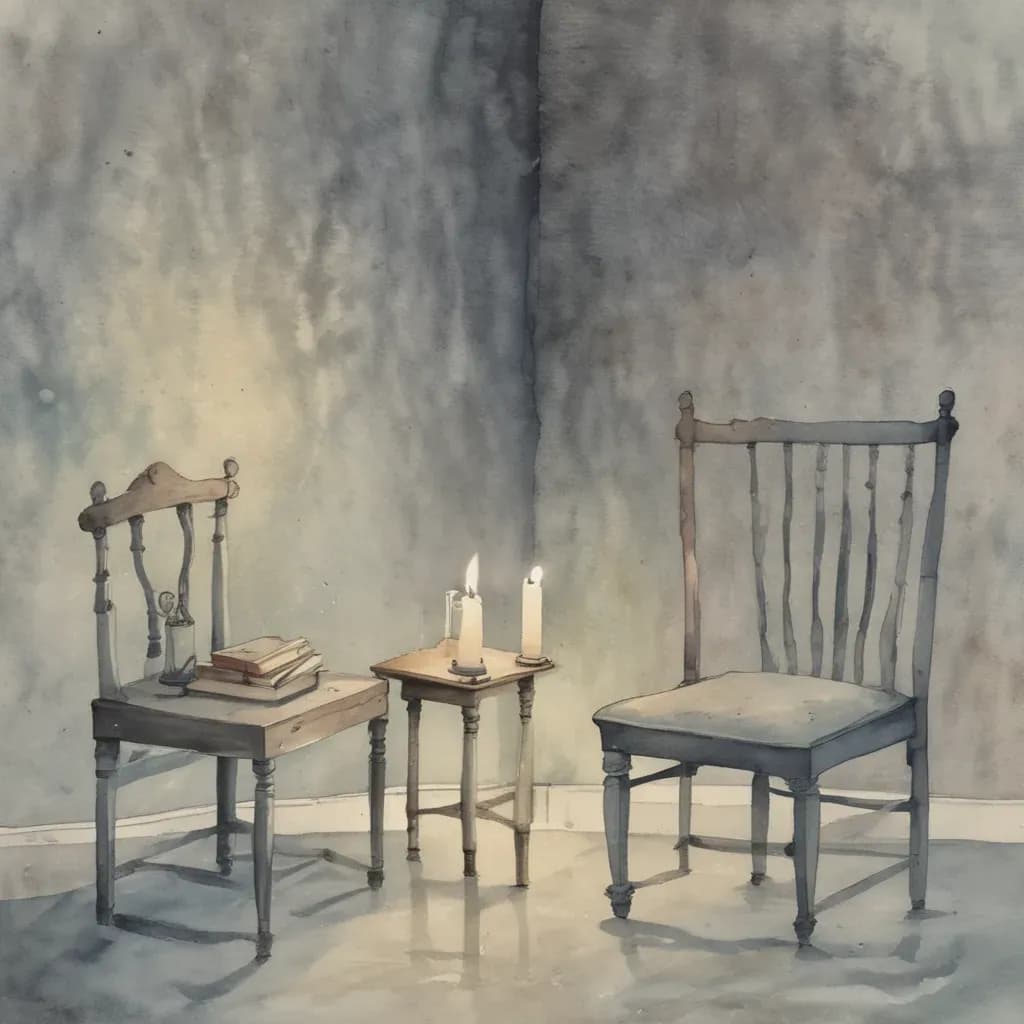
Track Nine, and the Weight It Carries
"Wasted" arrives ninth on an album of fourteen tracks. By the time it appears, the listener has passed through some of the record's most meditative, inward-looking material, including the piano ballad "Endless" and the introspective "Often, Lately." The album's second half needs a jolt, and "Wasted" provides it.
Critics consistently identified the song as one of the album's more energetic, rhythm-forward moments. The German music publication laut.de noted that "Wasted" and "Turnstile" were the two tracks where the production introduced more rhythmic drive, breaking the album's otherwise unified midtempo texture.[4] Buzz Mag grouped "Wasted" with the lead single "Funeral" as the album's "anthemic and empowering" tracks that break through "the lingering sadness" present elsewhere on the record.[5]
That placement within the album is not accidental. Kennedy has built his catalog on the contrast between quiet devastation and soaring release. The emotional shape of "Wasted" mirrors, in compressed form, what the whole album does structurally: earn the grand feeling by laying down the groundwork of restraint first.
The Fear at the Center
The song is built around a single, sustaining fear: that two people might look back and realize they had allowed something real to slip away. The narrator is not describing a relationship that has already ended. He is standing at the edge of its possible collapse and making a case for turning back before the damage becomes permanent.
Kennedy frames this with characteristic emotional directness. His lyrics position the speaker as entirely willing to meet the other person wherever they are, to cross whatever distance stands between them, to make whatever sacrifice is required. In one of the song's most striking moments, the narrator invokes the image of a river he would cross without hesitation. The gesture is not rhetorical. It is the kind of promise that only makes sense if the thing being fought for is genuinely irreplaceable.
The cost the narrator refuses to accept is the one that comes from inaction: the retrospective knowledge that they allowed something precious to go to waste. That word carries a specific moral weight in this context. Waste is not simple loss. To waste something implies agency, a failure to care for what deserved care. Kennedy is placing responsibility somewhere, gently but unmistakably.
Kennedy's Language of Urgency
Across his career, Kennedy has returned again and again to a particular emotional register: the moment just before a relationship turns or shatters, when the speaker can still feel the shape of what they have and is terrified of its fragility. Songs like "Power Over Me" and "An Evening I Will Not Forget" occupy similar emotional territory.[1] "Wasted" lives in that same space, with the added dimension of what might be called retrospective dread: the fear of a future regret that has not yet happened but feels inevitable if nothing changes.
Kennedy has described his creative process as one that draws heavily on memory and the past. He has told interviewers that he finds it difficult to remain in the present moment because he is always dredging up what came before for material.[2] "Wasted" shows that this backward-looking tendency can work in the opposite direction too, projecting forward into an imagined future loss in order to argue against it in the present. The song uses the grammar of memory to make a case for action before it is too late.
The Album's Broader Arc
"The Weight of the Woods" is an album deeply committed to the idea that things matter. The forest matters. Place matters. History matters. Connection matters. Kennedy's engagement with Irish identity on the record (the use of uilleann pipes, bodhrán, and tin whistle, the incorporation of the Maynooth University Chamber Choir, the Gaelic proverb that animates the album's heart) reflects a belief that roots are not nostalgic ornamentation but actual substance.[2]
"Wasted" belongs to that same ethos. Its urgency is the sonic equivalent of Kennedy's stated philosophy about the forest: that some things are worth fighting for, worth crossing rivers for, worth the fear of saying so out loud. Letting them go to waste is not merely sad. It is a kind of failure.
Hot Press praised the album for Kennedy's "golden melodic ability and mighty storytelling chops," calling it a "magnificent third album from Ireland's stadium bard."[6] Darkus Magazine described the record as a triumphant return to form, rooted firmly in his native Ireland.[7] Even the Irish Times, whose review was considerably more skeptical of the album's overall ambition, acknowledged that individual tracks demonstrated genuine emotional and musical craft.[8]
Who Is the Song Talking To?
One of the interesting ambiguities of "Wasted" is the question of who, exactly, the narrator is addressing. Kennedy is a confessional songwriter who often draws directly from personal experience, but the emotional universality of the song's central fear makes it easily portable into any listener's own life.
The relationship in question could be romantic. But the song is not limited to that reading. The language of refusing to forgive oneself for letting something go extends naturally to friendship, to family, to any bond of genuine value. The river imagery, with its suggestion of significant effort freely offered, could describe a wide range of human connections.
Kennedy has consistently spoken, throughout the album's promotional cycle, about the importance of loyalty and place. The forest, the neighborhood, the people he grew up alongside: these are the things that carry weight for him.[2] Reading "Wasted" in that fuller context, the song becomes less a conventional love ballad and more a meditation on what it means to fail in your obligations to anything that actually matters.
Craft and Consequence
"Wasted" is not a structurally complicated song. Kennedy works in an emotional register that trusts directness over complexity, and he has always understood that a well-chosen image lands harder than an elaborate metaphor. What distinguishes his best work is the precision with which he identifies a specific fear. He does not write about loss in general. He writes about this loss, this moment, this particular plea.
The InMusic Blog ranked "Wasted" fourth on the album, noting the record's overarching themes of grief, loss, introspection, hope, and resilience.[9] Those five words are a fair map of the whole record, and "Wasted" manages to hit most of them at once. The grief is potential rather than actual. The hope is what drives the plea. The resilience is the willingness to name the fear rather than swallow it.
Kennedy's voice, what the New York Times once described as "a grainy, melancholy voice that can crest with a howling rasp,"[1] carries particular charge when it reaches the song's emotional center. The rawness is the argument. The request not to waste this thing is credible precisely because the voice making it sounds like it has felt loss before and knows what it actually costs.
A Song About the Future Tense of Loss
What separates "Wasted" from many songs in the grief-and-love tradition is its temporal position. It is not an elegy. It does not describe what has already been lost. It describes the moment immediately before loss becomes inevitable, when the outcome is still uncertain and the stakes are fully visible.
That position gives the song a forward-looking intensity that most breakup songs, by their nature, cannot achieve. Kennedy is not processing. He is preventing. Or trying to. The difference matters enormously.
There is something deeply human in that attempt. Most people carry a story that fits this shape: a moment when they could see clearly what was at risk and either acted or did not. Kennedy makes the listener feel the weight of that choice before it has been made. He holds the door open and asks whether you are really sure you want to walk out. That is not a small thing to do in four minutes of music.
References
- Dermot Kennedy - Wikipedia — Biographical overview: career milestones, Brit Award nomination, RTE Choice Music Prize, musical influences
- Dermot Kennedy on New Album 'The Weight of the Woods' (Rolling Stone Australia) — January 2026 pre-release interview: album liberation, forest imagery, producer Gabe Simon, dredging the past for material, Irish roots
- Dermot Kennedy: 'I was freaking out about my voice' (Irish Times, April 4 2026) — Post-release interview discussing vocal health crisis and two weeks of enforced silence during recording
- The Weight of the Woods review (laut.de) — German review singling out 'Wasted' and 'Turnstile' as the rhythmically dynamic tracks that break the album's midtempo uniformity
- The Weight of the Woods review (Buzz Mag) — Review grouping 'Wasted' with 'Funeral' as the album's anthemic, empowering tracks that break through the lingering sadness
- Album Review: Dermot Kennedy, 'The Weight of the Woods' (Hot Press, 8/10) — Hot Press eight-out-of-ten review calling it a magnificent third album from Ireland's stadium bard
- Dermot Kennedy Finds His Roots in the Wild (Darkus Magazine) — Review praising the album as a triumphant return to form rooted in Kennedy's native Ireland
- The Weight of the Woods review (Irish Times, 3/5) — Mixed Irish Times review acknowledging craft on individual tracks while questioning the album's overall scope
- The Weight of the Woods - Every Track Ranked (InMusic Blog) — Track-by-track ranking placing 'Wasted' fourth best on the album; notes themes of grief, loss, introspection, hope, and resilience