What Lies Ahead
A choir sings before anything else happens. Low male voices open the track, solemn and a little strange, as though the listener has wandered into a room where something is about to be unveiled. Then the strings arrive, and a patient, almost hymn-like song begins to unfold. "What Lies Ahead" is under three minutes long, and it spends them thinking about how new things get made.[1][2]
The single came out on March 3, 2026, a full moon, as the third release from Peter Gabriel's album o\i.[1][4] The album itself is not due until November 27, 2026, so there are no full album reviews yet.[5] What follows draws on Gabriel's own comments, the credits, and the reporting around the single, and where I am interpreting rather than reporting, I will say so.
A song about inventors
Gabriel has been direct about the subject. He calls it a song about inventors and invention.[2] The inspiration is personal: his father was an electrical engineer and inventor, and Gabriel watched him wrestle with the long, frustrating road from an idea to a working object.[2]
That road has two halves. First comes the making, the many iterations it takes to turn a notion into something that functions. Then comes the selling, which means persuading the people with the money and the wider world that the thing deserves to exist.[2] Gabriel has said he has always been curious about the creative process and how it applies to inventors, and the song treats invention as a lonely, stubborn, partly spiritual labor.[2]
It is easy to hear a second subject underneath the first. Gabriel is himself an inventor of sorts, someone who built a studio, a record label and a world music festival and who has long been drawn to new technology. The father's struggle and the son's career rhyme with each other, and Gabriel dedicated the song to his late father at the North American shows of his 2023 tour.[1]
A melody from a son, a choir from a friend
The origin of the music reinforces the theme of things passed along. The song began with a melody his son Isaac was playing around with, which Gabriel liked and decided to build into something larger.[2] A tune handed from one generation to the next, in a song about a parent's work, closes a small loop.
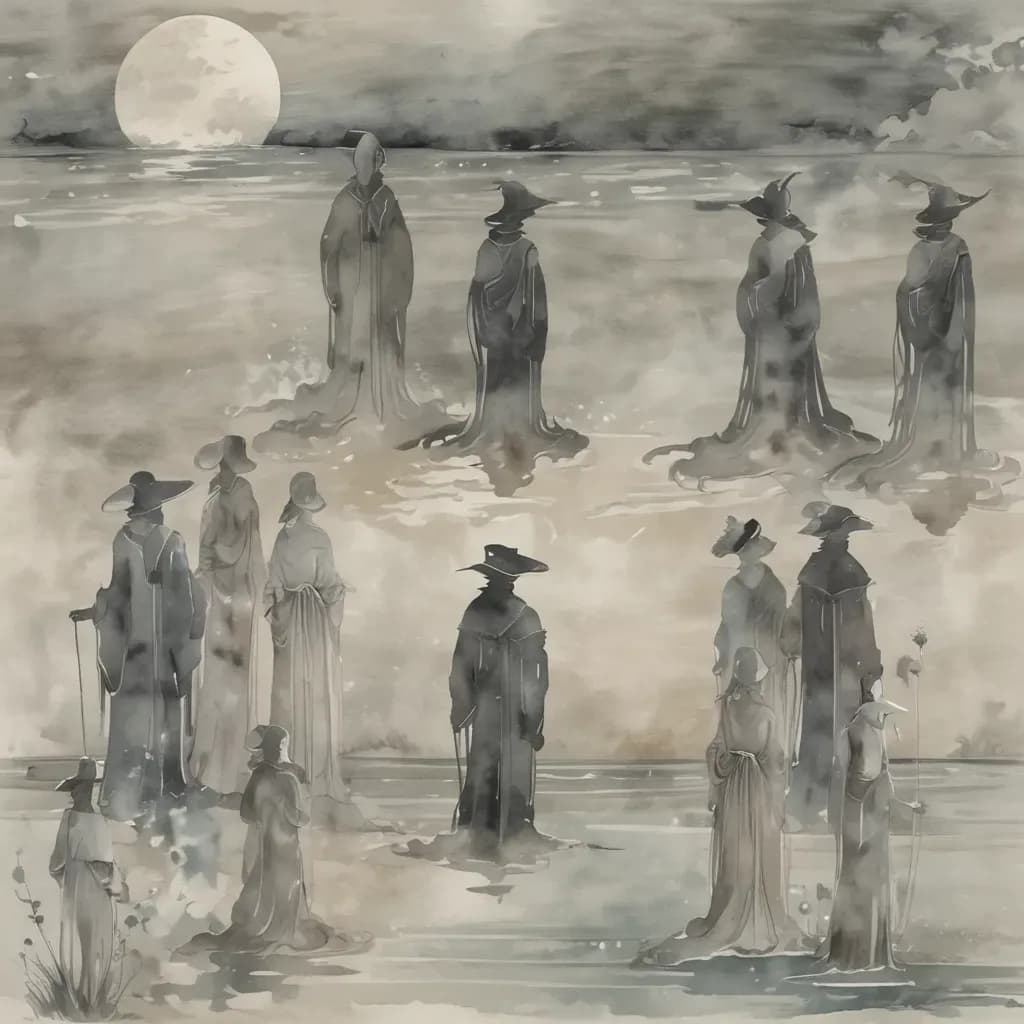
The choir came from another relationship. Brian Eno, Gabriel's longtime friend and collaborator, suggested opening with the voices.[2] Gabriel used the Swedish male voice choir Orphei Drängar, the same group that sang on "This Is Home" from i/o.[1] He says they create a very strange mood that is powerful and emotional, and that he wanted the choir at the front to take the listener straight into another world.[2]
He is careful to add that he is not religious, though he has always loved spiritual and inspirational music.[2] That distinction is useful. The song borrows the sound of reverence without asking the listener to believe in anything in particular. It is awe pointed at human ingenuity.
The sound of an idea taking shape
The arrangement does a lot of the interpretive work. A string section of violins, violas, cellos and double basses carries the song, arranged by John Metcalfe with Gabriel and conducted by Metcalfe, with a solo cello from Linnea Olsson and a trumpet from Paolo Fresu.[1] Tony Levin plays bass.[1] Consequence described the result as meditative and deliberate, a ruminative tone over the low hum of orchestra and choir.[3]
Nothing here is in a hurry. The tempo and the long, held string tones feel like someone turning an idea over in the hands, testing its weight. That patience is itself a statement about invention: the good ideas are rarely quick. There is also a pleasing humility in how the piece is built. It begins in a hush, accumulates slowly, and never tries to win with volume.
There are two official mixes. The Bright-Side Mix by Mark "Spike" Stent runs 2:52, and the Dark-Side Mix by Tchad Blake runs 2:54.[1] Every song on o\i gets this pair, one released at the full moon and one at the new moon.[5] A song about ideas that can be iterated on gets, fittingly, two versions of itself.
An old song finally finished
The song is older than the album it lands on. Gabriel first played it on his 2014 Back to Front tour, in the acoustic portion of the set, with no finished words. The debut was on November 20, 2014 in Turin, with a second performance the next night in Bologna, and the arrangement then was piano and strings.[1] Cello player Linnea Olsson was in that touring band, and her cello line survived into the final recording.[1]
Years passed before the words arrived. Metcalfe added orchestral elements in sessions in 2022, Gabriel played the song six times on the 2023 i/o tour, and in November 2023 he said it would appear on the follow-up album.[1] The trumpeter Paolo Fresu had also recorded an instrumental version in 2020, which first drew Gabriel's attention to him.[1]
Seen against that timeline, the song about the slow business of bringing an idea to life is itself an example. It took more than a decade from first public sketch to finished single. That is an accidental but apt demonstration of its own argument.
Birth, pain and a stitched tear
The cover art sharpens the metaphor. The single uses Birth Tear / Tear, a 1982 work by Judy Chicago, embroidered by Jane Thompson in Houston, from the years when Chicago directed more than 150 people working to her designs on the subject of birth.[1]
Gabriel says the image depicts the pain of giving birth, which no man can truly understand, and that giving birth to an idea has many less painful parallels.[2] It is a striking choice for a song about inventors, because it reframes invention as bodily and costly rather than clean and clever. Ideas, on this view, arrive with effort and some suffering.
He also connects the artwork to a Judy Chicago remark that truth can be found in what is ignored, forgotten and left out, and pairs it with a remark from the designer Gaetano Pesce that the beauty of the future will lie in imperfection.[2] Those two thoughts matter for the song. They suggest that what lies ahead may belong less to polished certainty than to the overlooked and the flawed.
The future, and a worry about closed minds
The album-wide framing gives the title extra weight. In the announcement for o\i, Gabriel expects a transition arriving in three waves: artificial intelligence, quantum computing and brain-computer interfaces. He argues that artists should look into the mists ahead and hold up a mirror.[6]
Gabriel has tied the cover art to this concern. He links it to AI and a "robotic" culture, and to a fear that society is backing away from open-minded thinking. He says he hates moves to shut down debate in the creative arts and in universities.[2] In that light, the song is a small argument for patient, curious, imperfect human creativity at a moment when machines are doing more and more of the making.
Consequence notes that a line in the song pictures the world as connected like a brain, which fits the loose "brain project" that runs through parts of the album.[3][5] I read that image as the song's widest lens: invention does not happen to one person alone, but within a networked world that both enables it and may eventually absorb it.
Where it sits on the album
"What Lies Ahead" is the third of thirteen tracks.[5] It follows the opener "Been Undone" and "Put the Bucket Down", and comes just before "Till Your Mind Is Shining".[5] The album mixes new material from 2024 and 2025 with outtakes from the sessions for Us, Up and i/o, so it is partly an act of retrieval, with old ideas finally finished.[5] That makes a song about the long gestation of ideas an unusually good fit for the record.
Within the wider o\i mood, it is a calm centerpiece. Gabriel has described the pair of albums as a joint project of twenty-five tracks, and this one sets out the shared theme with the least fuss: looking ahead without panic, and with some wonder.[5]
Other ways to hear it
One reading takes it as a straightforward tribute to a father. The dedication at the 2023 shows and the account of his father's struggles support that, and the choir and strings give it the feel of a memorial.[1][2]
A second reading is political and cultural. Given Gabriel's comments about open debate and robotic thinking, the song can be heard as a plea to protect the conditions in which new ideas can emerge, which means tolerance for the unfinished and the strange.[2]
A third reading is more private and spiritual. Because the song opens with a choir and Gabriel speaks of wanting to take listeners straight into another world, it can simply be a meditation, with the inventor as a stand-in for anyone trying to bring something new into being.[2][3]
Why it resonates
Most songs about the future are either alarmed or giddy. This one is neither. It sounds like attention. The slow build, the sacred-sounding voices and the plain subject of how people make things combine into something unusually humane for a track about technology and time.
For listeners who know the older Gabriel, there is a pleasure in hearing him stand again where he has often stood, between the old and the new, working with Eno and with a close circle of musicians. For newcomers, it works as a brief, quiet argument that the work of making things, with all its pain and imperfection, is worth honoring.
What lies ahead, the song seems to say, is still unwritten. It will belong to whoever has the patience to build it, and the stubbornness to keep going when nobody is buying yet.
References
Keep reading
More by Peter Gabriel
More Art Rock
- Kid A Radiohead
- Won't Stand Down Peter Gabriel
- The Greatest Show on Earth U2
- Different Religion Miley Cyrus
- Heroin The Velvet Underground
- The Rain Song Led Zeppelin