Whispers in the Wind
There is a particular kind of quiet that only exists when the room around you is loud. It is not silence, exactly, but a pocket of calm carved out inside noise. "Whispers in the Wind" lives in that pocket. It is a song about holding onto one person while everything beyond the front door feels like it is coming loose.
Jordan Rakei placed it at the very end of his seventh album, A Safe Place To Be Wild, and the placement matters.[1] A record about safety and wildness needs a final statement about which one wins. This closer answers with tenderness, and it does so on a grand scale.
Where the song sits
Rakei has described the track as being about emotional safety within a relationship while the world outside feels unstable, shaped by war and conflict.[1] That framing is unusually direct for him. Much of his catalogue trades in introspection, searching for identity and meaning in a fast and fractured modern life.[5] Here the lens widens. The private and the political share one frame, and the private is offered as a refuge.
The album came together during a remarkable stretch of his career. He spent a year as the first resident artist at Abbey Road Studios, and he also worked from a home studio he built outside London.[3][4] Coverage of the project describes the Abbey Road residency as a no-pressure space where he was free to make whatever he wanted.[2]
The announced themes of the record include self-acceptance, vulnerability and creative freedom.[3] Read against that, the closing song feels like the thesis in miniature. You can only be wild, the album seems to suggest, once you have somewhere safe to land.
A refuge built from sound
The press response to the single focused on its scale. Clash described a song built around a soothing vocal, with an arrangement that carries a sense of cinematic grandeur.[1] That combination is the key to how the song works. A soft voice would ordinarily suggest intimacy and smallness. Wrapping it in widescreen orchestration says something different: that this small private feeling is big enough to hold a whole world's worth of worry.
It is a smart inversion of how love songs usually handle crisis. Many songs treat global turmoil as a backdrop, a bit of scene-setting before the real emotional business starts. Here the turmoil is the reason the emotional business matters at all. The relationship is not an escape from reality. It is what makes reality survivable.
Rakei has long been a producer-minded songwriter, someone who plays many instruments and shapes the texture of a track as carefully as its melody.[5] His soul and jazz-inflected style, often filed under neo-soul, gives him a vocabulary of warm chords and lush harmony that suits this kind of consolation. Nothing in the song needs to shout to be urgent.
The title as a metaphor
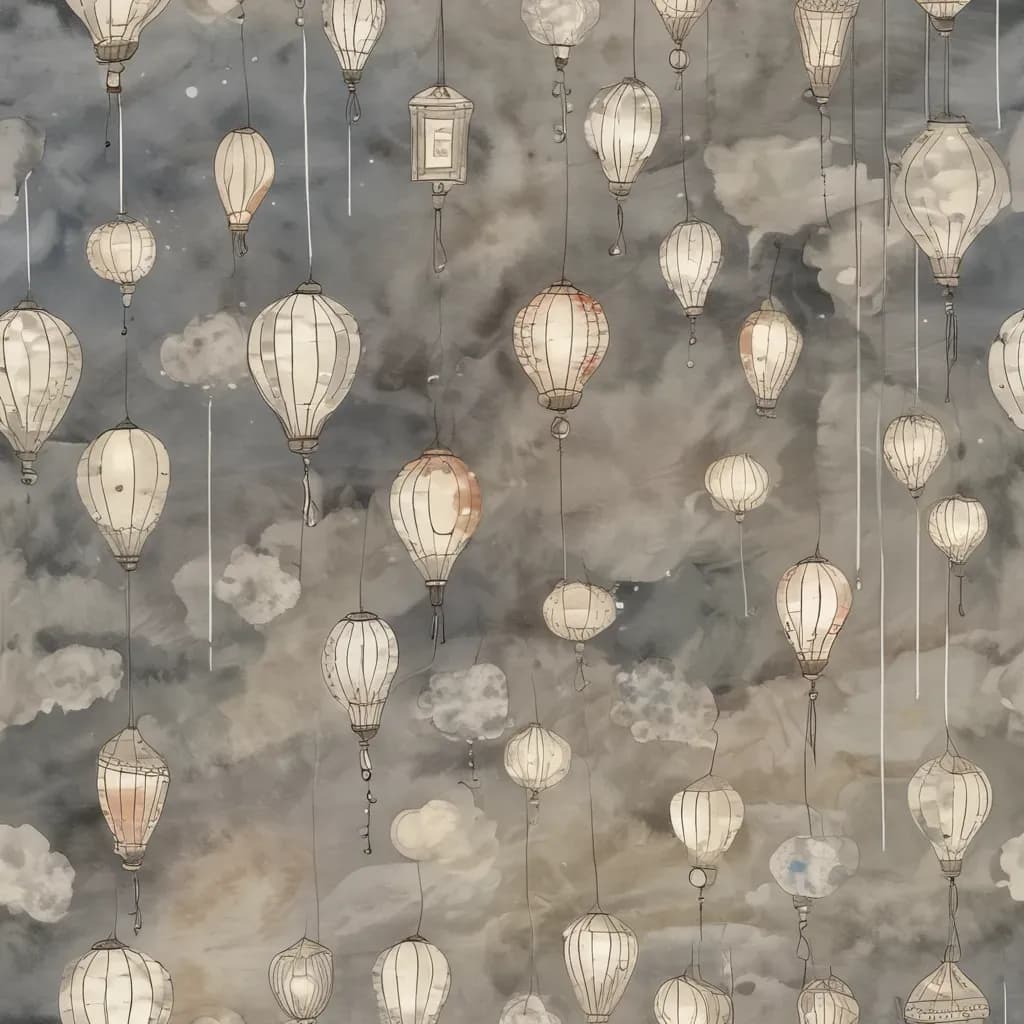
The title does a lot of quiet work before a note plays. Whispers carried on the wind are faint, unreliable and easy to lose. They are also, traditionally, how rumours, warnings and half-heard intuitions travel. Setting that image against a song about reassurance creates a pleasing tension.
One reading is that the wind stands for the noise of the outside world: the news cycle, the anxiety, the sense that every gust brings another piece of bad information. Against that, the whisper is the intimate voice that cuts through. It is the thing one partner says to the other when words need to be small to be believed.
A second reading flips it. The whisper is fragile, and the song is aware of that. Safety in a relationship is not a fortress. It is something two people keep making, again and again, in low voices, because the alternative is to be swept away. On this reading the song is less a boast of security than a gentle vow to keep protecting it.
Why closing the album matters
Track order shapes meaning. An album called A Safe Place To Be Wild could easily end on a defiant, chest-out note. Instead it ends by turning the lights down and leaning in.[1] That choice reframes everything before it. If the earlier songs are the wildness, the experiments, the confessions and the self-questioning, the closer is the place all of that is allowed to happen.
There is also something fitting about a closer that trusts its audience to sit with feeling rather than chase a hook. In an era of short attention spans and playlist skipping, a grand, patient ballad at the end of a long record is a small act of faith in the listener.
Rakei's longer arc
Rakei was born in Tokoroa, New Zealand, raised in Brisbane, and settled in London in 2015.[5] Across a run of albums that stretches from his self-released early work through Ninja Tune releases and into the 2020s, he has moved between jazz, soul and electronic production without losing a recognisable sensibility.[5] His records tend to circle a question about how to stay human and connected inside a modern world that pulls attention in every direction.
Seen that way, this closer is less a departure than a sharpening. The earlier preoccupations with identity, technology and belonging are still there, but the answer on offer is plainer. Stay close to the people who make you feel safe, and let that be enough to steady the rest.
The Abbey Road connection adds a quiet irony. That studio is one of the most storied rooms in popular music, a place with a weight of history in its walls.[2] Recording an album about gentle refuge in a space so associated with grand statements helps explain the song's blend of hush and scale. It sounds like a private moment that was allowed to take up as much room as it needed.
There is a practical lesson in the sequencing too. Albums that end on resolution tend to be remembered as complete experiences rather than collections of singles. By ending with a song of reassurance, Rakei invites a replay: the listener returns to the start knowing where the journey lands, and hears the wildness differently.
Cultural resonance
The song arrives at a moment when many listeners are living with a steady background hum of distant crisis. Wars and conflicts reach people daily through their phones, and the usual response is either numbness or doom. Pop music has a long tradition of offering a third option, which is to point at the person beside you and say that this, at least, is real.
What makes Rakei's version effective is that it avoids both sentimentality and escapism. The statement the song makes, as he frames it, is not that the world is fine. It is that the world is not fine, and that tenderness is still worth defending.[1] That is a modest claim, and perhaps for that reason a believable one.
Other ways to hear it
Because the artist's own explanation centres on a romantic relationship, that is the most natural reading. But the language of safety and shelter stretches easily. Some listeners may hear it as a song about family, friendship or a long-term creative partnership. Others may hear an inward turn, a person learning to offer themselves the same reassurance they give others.
That last reading connects to the album's wider interest in self-acceptance.[3] If the safe place of the album title is partly inside the self, then the whisper might be an internal voice, the kind that has to be cultivated over years before it can be trusted.
There is also a political reading that sits just beneath the surface. A song that names no villain and takes no side can still be a statement, because choosing tenderness during a period of conflict is itself a position. It refuses the idea that private feeling is a distraction from public events. Instead it treats care between two people as one of the few things anyone can actually build while larger forces play out elsewhere.
It is worth being plain about the limits of what can be said. The song is new, and public commentary from the artist so far is brief. The reading above leans on his own summary and on the context of the album, and anything beyond that is interpretation rather than reported fact.
Closing thoughts
"Whispers in the Wind" is the sound of a record exhaling. After an album of exploration, Rakei closes with a song that says the exploring was only possible because someone, somewhere, made the ground feel steady.[1] Its grandeur and its softness are not in conflict. They are the same gesture: making something enormous in order to protect something small.
For a listener carrying the weight of the news, or simply the weight of an ordinary hard week, that is a generous thing for a song to do. It does not promise that the wind will drop. It offers a voice close enough to hear anyway.
References
Keep reading
More Neo-Soul
- Warmest Shade Of Blue Snoh Aalegra
- No More Lies (Live) Thundercat
- Move Along Jack Harlow
- This Thing We Call Love Thundercat
- Say Hello Jack Harlow
- Dangerous Lover Sekou