Dine N'Dash
A restaurant check arrives, and someone decides not to pay it. That small act of petty theft is the doorway into one of the strangest songs The Strokes have recorded. "Dine N'Dash" starts with the language of a bad date and a bounced card, then keeps walking until it reaches territory that is far darker and far more uncomfortable.[1]
It is the second track on Reality Awaits, the band's seventh album, and critics have been quick to treat it as a centerpiece.[8][5] What makes it compelling is the gap between its surface and its core. It sounds poised, even elegant. It is about a man who cannot reconcile what he wants to be with what he feels.
Where the song sits
Reality Awaits came out on July 24, 2026, on Cult Records and RCA, and it is the first Strokes album since The New Abnormal in 2020.[9][6] Rick Rubin, who produced that earlier record, returned behind the board. The album was recorded in Costa Rica and finished in various places around the world, with the lineup unchanged: Julian Casablancas, Nick Valensi, Albert Hammond Jr., Nikolai Fraiture and Fabrizio Moretti.[9]
The record has nine songs, and "Dine N'Dash" arrives right after the loud opener "Psycho Shit."[9][8] Stereogum noted that the placement gives the album a quick change of gears, moving from noise into one of the cleanest and most polished slices of indie rock the band has made in years.[8]
The band chose to play it live before anyone could hear the finished album. "Dine N'Dash" made its concert debut on July 23, 2026, at Red Rocks Amphitheatre in Morrison, Colorado, hours before release.[4] It was the seventh song of the main set, and apart from the lead single "Going Shopping," it was the only new track they played that night.[4][5]
A cool surface and a restless engine
The sound is a big part of the meaning. Paste described a glowing, post-disco pulse running through the track, and its reviewer even wondered whether a British accent was surfacing in the vocal, one of many unexpected timbres on the record.[6] Songfacts hears the same detail and adds that parts of the song drift into spoken word.[1]
Stay Free Radio called the production warm, unhurried and lived in, with a sense of space that suits Rubin's approach, and described the whole thing as cool but never cold.[2] There is a faint tension underneath. The band sounds locked in, yet the performance keeps tipping slightly off balance.
Stereogum singled out two things: a gut-punch guitar tone, and a vocal that sounds fragile and convincing without leaning on the vocal processing that dominates much of the album.[8] He mumbles, drawls, croons and strains, sometimes inside the same stretch of song. That variety of voices fits a narrator who cannot settle on a single self.
The melodic hook has its own story. Songfacts calls it the evil twin of the hook in "The Adults Are Talking," a pointed way of saying that the band has taken a shape from their own past and bent it toward something sourer.[1] The song runs a little over five minutes, long by Strokes standards, and it uses that room to lurch between hazy detachment and menace.[1]
Walking out on the bill
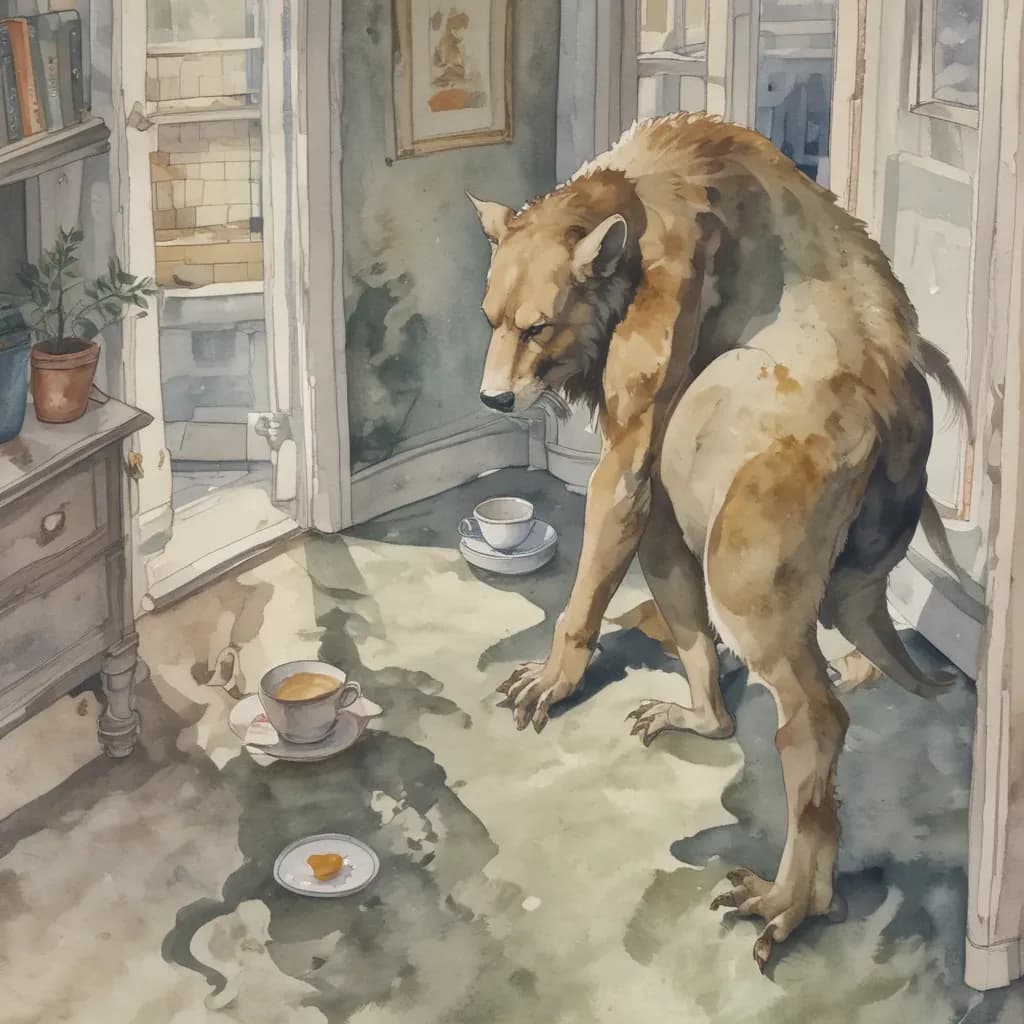
Start with the title image. A dine and dash is a small, cowardly crime, and it works as a metaphor on several levels at once. Songfacts reads the song as a study of financial desperation and impulsive escapism, where the stolen meal is less important than the feeling of being trapped that drives it.[1]
Medicine Box takes the image in a more romantic direction. For that writer, the unpaid tab stands for a relationship the couple could never afford, with the narrator quietly covering the exit while pretending that everything is going well.[3] The opening scene is a standoff built on a bluff that both people can see through.[2][3]
Stay Free Radio notes that, in this telling, the narrator takes what he needs and lets the other person slip out cleanly. The cheerful reassurance he offers along the way reads as dark irony, a social lie offered by someone who knows better.[2]
There is a nice, uncomfortable joke buried in all this. A band led by a famously privileged singer delivers a refrain about not being able to afford things, and Stereogum pointed out the irony without letting it ruin the song.[8] The tension between status and anxiety is part of what keeps the track alive.
Permission, power and the leash
Midway through, the song stops being about a date and starts being about authority. A proverb about birds and their company gets deliberately twisted, which Medicine Box reads as a sign that loyalty here leads nowhere good.[3] Then comes a break built from a run of questions about what the speaker is allowed to do.[2][3]
Those questions have an institutional ring. Medicine Box compares them to a soldier's or a prisoner's checklist, and Stay Free Radio hears defiance without direction, a person pushing against social control all the way down to the question of whether he is even permitted to die.[2][3]
This is where the song becomes plausibly political. Reading it alongside the rest of the album helps. The Line of Best Fit described Reality Awaits as a bleak satire of a collapsing world, populated by out-of-touch billionaires, people hooked on AI chatbots, corporate drones and war hawks.[7] A narrator asking permission for basic acts of existence belongs to that landscape.
The beast in the room
The darkest stretch arrives in the later verses. Songfacts describes graphic violent imagery and a predatory instinct that the narrator can neither explain nor dismiss.[1] Stay Free Radio reads one verse as a violent fantasy rather than a deed, delivered by someone who thinks of himself as peaceful and is appalled to find the impulse in his own head.[2]
Medicine Box describes the same moment as a procedural violent fantasy followed immediately by horror at the speaker's own capacity for it.[3] The reviews agree about the shape of the experience, and that shape is the song's real subject. The question is not whether the narrator will act. It is what you do with the part of yourself that you did not choose and cannot stand.
Then the final verse turns toward blunt self-criticism. The writers hear an admission of prejudice and animal instinct, paired with a promise to work on it, and a tone of exhaustion by the end.[2][3] There is no triumph in any of it. The song does not offer redemption, only the tired honesty of someone who has looked.
Songfacts frames the contrast well. Early Strokes songs were about boredom, nightlife and the glamour of not caring.[1] This one turns inward, and the conflict is psychological rather than social. The band that once made detachment sound glamorous is now asking what detachment costs.
The unfinished ending
The song closes with a bit of speech that sounds like a studio comment about how softly or firmly to play. Songfacts and the others differ on how to describe it, but Stay Free Radio and Medicine Box both read it as leftover talk from the recording session that was kept on purpose or by accident.[1][2][3]
The effect is to make the track feel like an unfinished draft. Stay Free Radio argues that this suits a song that never resolves its contradictions.[2] Medicine Box hears restraint in it.[3] Either way, the song leaves the room without settling the bill.
Other ways to hear it
There are at least three readings, and the sources support all of them. The first is personal. The narrator is a man in a failing relationship who escapes through small lies, and whose private rage frightens him. In this version the money is metaphorical, and the debt is emotional.[3]
The second is psychological. Songfacts and Stay Free Radio both emphasize an internal conflict between destructive urges and a longing for peace.[1][2] The restaurant is a stage set, and the real drama takes place in the narrator's head.
The third is social. Medicine Box allows for an outward reading, in which the song is about power and how it gets abused, with the narrator as a small cog who recognizes the machinery.[3] This reading fits neatly with the broader satire that The Line of Best Fit found across the album.[7]
Nothing in the available coverage records the band explaining the song themselves, so all of these remain interpretations rather than confirmed intentions. That openness is part of the pleasure. The track holds all three ideas at once without choosing between them.
Why it matters
Critical opinion on Reality Awaits has been divided. Paste called it bizarre but impressive, weirder and more demanding than The New Abnormal, with fewer big hooks.[6] The Line of Best Fit gave it a more mixed reception, praising the concept while objecting to the vocal production on several songs, and still named "Dine N'Dash" among the impeccable numbers.[7] Far Out went further and called it the album's standout.[5]
That agreement on one song, in a divided response, says something. "Dine N'Dash" shows the band doing what they do best, which is making tension sound effortless, while pushing into emotional ground they rarely visited in their early years.
Its larger accomplishment is to take a tiny act of cowardice and turn it into a mirror. Anyone who has ever slipped away from a hard conversation, a bad situation or a bill they could not face will recognize the first impulse. The song then follows that impulse down to where it gets frightening, and it does so over a groove that you could dance to.
That combination of polish and dread is hard to forget. It makes the song feel less like a story and more like a mood you carry out of the room, with the check still sitting on the table behind you.
References
Keep reading
More by The Strokes
More Indie Rock
- Bark at the Moon MJ Lenderman
- Lonely Richard Amen Dunes
- Octoberland Atlas Sound
- Stoned and Starving Parquet Courts
- Pancake Swirlies
- Random Rules Silver Jews