Hardwired
Most songs about hard work flatter the worker. They offer a pickup truck, a paycheck and a sunset, and they promise that effort will be noticed. "Hardwired" is more honest and stranger than that. It is a song about people whose endurance has become so automatic that they no longer register how much it costs them, and it borrows one of alternative rock's most famous questions to say so.
Released on July 31, 2026, as a duet between Stephen Wilson Jr. and Miranda Lambert, the song sits where country storytelling meets the heavier, moodier language of 1990s Seattle. That blend is Wilson's signature, and this track may be its clearest statement.
Where the song came from
"Hardwired" was written by Wilson, Lambert, Jesse Frasure and Adam Hood[2], and Pixies frontman Frank Black is later credited as a co-writer because of the interpolation at its center[4]. Wilson has said he was brought into the writing room at the last minute and was not even supposed to be there[1]. The chorus arrived early, and its melody began to lean on minor chords, giving the song a heavier emotional tilt than the genre's usual uplift[1].
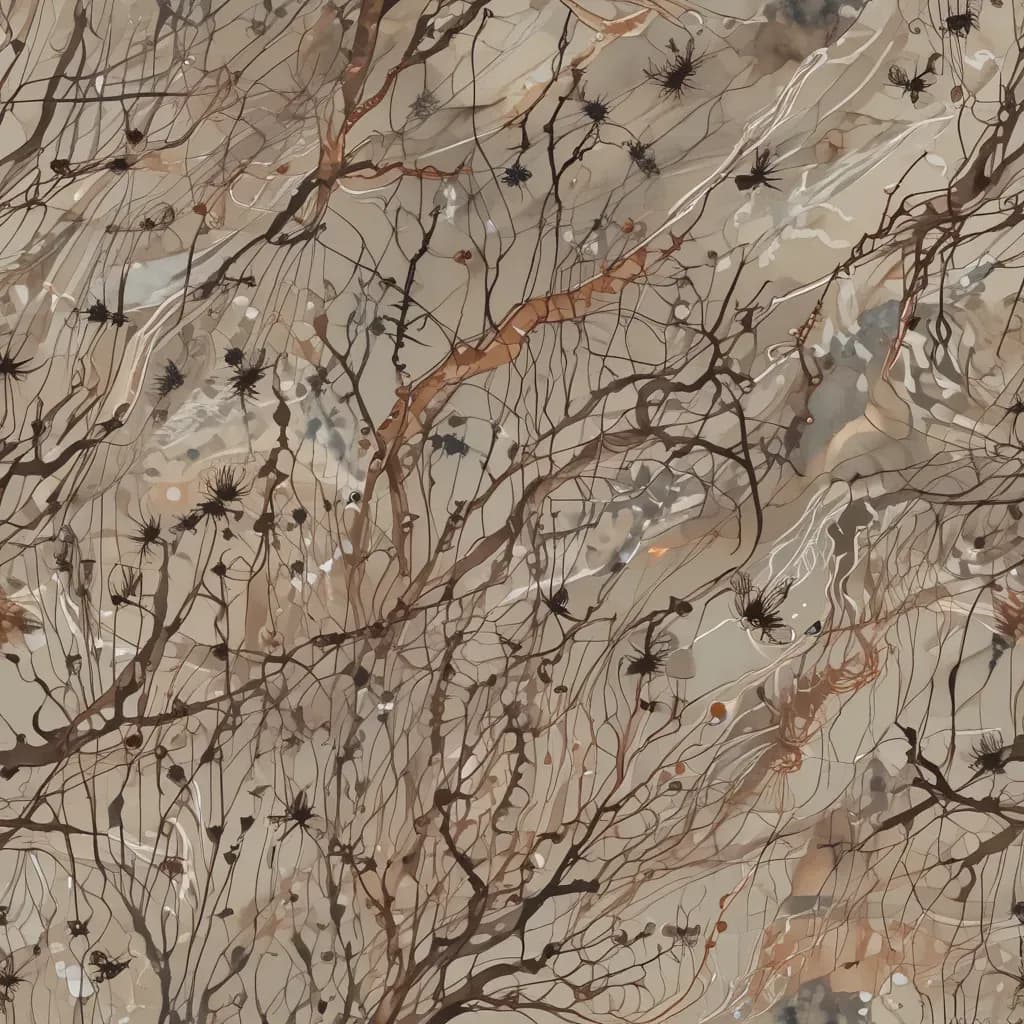
The single came out with a visualizer directed by Jace Kartye. It shows the circuitry of a computer chip with worms and other bugs crawling across the scenes[2]. The imagery is a neat visual pun on the title: wiring that cannot be changed, and small organisms moving through it regardless.
The song later landed a Grammy nomination for Best Country Song, and it appears as the second track on Wilson's double album, Impressiøn Of A Human // Children Of The Cørnerman, due February 26, 2027[4]. Wilson has described the two halves of that release as a semi-dystopian hillbilly future and a semi-dystopian hillbilly past[4]. "Hardwired" belongs to the past half, the one that tries to make sense of a hardscrabble upbringing.
A flashlight on unglamorous lives
Wilson grew up on a rural route in southern Indiana, surrounded by farms and spending time around a body shop, among people he describes as having real grit[1]. He has said the song is very rural, and that he wanted to celebrate those overlooked people and shine a light on them[3].
The details he cites are physical and unromantic. A worker so tired that sleep arrives on the couch with the boots still on. Someone standing knee-deep in rain and mud when a chain slips loose from a trailer hitch[1]. Wilson says he has fallen asleep in his own steel-toed boots, which suggests these are remembered scenes rather than invented ones[1]. None of these moments is dramatic. They are the small, repeated indignities of manual labor, the sort that never become anecdotes because they happen every week.
One reviewer reads the song as a portrait of laborers too worn down to care about appearances, with no time to do anything but try to recover[2]. That reading fits the picture. The song's people are not suffering theatrically. They are simply used up, and the song's loyalty to them lies in refusing to dress that fact up.
What "hardwired" really means
The title carries the argument. In Wilson's explanation, people who keep going anyway are hardwired to do so, and the world made them that way. He talks about it as the product of time, temperature and pressure, as if these workers were forged rather than born[1]. He sees real art in that process[1].
There is an ambiguity here that makes the song richer than a simple tribute. To be hardwired is to be strong, but it is also to lack a choice. A circuit does not decide to carry current. Read one way, the title is praise for resilience. Read another way, it is a quiet charge against a world that shapes people to absorb punishment and then relies on them to keep absorbing it.
The sound supports both readings. The mix of country and grungier rock[2] gives the song a weight that a bright, polished arrangement would not. It plods a little, in a good way, like someone on the last hour of a long shift. The minor-key pull of the chorus keeps any sense of triumph from becoming too easy.
The Pixies detour
The most talked-about element of the song is the bridge. Midway through, Wilson and Lambert interpolate the title phrase and an image from the Pixies' "Where Is My Mind?", using it in a longing way beside the song's own chorus[2]. On paper it sounds like a stunt. In practice it is the emotional hinge of the whole piece.
Wilson has explained how it happened. While writing, the Pixies song kept drifting into his head. He said nothing at first, because nobody wants to be the person who starts playing a different song in the middle of a writing session. He recorded the idea anyway, and it kept returning[1]. Because he generally avoids bridges unless a song truly needs one, and because he felt the verses had said what they had to say, he used the borrowed line as the bridge instead[1]. He says it fit the existing material and carried it somewhere new[1].
He does not claim the Pixies song is about hardworking people. His point is that in this context it takes on a different meaning, speaking for people who feel they are losing their minds a little every day from overwork[1]. It is a smart move. The original is a famously dreamy, disoriented piece of alt-rock, and moving it into a country song about exhaustion turns that disorientation into something practical. Fatigue is not only physical. It also wears away the ability to notice that you are tired. One reviewer makes a similar point, reading the interpolation as underscoring how exhaustion leaves workers unable to recognize their own exhaustion[2].
Wilson also says that the interpolation was not something he normally sets out to do. It just happened, and he did not fight it. The only obstacle was the business and publishing side, which was resolved, and he says Frank Black was kind enough to allow the use[1]. The credit that resulted is part of why the song drew extra attention at Grammy time, since it gives Black what Stereogum counts as his first-ever nomination in a songwriting category[4].
A country song with Seattle in its bones
Wilson describes "Hardwired" as one of the most country songs he has written lyrically, and he jokes that he is all hat, no Seattle[3]. That joke captures the tension in his music. His heroes in country include George Jones, Johnny Cash and Hank Williams, and he credits Tim McGraw's "Don't Take the Girl" with making him cry on a school bus at about twelve[1][3]. But he also came of age on grunge, naming Nirvana, Soundgarden and Weezer among the records that shaped him, and he has said Soundgarden's Superunknown taught him about alternate tunings[1].
On "Hardwired" he leans on the country side for the lyric. He says he studied how Jones, Cash and McGraw built their songs, and he describes his own sound as painting similar pictures to theirs with a different brush[3]. The Pixies bridge is where the other half of his education surfaces. It is a gesture that says both traditions belong in the same room, and that a working-class song can be built from the vocabulary of 1990s college radio as easily as from the honky-tonk.
Lambert's presence strengthens this. As a co-writer, she was part of the song's shape from the first session[1][2]. The duet format also helps the song's subject. A single narrator can sound like a complaint. Two voices sound like a community.
Why it resonates
Country music has always claimed to speak for working people, but the claim often rings hollow when the songs treat labor as a branding exercise. "Hardwired" sidesteps that by paying attention to bodies and objects: boots, mud, couches, trailers. It does not ask the listener to admire the worker so much as to see them, and to understand that endurance is not the same thing as contentment.
The timing helps. The song arrived in a year when Wilson's career had already expanded, with his earlier hit "Gary" and the singles around it sharing a through line of upbringing and class[3]. Whiskey Riff observed that "Hardwired" and "Gary" both draw on his upbringing[3]. For a songwriter who spent years pitching strange songs in Nashville that nobody knew where to place, there is a satisfaction in seeing this one recognized by the industry that once hesitated[1][4].
Other ways to hear it
Some listeners will hear a straightforward salute, and Wilson's own comments support that. His stated aim is to celebrate people who rarely get celebrated[3]. That is the most direct interpretation, and it is a satisfying one.
A second reading treats the song as critical. If people are hardwired by pressure, then somebody is applying the pressure. Placed on an album that Wilson says looks warily at a technology-driven future on one side and wrestles with a hardscrabble past on the other[4], the song can feel like a bridge between those worlds. The circuit-board visualizer[2] nudges that way, suggesting that the old labor and the new machinery are not so different, and that both treat people as components.
A third reading is more personal. Wilson lost his father suddenly, and his career grew out of that grief[1]. A song about people shaped by time, temperature and pressure can also be a song about a son trying to understand the man who raised him, and the kind of life that made him. That interpretation is not stated by Wilson in connection with this track, so it should be held lightly, but it fits the emotional register he has built across his work.
Conclusion
"Hardwired" works because it keeps two ideas in view at once. Endurance is admirable, and endurance is also something people are pushed into. The song does not resolve that tension, and it is better for it. By lifting a dreamy alt-rock question into a country song about exhaustion, Wilson and Lambert give the working-class anthem a new and slightly unsettling register.
What remains after the last chorus is a feeling more than a slogan: the tiredness of people who never stop, and a stubborn respect for them anyway. In a genre crowded with easy tributes, that is a rarer thing to leave behind.
References
Keep reading
More Country Rock
- Bark at the Moon MJ Lenderman
- Desperado Eagles
- How's It Goin' Bryan Adams
- The Battle Of Lundy's Lane Bryan Adams
- Torn U2
- I'm a Song Stephen Wilson Jr.