No More Dream
Most debut singles introduce a group by smiling at the audience. "No More Dream" did something closer to the opposite. It arrived in June 2013 with a scowl, a hip-hop beat and a question aimed squarely at the young people who might be listening: what are you actually doing with your life, and who told you to want it?
BTS were seven teenagers and young men from a small company, standing in a K-pop industry dominated by three giant agencies. Their first act was not to flatter that world but to talk back to the larger one behind it, the society of exams, résumés and safe careers that had shaped all of them.[6]
A debut from the underdog
The song is the fourth track on 2 Cool 4 Skool, a debut single album released on June 12, 2013 by Big Hit Entertainment. The music video came out the same day, and the group performed on Mnet's M Countdown the next day.[1] It was written by Pdogg, "Hitman" Bang, RM (then Rap Monster), Suga, J-Hope and Supreme Boi, with Pdogg producing.[1][3]
That list matters. Even on the first record, the rappers of the group were credited as writers, and the lyrics were reportedly rewritten more than twenty times by Suga and RM.[1] Debut-day coverage described seven members who rapped, sang, danced and took part in composing and producing, which was an unusual pitch for a rookie act.[4]
The press at the time heard something familiar and something new. One report said the track recalled 1990s gangster rap rebuilt in a contemporary style, with a strong hip-hop beat and a message about the dreams of youth.[4] The group were presented as "hip-hop idols," a label that placed them alongside a few other recent acts but set them apart from the polished pop that surrounded them.[6]
The commercial start was modest. The single debuted at number 124 on the Gaon digital chart, and the album sold fewer than a thousand copies in its first week.[1][3] Dazed later called the video the one that started it all, and noted that BTS were never expected to succeed.[6] Seen from today, the quiet reception makes the song's defiance feel earned rather than inherited from fame.
The message travelled. In 2014 the group released a Japanese version as their debut single in Japan, with new Japanese lyrics, and it later appeared on the album Wake Up.[3] That release reached number 8 on the weekly Oricon chart and sold more than 32,000 copies in its first week, a far warmer reception than the original had found at home.[3] A new video was shot for it, using different locations but the same theme of vandalised buildings.[3]
The early live history tells a similar story of slow, stubborn growth. Generasia lists the song as the centrepiece of the group's first stage appearances, beginning with M Countdown on June 13, 2013.[3] For years afterward it stayed in the set, long after bigger hits had arrived, which suggests the group regarded it as a foundation and not a souvenir.[3][6]
The question the song asks
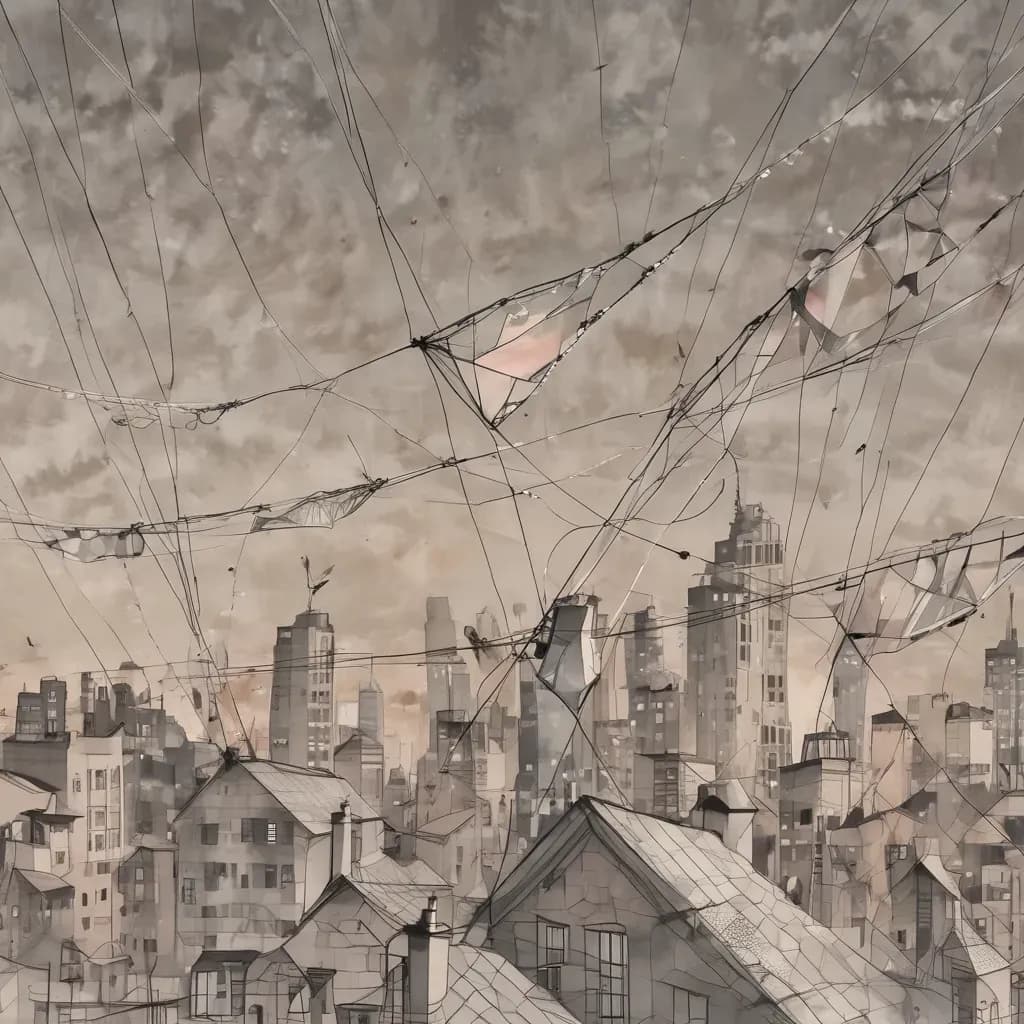
At the centre of "No More Dream" is a critique of a life lived on autopilot. The narrator's world offers a script: study hard, pass the tests, find a respectable job, collect the symbols of success. The song looks at that script and asks whether anyone on it is actually dreaming, or just executing a plan.
Commentators have read this as an argument against a traditional nine-to-five future, and also as an attack on hypocrisy. In that second reading, the people who sneer at an ambitious young person for aiming too high are often people who have no aspirations of their own to defend.[6] The song is less a rejection of work than a rejection of a smallness that passes itself off as maturity.
Suga's verse is often singled out for its sarcasm. He rattles off the trappings that adults say they want, in a tone that makes plain he is mocking the shopping list rather than endorsing it.[6] The humour is part of the point. The song prefers a raised eyebrow to a sermon, which makes its anger easier to share.
Pressure, class and the weight of a national mood
The song also reaches past school and career toward the condition of an entire generation. A Billboard analysis, as summarized by Nicki Swift, notes that the rap parts invoke the popular Korean slang for the country as a kind of hell for its young people, and urge rebellion against a rigid society.[2] That slang belongs to a wider conversation about stagnant opportunity, inherited advantage and the exhaustion of young adults who feel the ladder has been pulled up.
The album's broader themes support this. Wikipedia's account of 2 Cool 4 Skool, drawing on Kim Youngdae's book BTS: The Review, describes lyrics concerned with misunderstanding and prejudice, with a society that diminishes the dreams of the young, and with anxiety and determination about the future.[1] That reading holds together the title track's defiance and the more tentative feelings elsewhere on the record.
It is worth remembering who is delivering these thoughts. The members were in their teens and early twenties, and they had committed to a risky career in music rather than the safer path many peers were encouraged to take. The song does not need to be read as strict autobiography to carry that tension. Its anger has the specific flavour of people who have just made a risky choice and are daring the world to say it was a mistake.
Sound, image and a debut video that dared
The music video was directed by Zanybros, with choreography by Son Sungdeuk.[1] Generasia describes scenes of the members dancing in the street after a bus crash, in a graffiti-covered building and inside the bus itself.[3] Dazed recalls skate ramps, classrooms and graffiti, and calls the whole thing overstuffed but effective.[6]
The imagery is a school setting turned into a stage. That is consistent with where the song sits in the group's early work, the first part of what fans call the school trilogy, and it frames the entire project as a conversation with students, about students.[6] The uniform and the classroom become props in an argument about whether the thing they represent is a path or a cage.
The dance is a major part of the song's afterlife. Dazed noted that the group performed it live in full until the 2017 Wings tour, and that those performances lent it the strength of a self-fulfilled prophecy.[6] The dance break, with its fearless group choreography, became a staple that fans still discuss.
The song looking back at itself
One reason the track keeps its power is that BTS kept returning to it. In 2022, when the group assembled the anthology Proof to mark nearly a decade together, Suga and Jimin chose to include it.[5] Suga described it as their debut song and the kind of song they could only have made back then.[5]
Jimin agreed with that assessment and added something important. He called it the first song in which the group truly expressed their emotions and message clearly.[5] That statement turns a debut single into a statement of purpose. It frames the later themes of mental health, youth and self-acceptance as growing out of this early, noisy refusal.
The song has also had unexpected second lives. In April 2020 it re-entered Billboard's World Digital Song Sales chart at number two and was the best-selling K-pop song in the United States that week, and it reached number one on that chart in December 2023.[1] For a track that began at the bottom of a domestic chart, that arc is a small proof of its own argument.
Other ways to hear it
Not everyone hears a purely political song. The original coverage focused on the sound and the youthful message, and many fans treat it as a motivational anthem, a song to play before an exam or an audition.[2][4] On that reading, the title is less a rejection of dreaming than a call to stop dreaming passively and start acting on what you want.
A more sceptical listener might note that a group built by a company and trained for years is an imperfect messenger for rebellion. That tension is real. But the song's sharpness comes partly from that position. It is a message from inside the machine, delivered by people who had to work within it, which makes the cynicism feel hard-won rather than posed.
There is also an older, more universal reading. Strip out the specific national context and the song describes any moment when a young person realises that the future handed to them was designed by someone else. That recognition happens in every country, which helps explain why a Korean-language debut found listeners far beyond Seoul.
Why it still matters
"No More Dream" is rarely the first BTS song a casual listener learns, and it is not the group's most polished work. Its value is as a starting point. It shows the seven members choosing, on their first outing, to say something rather than only to charm.
That choice set the tone for everything that followed. The school trilogy, the later albums about adolescence and anxiety, and the group's habit of treating fans as peers instead of customers all trace back to this record's blunt question. Whether it is read as protest, pep talk or career statement, the song makes the same demand of its audience: decide what you actually want, and do not let a checklist decide it for you.
References
Keep reading
More K-Pop
- DEPENDS XG
- UP ATEEZ
- Boogie Woogie NCT DREAM
- You're Under Arrest ILLIT
- Someone To Hold JENNIE
- Attitude aespa