Garden Song
Most songs about growing up pick a single memory and polish it. "Garden Song" does something stranger and more honest: it lets the past, the present and a few outright hallucinations share one yard. There is a quiet suburban backdrop, a bad dream, a bit of folk medicine, a joke about burying someone, and underneath all of it a person trying to figure out whether she is allowed to be happy.
It was the first solo music Phoebe Bridgers released in nearly three years, and it set the tone for an album that would be remembered for its dark humor and its dreamlike sprawl. It still works as a small, strange map of how anxiety actually feels: not one big fear, but a constant low hum in which ordinary images keep turning sinister.
Where the song comes from
"Garden Song" arrived on 26 February 2020 through Dead Oceans as the lead single from Punisher, and it was her first solo single since the 2017 debut Stranger in the Alps.[2] Bridgers wrote it with Christian Lee Hutson and Marshall Vore, and produced it with Tony Berg and Ethan Gruska at Sound City in Los Angeles.[2] According to Songfacts, she wrote it while on tour and built much of its sound palette on an iPad app, which helps explain the shimmering, slightly unreal synthetic haze around her voice.[3]
The setting matters. Reviewers noted the song's roots in Pasadena, the Southern California city where she grew up, and the New Yorker described the result as dreamlike and mundane at the same time, steeped in melancholy.[2] That pairing is the song's whole method. The suburbs are never just the suburbs, and the dreams are never just dreams.
Bridgers has described Punisher as a record about the distance between having what you wanted and being able to enjoy it, and about coping tools that were useful once and now hold her back.[3] "Garden Song" is the opening statement of that idea. It frames the whole album as something like the first stretch of therapy: looking at old material you cannot change and deciding what to do with it anyway.[3]
Everything on the list
When Bridgers was asked to summarize the song, she gave a list rather than a sentence. According to the Apple Music note quoted by Songfacts, it covers growing up, falling in love, murder, a sex dream, witches, zombies, anxiety, depression, energy work, therapy and wanting to garden.[3] The joke is partly that the list sounds absurd. The other part is that nobody who has lived inside an anxious mind will find it absurd at all.
That scattershot quality is deliberate. The song does not build toward a thesis. It moves from image to image in the way thoughts do at three in the morning, where a childhood landmark can sit directly next to a grisly fantasy, and neither one feels out of place. Pitchfork called it an understated rumination on lost time and complicated nostalgia, and praised the way its slight arrangement lets her humor and storytelling quirks come through.[2]
Manifestation, and the fear that comes true
The most useful thing Bridgers has said about the song is that it concerns things becoming real the more you think about them.[2] That idea runs through the whole piece. The narrator imagines a future garden, a settled life, a quiet kind of happiness, and almost in the same breath imagines the ways it will be spoiled. Wishing and dreading feel like the same act.
Anyone who has anxiety will recognize the trap. If you picture a bad outcome vividly enough, it begins to feel like a prediction, and if you picture a good one, it feels like tempting fate. The narrator keeps trying to plant something hopeful and keeps finding it entangled with worry. The title's image of tending a garden turns out to be a metaphor for patience, which is exactly the quality anxiety makes hardest to practice.
Bridgers also noted that many of her lyrics are real events she tucked away without realizing their significance, only recognizing them once they appeared on the page.[3] That helps explain the odd texture of the writing. The details are too specific and too off-center to be invented for effect. They feel like things that happened to her, filed in memory exactly as they were.
The graveyard joke and the Nazi next door
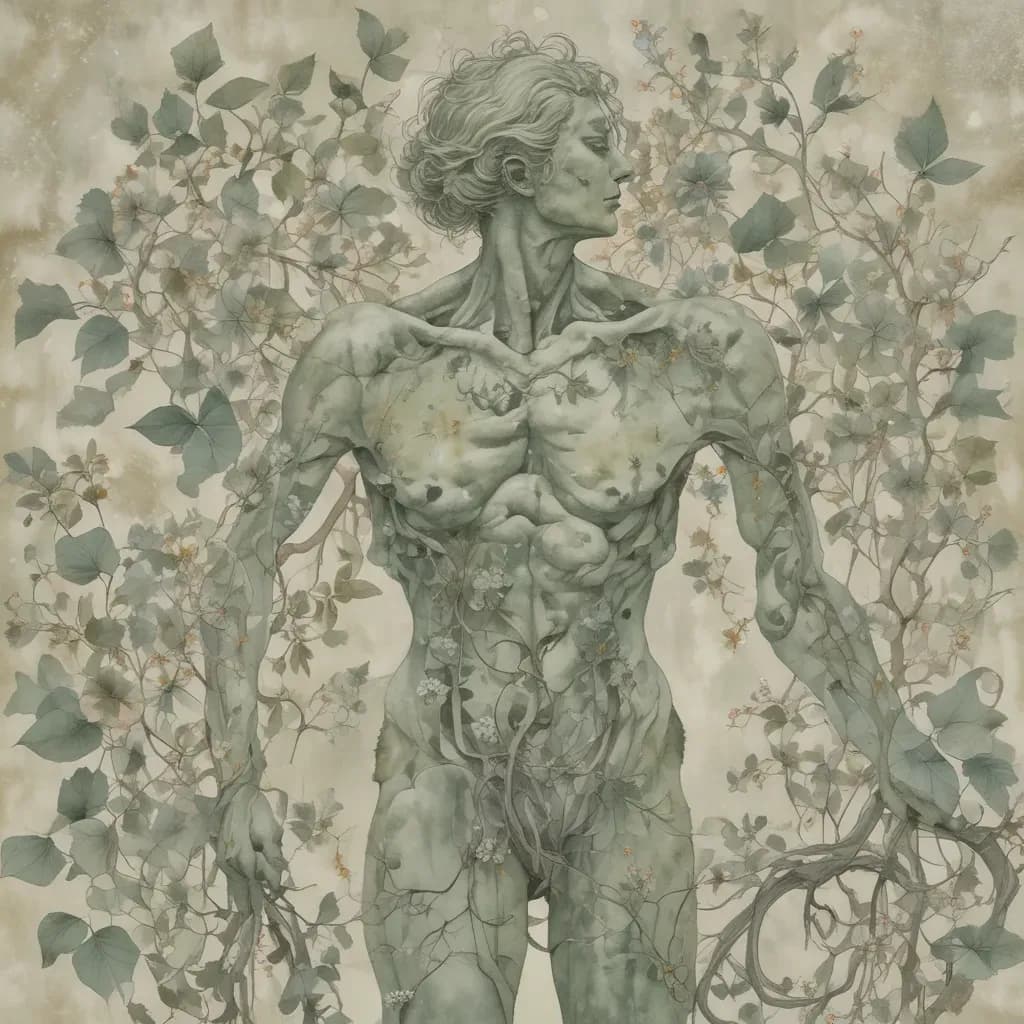
The opening scene, according to Songfacts, alludes to murdering a white supremacist and burying the body in a garden.[3] The origin is surprisingly mundane. It was inspired by an old crush who lived next door to a neo-Nazi and used to joke about doing precisely that.[3] The fantasy is therefore not really a confession. It is a bit of dark, adolescent gallows humor that has stayed lodged in her head and resurfaced when she needed a way to talk about the neighborhood of her memory.
This is a good example of how the song handles menace. Violence is present, but at a safe, comic distance, like something a teenager says to impress someone. Yet it gives the garden its double meaning. The place where things grow is also the place where things get hidden, and the song never lets us forget that a yard can hold both.
The liver, the doctor, and the strangest true detail
The most beloved moment in the song is also the most literal. Bridgers has said it comes from a visit to a Los Angeles nutritionist, who told her something about her liver that she considered the craziest thing she had ever heard, which is why she knew it belonged in a song.[3][5] Songfacts connects the detail to the idea in traditional Chinese medicine that the health of the liver is bound up with emotional health, and in particular with resentment and anger.[3]
Whether or not you believe in that framework, the image works. It takes the abstract business of holding onto old hurts and gives it a body part and a practitioner. For a few seconds, healing sounds almost physical, and the song gains a note of tenderness that its jokes might otherwise hide. After so much talk of fear and burial, a stranger offering a small reassurance feels like relief arriving from an unexpected direction.
It also reflects how Bridgers works generally. She treats the comic and the sincere as part of the same breath, trusting that a ridiculous detail can carry real emotion if it is true enough.
Sound as a second narrator
The arrangement does a great deal of the interpretive work. Reviewers described shimmering synths and delicate vocals, and the track sits on a slow folk-rock pulse that never quite resolves into a climax.[2] Under it all runs a deep voice, which belongs to her tour manager, Jeroen Vrijhoef, a man known for being well over six feet tall.[3] His low murmur underneath her light one adds an extra figure to the song, as though the narrator's anxious conscience had begun talking back.
The effect is hushed but crowded. It sounds like a room with someone else in it, which suits a song that is partly about being haunted by your own head.
The video as a companion
The accompanying video was directed by her younger brother, Jackson, and the concept was hers: she wanted it to begin with her taking a hit from a bong and then asked him to surprise her with whatever came next.[2][3] What follows is deliberately goofy, with fuzzy creatures in her bedroom and the comedian Tig Notaro appearing as a monk.[2] It would be easy to read this as a distraction from the song's heavier themes, but it fits. The video treats the same material the way the lyrics do, as something frightening and ridiculous at once, filtered through a hazy domestic space.
Reception and afterlife
Critics responded warmly. Consequence of Sound named it Song of the Week, with Dan Weiss praising the complexity of the writing, and Pitchfork later ranked it ninth on its list of the best songs of 2020, with the New York Times placing it at number sixteen on its own year-end list.[2] It reached number 42 on Billboard's Hot Rock and Alternative Songs chart and has been certified Gold in New Zealand.[2]
Those numbers are modest next to the song's reputation among listeners, who tend to treat it as a signature moment. It arrived just before the world went into lockdown, and its mix of isolation, vivid imagination and gallows humor landed with an audience newly alone with its thoughts. Bridgers' album would be released that June, and the single now reads as the unofficial overture to the whole experience.[4]
Other ways to hear it
One reading treats the song as a portrait of recovery. The narrator has begun therapy and the garden is the life she wants to build, one that requires slow, daily care and a willingness to dig up what is buried.[3] On this account the strange images are the material therapy brings up, and the tender moments are the small proof that it works.
Another hears a more ambivalent song. The narrator may be nostalgic for a time that was never as safe as she remembers, and the fantasies of violence and decay suggest that she cannot fully trust the pastoral picture she keeps painting. Pitchfork's phrase about complicated nostalgia points in this direction.[2]
A third reading is simply that the song has no single meaning, and that this is the point. Bridgers' own answer was a list, and a list refuses to rank anything. Growing up, murder, therapy and gardening all sit side by side because that is how a life actually presents itself.
Conclusion
"Garden Song" is a song about tending something while unsure it will survive, and it is built the way worry works: bright, specific, a little absurd and impossible to switch off. Its jokes and its dread are the same material, and its humor does not undercut the feeling so much as make it bearable.
That is why it keeps resonating. It does not offer a cure. It offers company, a narrator who is anxious, funny, haunted and hopeful all at once, and who keeps planting anyway.
References
Keep reading
More by Phoebe Bridgers
More Folk Rock
- Space and Time Big Thief
- Freedom Bus Sheryl Crow
- Tequila Sunrise Eagles
- Outlaw Man David Blue
- It's All Over Now, Baby Blue Bob Dylan
- Fairytale of New York Hozier